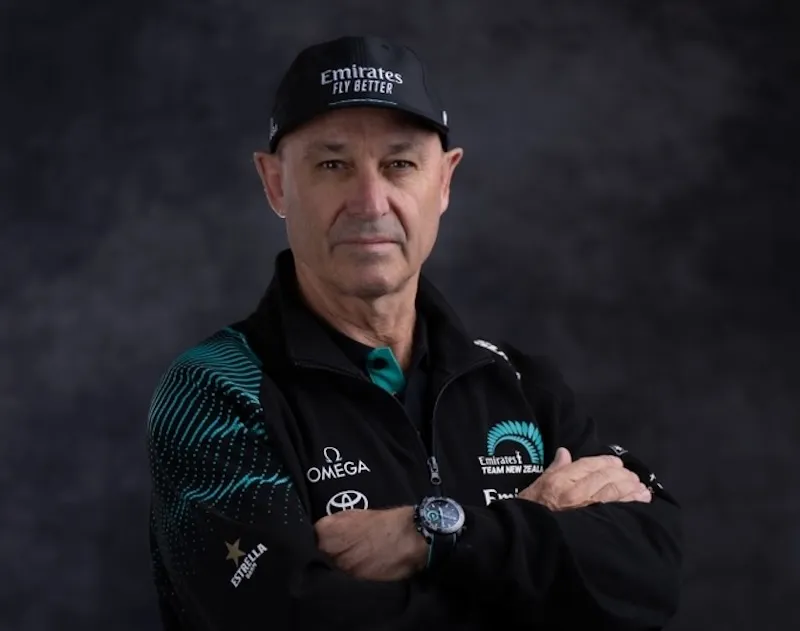



Speaking to a select group of sailing media last night on a Zoom call alongside Emirates Team New Zealand boss Grant Dalton, Ainslie said: “I think it’s going to be anywhere between four and seven teams – that’s the reality. Of course we want all seven – that would be amazing – but we will know in the next couple of weeks.”
Less than 48 hours earlier, and after many months of behind-the-scenes wrangling and intense negotiation between the existing America’s Cup teams and other interested parties, the news broke that the long-awaited America’s Cup Partnership agreement had finally been signed by all parties.
This effectively hands control of future America’s Cup cycles – including AC38 in Naples in 2027 – over to a board of governors made up of representatives from the teams, with an independent CEO leading operational staff to look after the day-to-day running of the Cup. That announcement triggered a deadline of October 31 for teams to submit their challenges for AC38.
It’s a short runway for sure, but Dalton and Ainslie believe the teams will be able to comply. Although the pair know who may or may not be in for AC38 they were unwilling to jump the gun by naming teams at this stage.
“We have an America’s Cup,” Dalton told the group. “We have a protocol in place that is active as of 36 hours ago and we have boats for an America’s Cup. But I am always hesitant to announce those who are in, when it’s actually up to them to announce that they are in.”
Dalton was quick to point out that, despite AC38 being less than two years away, because the rules for AC38 prohibit existing teams from building a new boat, there is much less time pressure than in previous cycles. He also pointed out the provision for late entries to be accepted.
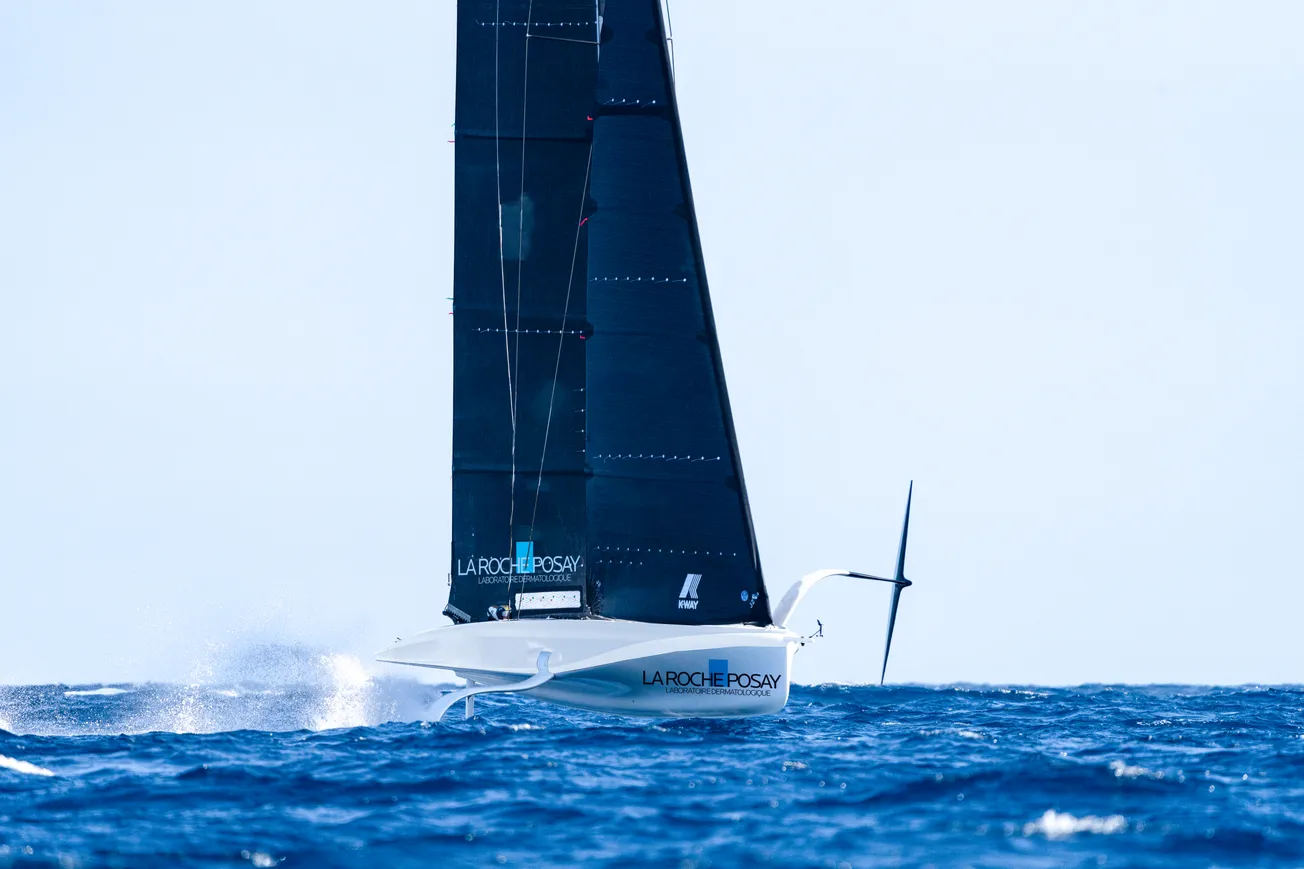
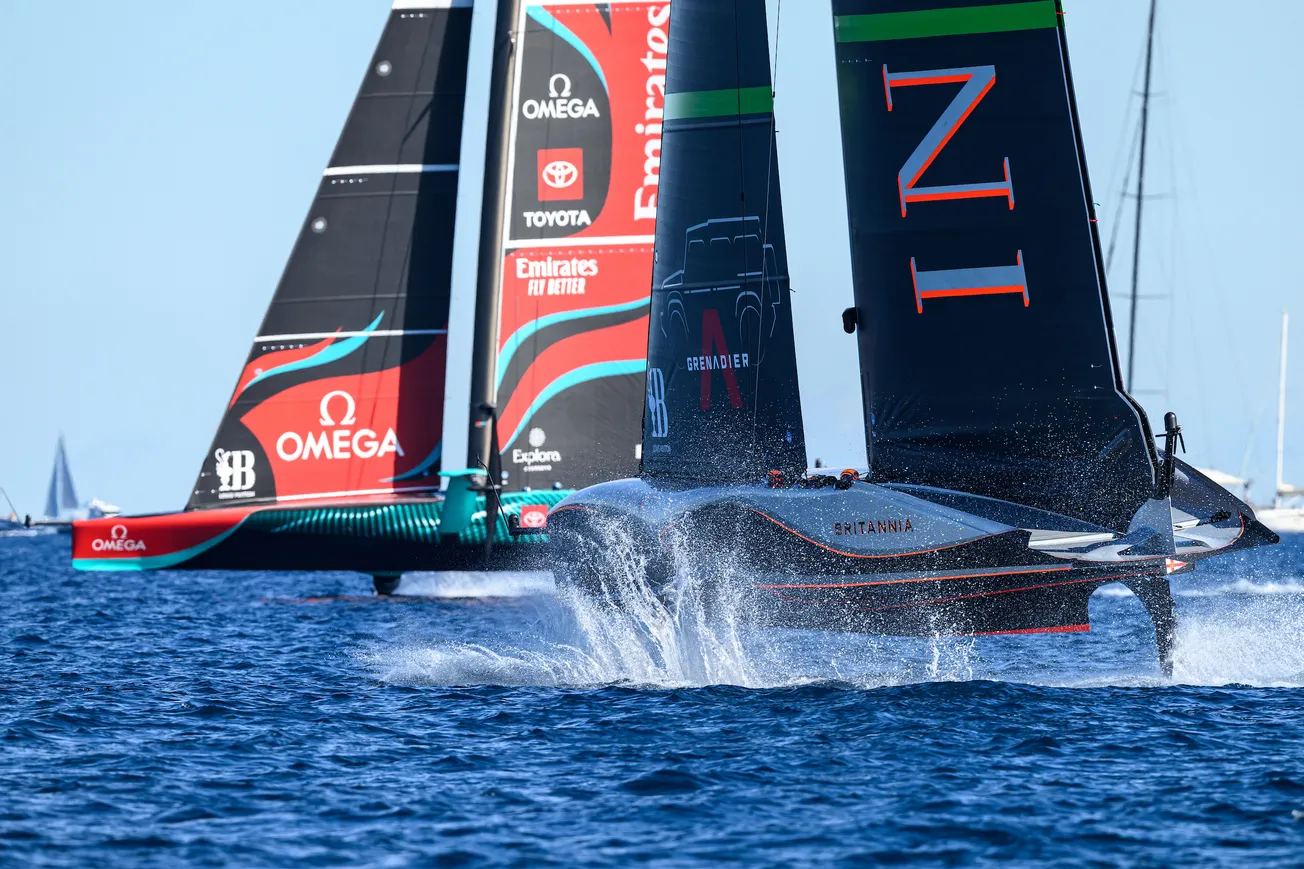
“The fall-over date is, I think, the end of January when there can be a late entry with the penalty being at the discretion of the board (ACP) at that stage. So it’s not really the end of the road on October 31. It’s not quite as time critical this time around because you don’t have to build a new boat – you are modifying your existing boat, foils, sails, mast, aero package, and all that sort of stuff.”
Under the AC38 rules teams have a limited number of sailing days in both their AC40s and AC75s. The teams will race three times in 2026 at preliminary regattas using AC40s. According to Dalton, the venue negotiations for all three are nearing completion, with the first event taking place in May of next year.
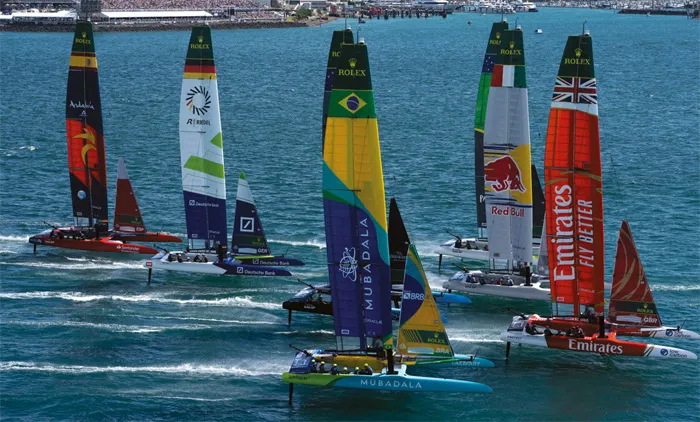
Asked if there were plans to coordinate the America’s Cup events calendar with that of SailGP to avoid clashes for the many sailors who would be competing in both competitions, Ainslie said it was important that both sides did a good job of matching up the schedules.
“A lot of these top sailors are going to be involved with both the Cup and SailGP and so collaboration is really the key,” he said. “These two events should be supporting one another, really. How far that goes is another question entirely. But if we are smart about how we develop both events then the sport of sailing and professional sailing at the highest level is really going to be turbocharged.”
From Dalton’s perspective there was little possibility of clashes in 2026, with the issue coming more to the fore in 2027.
“The obvious clash comes at Cup time,” he said. “Because you’ve got the full Louis Vuitton Challenger Series, the final pre-regatta, and the Cup itself. So each team’s got to make its own decisions about its personnel at that time. We have made our decision already. We made that quite early. But each team is different and they will make their own calls.”