Skip to content

Inside 11th Hour Racing's Transat Café L’OR podium performance

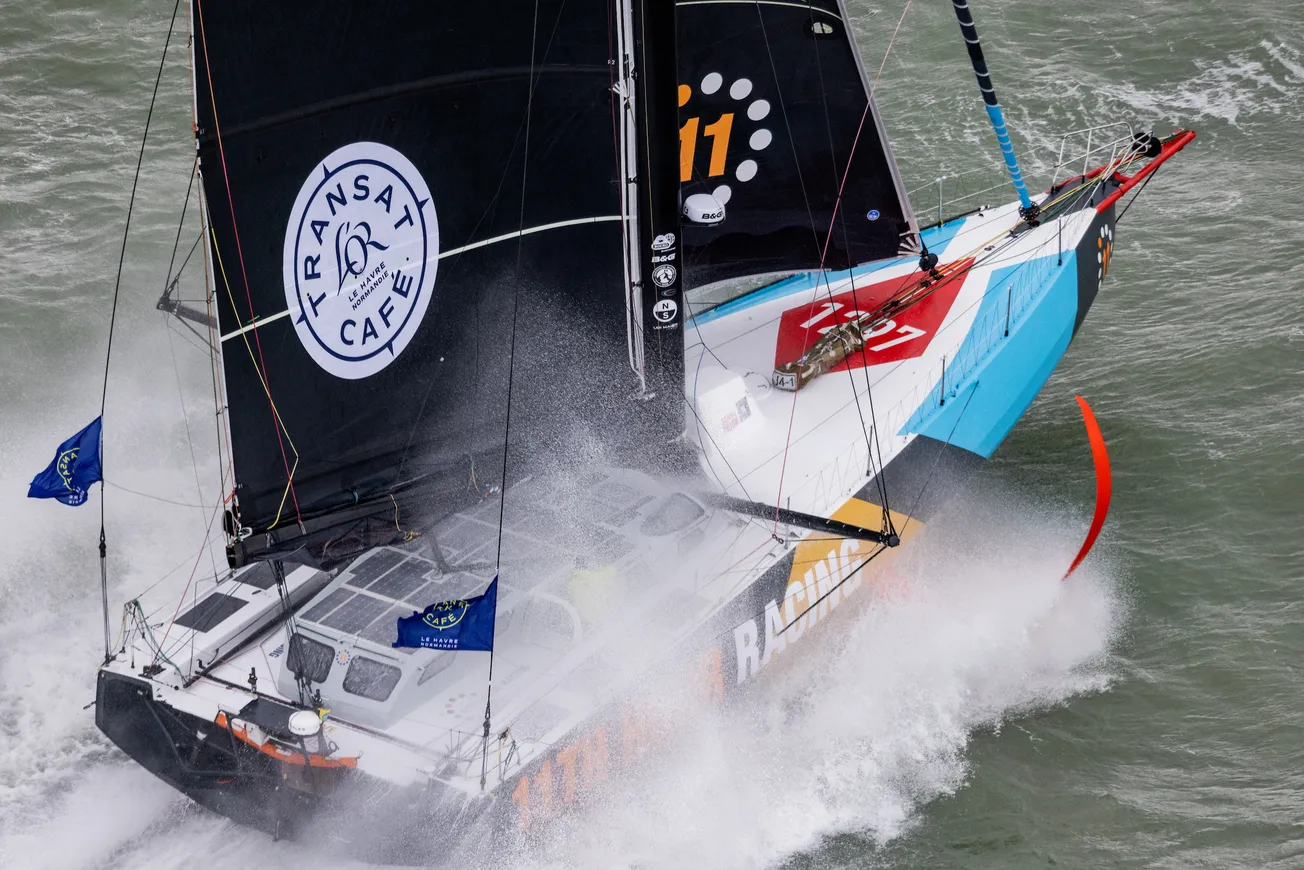
Francesca Clapcich & Will Harris’ second place finish in the 2025 Transat Café L’OR is all the more impressive given that it was Clapcich’s first race in charge of the boat she will use in the 2028 Vendée Globe. We checked in with Harris recently to get his take on how the race played out.

Image © Thomas Deregnieaux, Qaptur I 11th Hour Racing

When Clapcich was looking around for a co-skipper for her first competitive outing as skipper aboard the 11th Hour Racing IMOCA – previously Boris Herrmann's Malizia Seaexplorer – that she aims to race solo around the world in 2028, Harris was a somewhat obvious choice.

Other than Herrmann, nobody had sailed more miles aboard the German boat or knew it so comprehensively inside and out.

"I've known that boat since the first moment a piece of carbon was laid into the mould," Harris explained. "I've followed the development of the boat and done an awful lot of sailing on it. So it seemed obvious that we could partner up and I could share my knowledge and experience of the boat with Frankie."

The pair got some racing time together during the summer of 2025 after Clapcich joined the Team Malizia crew for the 2,000-nautical mile Course des Caps race around the British Isles, and for the second edition of The Ocean Race Europe.
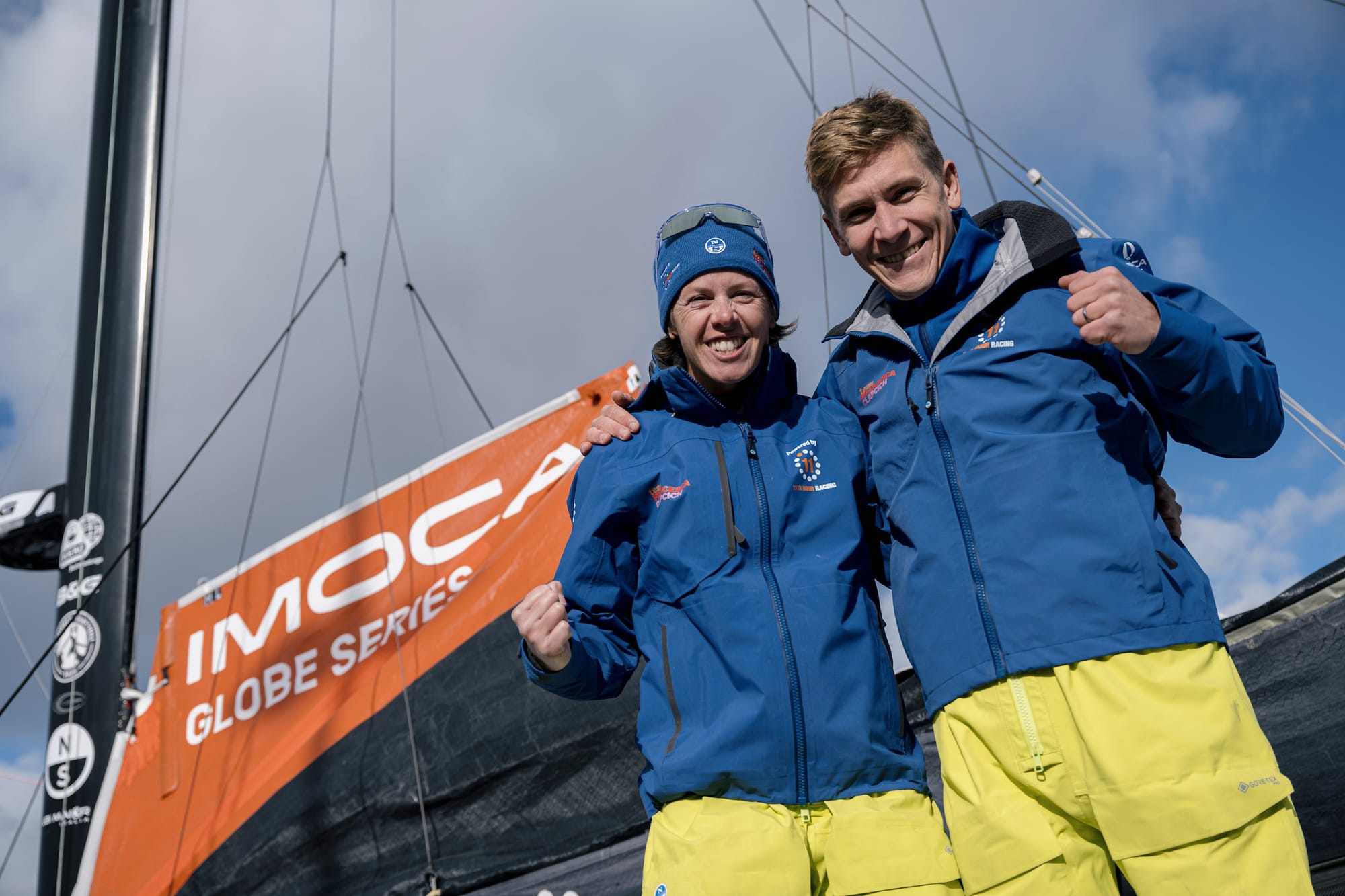
Image © Olivier Blanchet / Alea

It didn't take long for Harris to see that the two sailors had very similar personality traits when on board a race boat.

"It all felt very natural," he said. "We are both very easy-going sailors. Neither of us ever want to have conflict. Plus Frankie put a lot of trust in me as well – which I think was a big part of our success in the transatlantic race."

Clapcich was no stranger to IMOCA racing – she won the last edition of The Ocean Race as part of Charlie Enright's four-person crew aboard the American entry 11th Hour Racing Team – but had relatively little experience of sailing these complex boats in shorthanded mode.

The pair's first test came in May 2025 in an incident-ridden 1,000-mile qualifying passage to secure their entry to the Transat Café L’OR.

"We had all sorts of problems on the boat," Harris recalled. "Including losing our generator. We had no power. We had just one hydro generator to get us around this qualifier. It was almost a disaster, but we got through those things together.

"That's just how sailing goes sometimes. It was a fantastic test for us as sailing partners, as co-skippers – but also as friends. I think we really validated that we knew that we could get through these sorts of technical problems and have a good race. That was a very important part of us being able to feel very confident at the start of the transatlantic."

With Clapcich tied up with the management responsibilities that go along with launching a new Vendée Globe campaign, Harris made his focus the navigation and general race preparation he knew they would need to get right to stand a chance of being competitive in the upcoming transatlantic race.

"We divided and conquered," he explained. "Frankie was at the start of the project. She had to launch it and start to build a team. As well as being a sailor, she had to become a businesswoman too and be organising finances, the budgets, dealing with sponsors, and all the other things that go along with leading a campaign.

"I had worked with Boris for long enough to know first-hand how much stuff she was going to have to deal with. So I said that I would take on all the race-specific work – like looking at the weather and working out which sails we needed to take with us – so that she could concentrate on the bigger picture and make sure we had a supportive team behind us and all the resources we needed to take the start properly."

An intense storm system at the start in Le Havre, France and across the Bay of Biscay made the first two days of the race insanely tough for the doublehanded crews in their twitchy sixty-foot carbon yachts.

Rather than just aiming to try to survive whatever the conditions threw at them, Clapcich and Harris agreed a detailed strategy for those opening two days.

"We knew we were going to have to deal with very, very, strong headwinds coming up the English Channel," Harris explained. "Then, 48 hours later we would end up somewhere in the Bay of Biscay with absolutely no wind. That would be our transition time, when we could eat and sleep a bit without getting smashed around in the boat.

"We drew up a plan for that first 48 hours that detailed exactly what was going to be going on hour by hour up until that point. We planned out when we would attack and when we would take advantage of chances to check the boat over. The goal was just to keep the boat in one piece at the end of all that.

"It worked really well. We stopped looking at the other boats and didn't worry about the big picture for the race. We knew that if we could keep the boat – and ourselves – in one piece then we could see where we ended up after the storm. If we were in the front pack then great, if not then we still had a boat that we could race hard over the rest of the race."

Image © © Thomas Deregnieaux, Qaptur I 11th Hour Racing

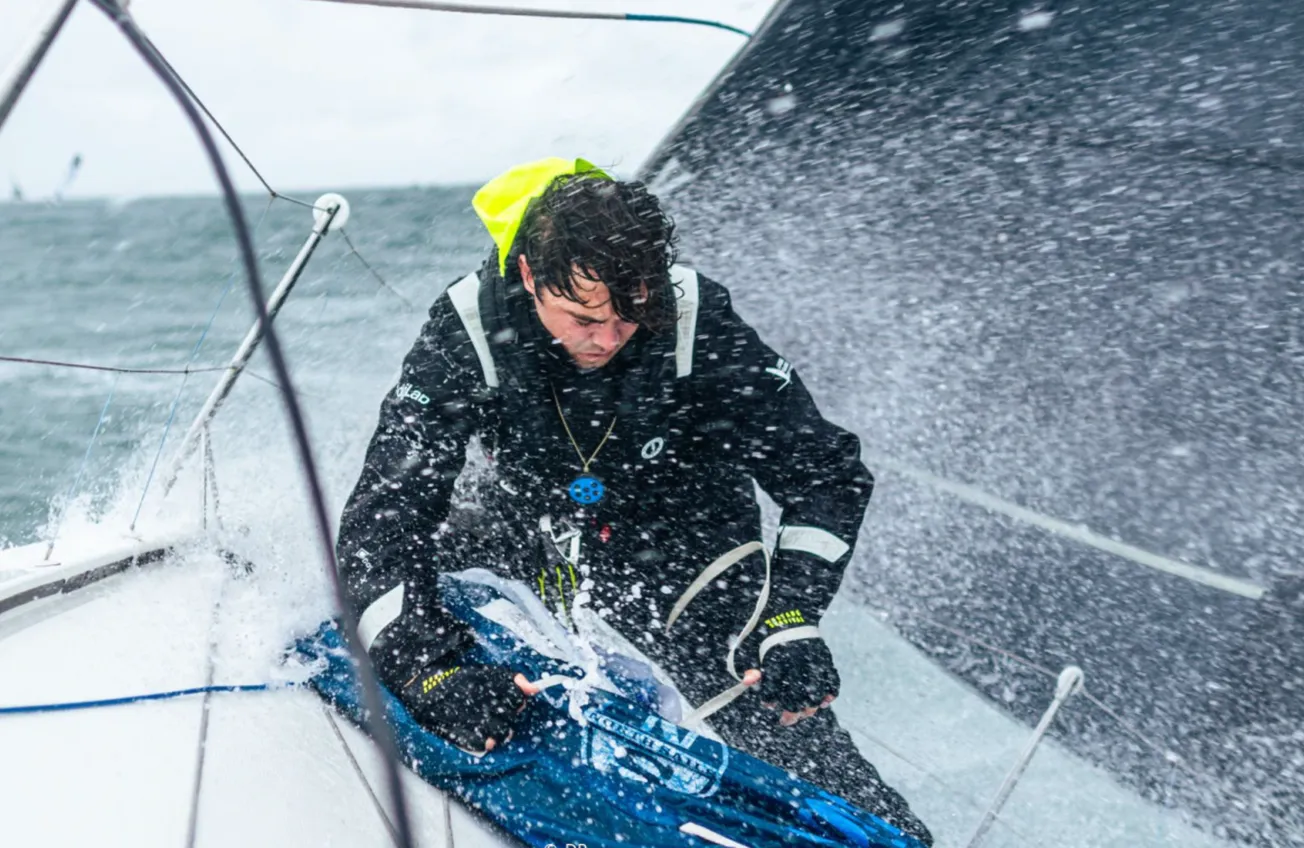
During the first night at sea the pair got virtually no sleep as their boat crashed incessantly from one massive wave to the next.

"It's hard in these foiling boats upwind," Harris said. "It was so bouncy and we had to make a manoeuvre every hour or two – and that means redoing the stack each time. I don't think we cooked our first hot meal until 36 hours after the start."

Despite enduring all this discomfort the pair emerged from this opening section with smiles on their faces as they found themselves amongst the leaders and with their bodies and their boat still very much intact.

For the next part of the race down to the Canary Islands – where the fleet would head west in search of trade wind sailing for the rest of the Atlantic crossing – Clapcich and Harris were focused on reading the local weather systems to keep themselves in the hunt for the lead.

"On the way south to the Canaries it wasn't like there was a big strategic move anyone could take," Harris recalls. "It's not as if we were sailing 500 miles away from the other boats. It was all about making small five-mile separations to try to gain some advantage."

However, when the leading pack arrived at the Canary Islands archipelago the 11th Hour Racing duo saw an opportunity for a breakaway move that could give them a jump on the pack and a chance to lead the fleet into the trade winds.

Ignoring the advice of the routing software to make the right turn in light winds around the islands and wait for new pressure to eventually arrive, Clapcich and Harris continued their track south away from the islands before turning west as the new breeze arrived.

The gambit paid dividends as the pair converted their three-to-four-mile separation into a 30-to-40-mile lead.

Now sailing in 20-knot trade winds and effectively pointing at the finish – albeit still several thousand miles away off the Caribbean island of Martinique – the pair's emphasis shifted from navigational strategy to maximising boat speed.

"I remember thinking 'here we go, they are all going to come past us now'," Harris said. "That night was when we realised just how fast Charal really is after they came flying past us at 30 knots in 14 or 15 knots of wind. We could do maybe 26 knots in those conditions – still faster than a lot of the fleet, but the Charal guys were next level. We really didn't see them again after that."

Getting the most out of the boat's performance by keeping it on the foils as much as possible required Clapcich and Harris to steer the boat themselves for prolonged periods – a massively physically demanding task for the two sailors who rotated every two hours.

"The IMOCAs are not really designed for hand steering. It's a very heavy tiller – up to 50 kilograms of load on it at times. Energy consumption-wise, a spell on the helm is equivalent to me going out on a big bike ride. We looked at the stats the other day – we both wore heart rate monitors throughout the race – and we were averaging 7,500 calories per day."

Image © Yann Riou - polaRYSE

What made the task of keeping the boat foiling was not so much the variations in the breeze – which Harris told me ranged from 14 to 20 knots –but a particularly tricky cross swell coming from the north.

"That created these really awful peaks that were pretty hard to get over. The autopilot is great until you get these kinds of horrible waves," he said. "We were fortunate in that we had a full moon so that we could see what we were dealing with. That allowed us to steer a lot better and when it comes to anticipating the waves a human is a lot better than an autopilot."

The trick Harris said was to focus on keeping the boat foiling by luffing up to get the bow to rise and bearing away when it starts to 'wheelie'.

"Basically you are always aiming to just keep the boat sitting on the foil but at the same time finding a way to get through the waves. For sure, that was an important part of the race. We estimate that hand steering gave us around a mile and a half of extra distance every hour.

Over five days, that adds up to a 150 to 200 mile gain – which is probably what we saw with that leading pack of five boats versus the rest of the fleet."

With Charal long gone, as the 11th Hour Racing sailors closed in on the finish in Fort-de-France, they found themselves in a pitched battle with MACIF Santé Prévoyance – raced by Sam Goodchild (GBR) and Loïs Berrehar (FRA) for second place.

Arriving in Martinique | Image © ean-Louis Carli / Alea

The last 48 hours saw the battle intensify after a gybe away by the 11th Hour Racing crew saw them close up a 30-mile deficit to put the two boats neck-and-neck over the final miles to the finish.

"That's when we said 'right, we are going for it from here',” Harris remembers. "After that we just steered the whole way and we managed to build up a 40 mile lead at the finish.

"It was a combination of speed – where we were sailing the boat nicely in the waves – and some what we call ‘trade wind gybes’, where we just managed to time it right with a cloud, an afternoon shift, or an evening squall. We managed to really nail a few of these and that's what gave us the advantage to claim second place."

For Harris, for whom the 2025 edition of the transatlantic race was his third time competing, the podium result brought with it an immense feeling of satisfaction.

"I first did this race back in 2019. Back then I was a 25-year-old Figaro sailor and I didn't expect to be sailing an IMOCA that year. You never know if you have got it in you to get a podium result, so six years on to come away with a second has really ticked off a big one on my bucket list.”

Comments

Latest

Kevin Shoebridge: ‘We feel confident within the team’

Kevin Shoebridge: ‘We feel confident within the team’

Although it’s often Emirates Team New Zealand CEO Grant Dalton’s shoot-from-the-lip soundbites making the headlines, chief operating officer Kevin Shoebridge has also been key to the team's many America’s Cup successes. I caught up with him in Naples to get his take on the latest Kiwi campaign.

Free Members Public