


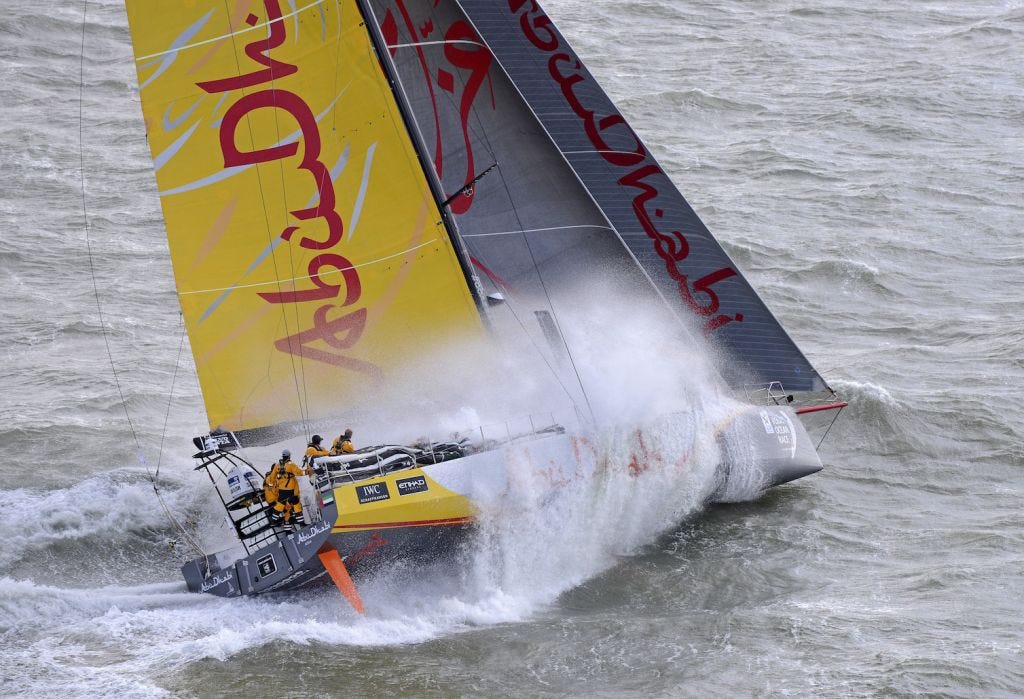
Back then I had been unexpectedly called up to stand-in as the onboard reporter aboard the Abu Dhabi Ocean Racing VO65 for what turned out to be a record setting lap of the British Isles.
My call-up didn’t come completely out of the blue. I was working for ADOR as the Volvo Ocean Race team’s communications officer in the 2014-15 edition of the fully-crewed race around the world. It was my second time working on the VOR – in the 2011-12 cycle I had been a member of the comms team at race HQ – and the race organisers had nominated the RBIR as a warm up for the then newly built fleet of one-design VO65s.
My role with the Abu Dhabi Tourist Authority-backed syndicate was very much shore-based, but I had been embedded with the team for the past several months as the boat was commissioned and I had enjoyed a number of days out on the race boat during the commissioning period. A few weeks prior to the RBIR, our original onboard reporter had resigned because of chronic debilitating seasickness. This was the early days of the OBR role and there weren’t as many obvious candidates to choose from as there are nowadays. So it had been a bit of a scramble to find a replacement, but we were happy we had found the perfect person in American videographer Matt Knighton.
Matt had trialled with the crew at our training base in Cascais, Portugal and everything had gone well. He clearly had the camera skills, he knew his way around a raceboat, and the crew – led by skipper Ian Walker – all seemed to like him. So there were ticks in all the boxes on the checklist, except for one. Matt had a totally-unmissable family event that clashed with the Round Britain and Ireland Race.
With the VOR Rules mandating that the team race with a functioning OBR – race management wanted to test out the onboard systems for sending back stills and video footage from at sea – we had to find someone to step in. I took the predicament to Ian Walker for his suggestions. “Well, you’ll just have to do it,” he said unemotionally, before turning away to another conversation.
I remember, in that instant, feeling first flummoxed, then elated, then petrified as I pictured myself carrying out the OBR role in an 1,800-nautical mile offshore race. Could I do this, I wondered? I wasn’t totally sure, but I was certain I wasn’t going to turn this amazing opportunity down. I don’t recall now how long I had to get myself ready for the race. I have a feeling it was a couple of weeks but it could have been much less. I spent that time familiarising myself, as best I could, with the handheld cameras (never my strong point), and the onboard systems for managing the boat’s remote cameras, as well as the Inmarsat high-bandwidth FleetBroadband satellite terminals used to beam the footage back to the VOR HQ in Alicante.
In the final few days before the race I sat in on the crew weather briefings delivered by our team meteorologist, the legendary Dutch navigator Marcel van Triest. Marcel is a towering figure of a man with the classic ‘Dutch-direct’ style of communication. He pulled no punches when he laid out the concerning weather scenario that was developing for the start of the race that coming Saturday. The tail-end of a once-hurricane called Bertha was making its way across the Atlantic and was set to bring heavy rain and violent storm force winds across the entire United Kingdom over the weekend. “It’s going to be heinous,” Marcel told us, as we huddled around his computer screen on the kitchen table of the team’s Portsmouth crew house. The first afternoon and night looked to be particularly bad, with the fleet having to crash its way upwind across the Irish Sea into 50-knot winds and huge seas.
Despite the storm warning, the RBIR fleet nevertheless assembled in the Solent on time on Saturday morning. However, as the fleet milled about under leaden skies, RORC made a late decision to put the start back to the next day, and to reverse the course so that we would set off to the east with the wind behind us and then reach up the North Sea on the way to Scotland. The pro sailors that made up the Abu Dhabi crew took the delay in their stride, of course. It was no biggie for them, but for me it meant another sleepless night, worrying about what was to come.
The following day the VO65 fleet scorched out of the Solent in close formation, flying No.3 asymmetrical headsails, and regularly breaking 20 knots. From my position at the very back of the boat, I braced myself against the aft stanchion, clung to the sail stack and tried not to get washed off. The VOR fleet made up the leading bunch as we passed the Forts off Portsmouth, but we were soon overtaken by Sidney Gavignet’s MOD70 trimaran Musandam-Oman Sail, which tore past us in a ball of spray and quickly disappeared into the distance.
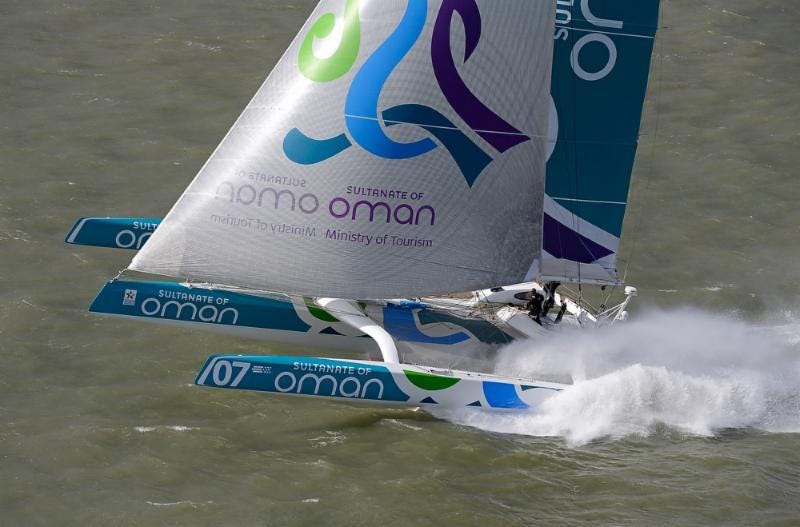
The first afternoon and first night was spent short-gybing along the south coast of England in close company with the other Volvo boats, as the navigators squeezed the fleet through the gap between the shore and the huge English Channel shipping separation zone.