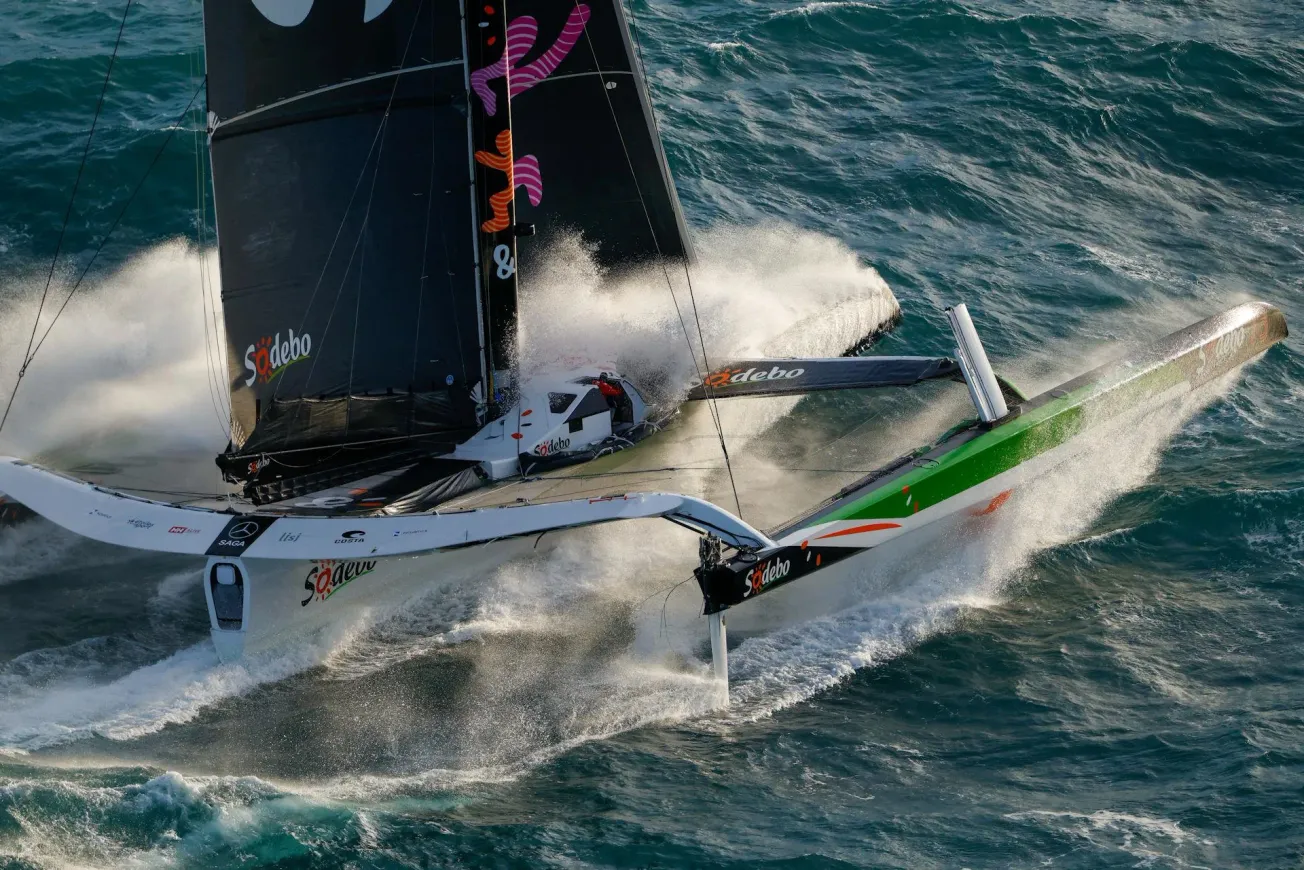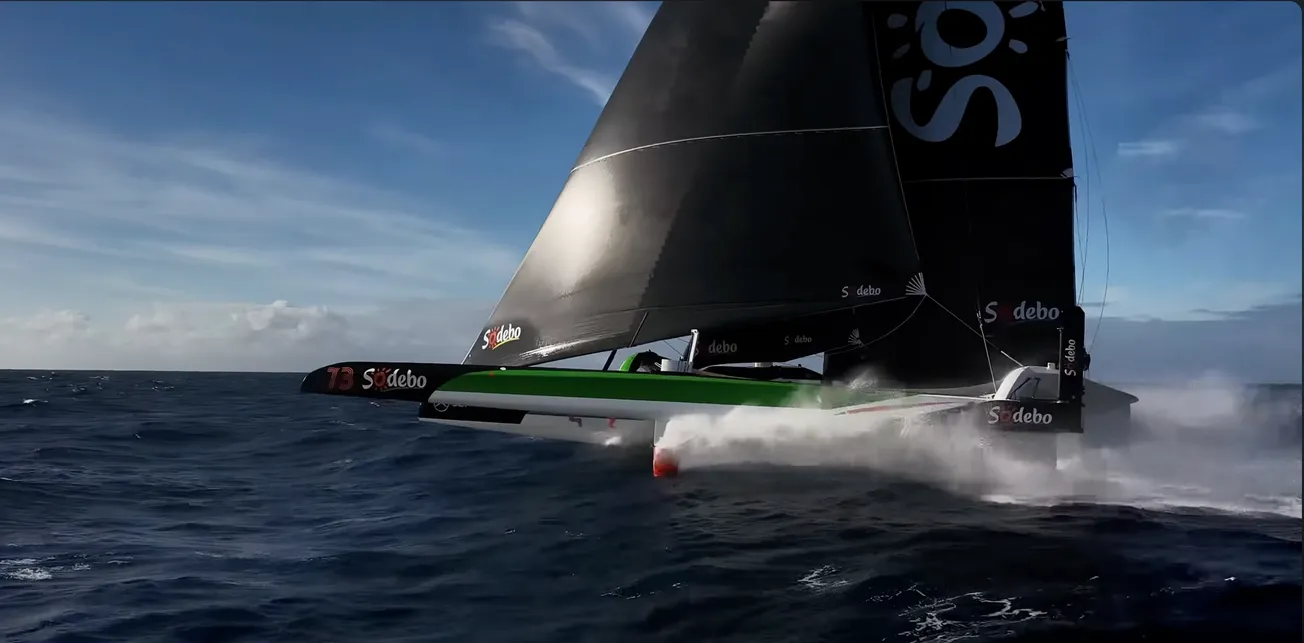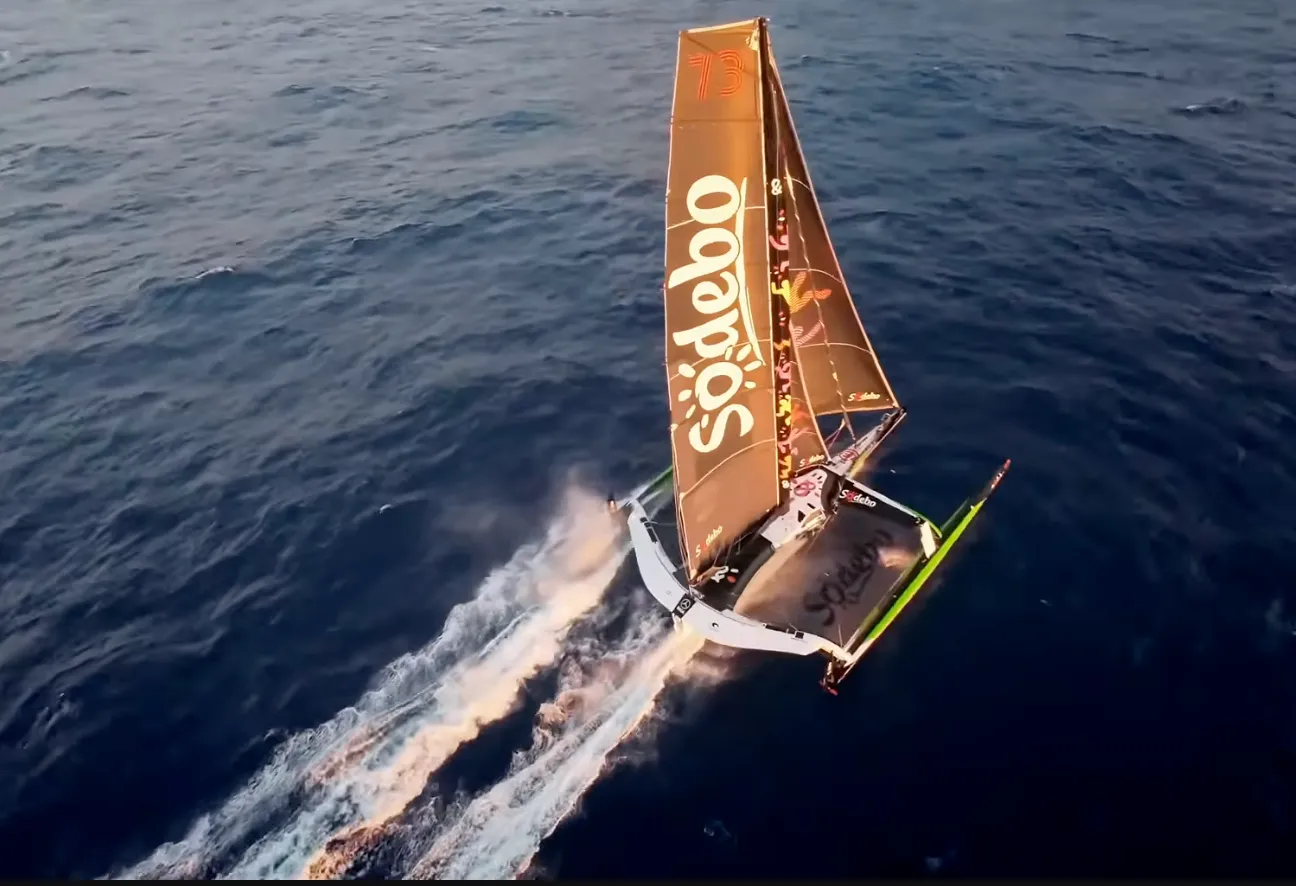
Since departing on Monday, December 15 the French crew have set not one but two new benchmark times for the opening passages of the around-the-world route.
Coville’s men took just four days, four hours, two minutes, and 25 seconds to complete the first stage from the official Jules Verne Trophy start line off Ouessant, France to the Equator – a feat that saw them better the previous fastest time achieved by Yann Guichard’s Spindrift crew in 2019 by 15 hours and 54 minutes.
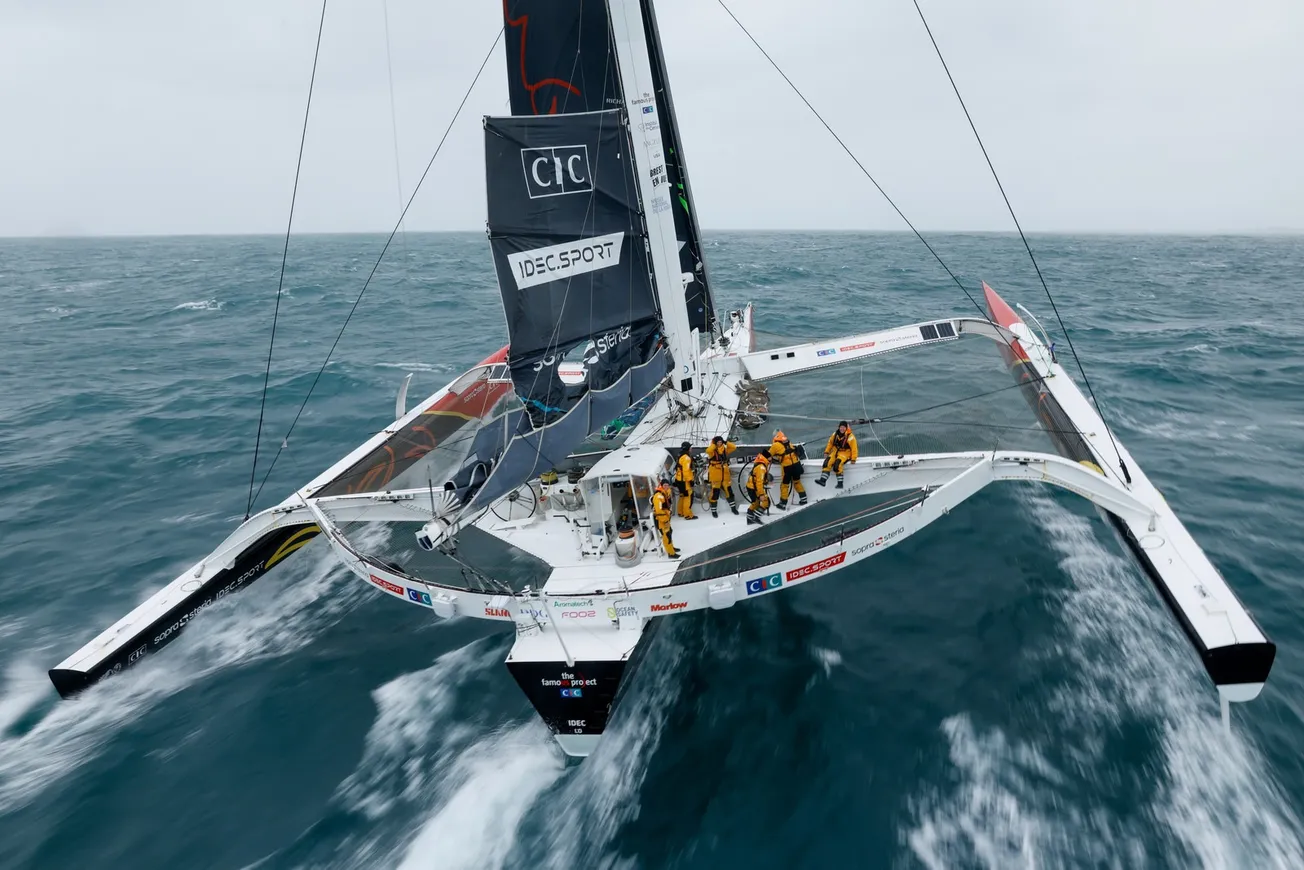
More importantly for the Sodebo sailors is the fact that they crossed into the southern hemisphere one day, 14 hours and 56 minutes faster than the current Jules Verne Trophy holders – Francis Joyon’s IDEC SPORT crew – did when they set the round-the-world record back in 2017.
Never ones to rest on their laurels, the Sodebo sailors kept the hammer down on their way to the southernmost tip of South Africa – to set a new benchmark time between Ouessant and the Cape of Good Hope of 10 days, 23 hours, and 56 minutes. This remarkable new record is nine hours and 36 minutes faster than the time set by Charles Caudrelier and Franck Cammas’ crew on Maxi Edmond de Rothschild back in 2021 – and saw them one day, 19 hours and 31 minutes ahead of IDEC Sport’s previous around-the-world record pace.
However, despite the blistering pace Coville and Co. had been setting on their way south through the North and South Atlantic, since passing the Cape of Good Hope – the first of the three ‘great capes’ they will negotiate on their fast lap of the world – today, as we approach the change of year, the French sailors find themselves fewer than 220 nautical miles ahead of the IDEC Sport ghost boat on the tracker.
The last few days have seen the Sodebo Ultim divert north of the supremely isolated Kerguelen Islands – also known as the Desolation Islands – to avoid being badly slowed by the remote archipelago’s wind shadow.
That diversion has meant a series of time-consuming and energy-sapping gybes. However, having successfully dived back down to the rhumb line course, the crew are hoping to be able to switch back to faster VMG sailing over the coming days as they dive further south towards the race management-imposed ice exclusion zone.
According to reports coming off the boat, as well as dealing with strong winds, the sea state is also proving challenging. In addition to being choppy, two wave trains from two different wind regimes are causing swell from the side and from astern – making it difficult for the crew to maintain steady speeds.
Next up for the team to negotiate is their passage through the centre of a low pressure system to the south-east. This may require them to tack to reposition themselves and with the winds expected to remain strong, the name of the game at this point is not pushing too hard in these tricky conditions and risking breaking the boat.