



The 2026 International Six Metre Swiss and European Championships took place on Lake Geneva in Switzerland, and were hosted by the Société Nautique de Genève (SNG) – Team Tudor Alinghi’s long-term America’s Cup partner. I was there working for the class association – a vibrant organisation that organises a World and European championship each alternate year.
Dating back to 1907 and the introduction of the International Rule – a.k.a. the Metre Rule – the Sixes are some of the world’s most beautiful and elegant racing yachts. For those who have never seen one, just imagine a scaled-down 12 Metre and you will get the idea. An Olympic class from 1908 to 1952, the world’s leading yacht designers often used Sixes as a test bed for their America’s Cup 12 Metre designs.
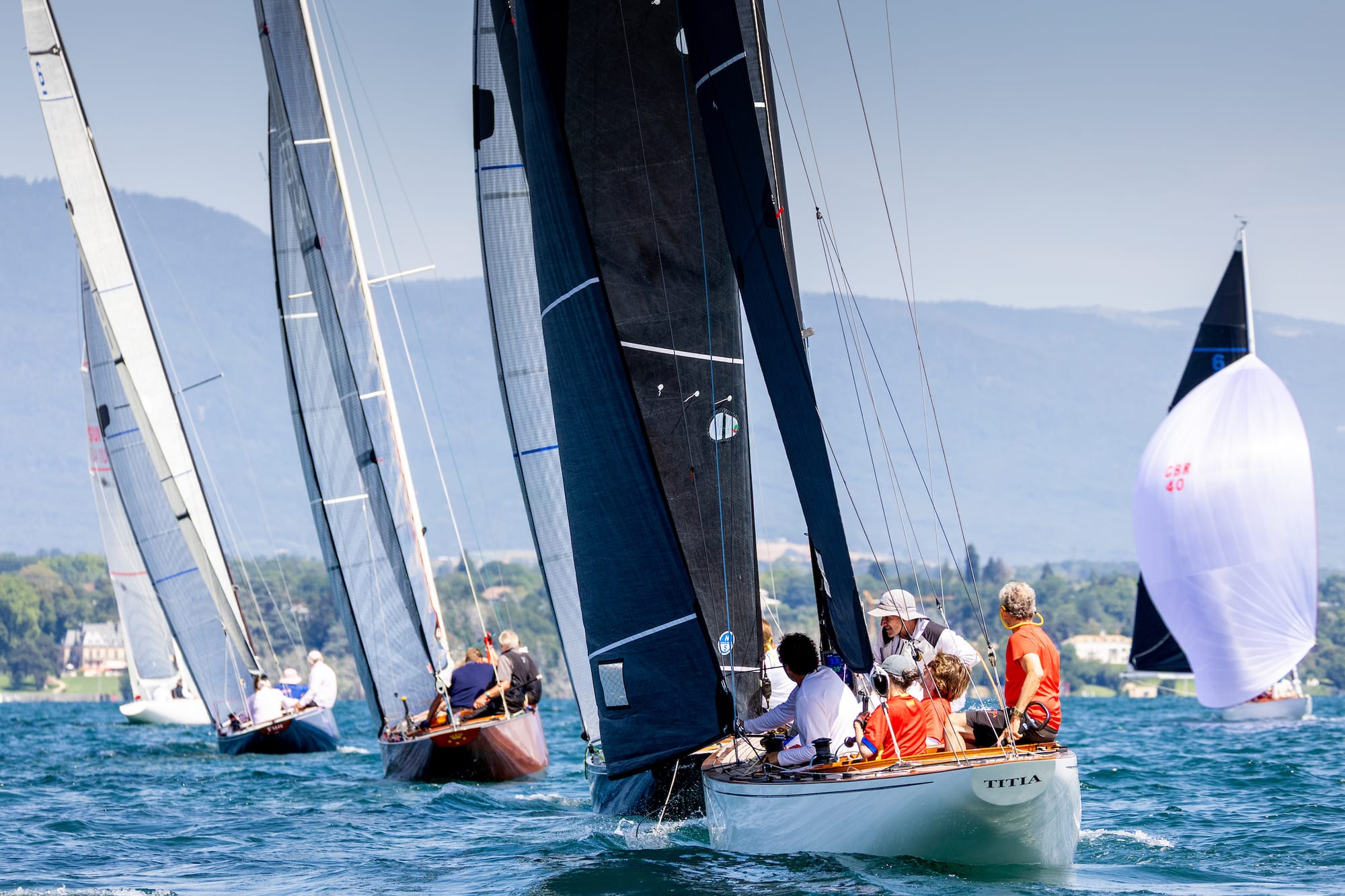
The class rules have been updated periodically and 1975 saw the introduction of an updated Modern design. The cut off date between a Classic and a Modern boat is January 1, 1966.
This year’s Swiss and European Championships attracted 20 entries in the Open (Modern) fleet, with 30 boats racing in the Classic fleet. There are few better host yacht clubs for a class like the Six Metres than the SNG. The club’s facilities include an excellent restaurant and bar, a close to 1,000-berth marina, an air-conditioned gym, a rowing club, and a highly active junior sailing school.
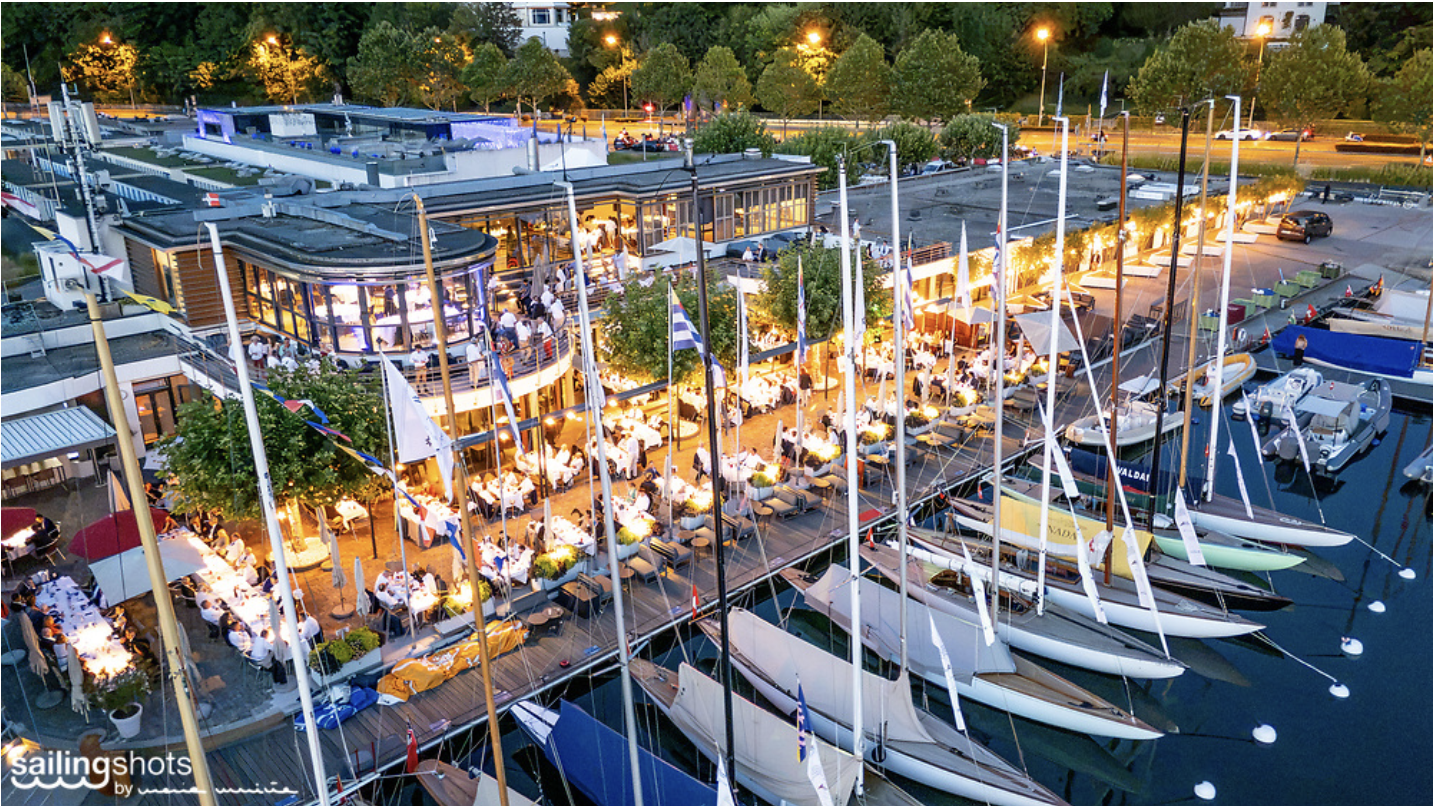
For the International Six Metre Europeans the club had cleared the waterfront outside the clubhouse to enable the 50-boat fleet to tie up stern-to in age order. Every boat’s berth was marked with a blue plaque giving details about the boat: name, sail number, designer, year of construction etc. That was a nice touch that worked really well during the event, with spectators and competitors alike strolling slowly along the long line of yachts taking in their elegance and beauty.
Swiss entries dominated the regatta, with more than half the 50-boat entry coming from the home nation. However a strong travelling contingent made up the remainder of the entries, with crews coming in from Finland, France, Germany, Great Britain, Spain, Sweden, and the United States
The event was my first experience of working with the class and I have to say I was very taken by how friendly and welcoming everyone was. It has been a while since I worked on a major championship and it was nice to experience the atmosphere of anticipation as the sailors worked their way through measurement and scrutineering ahead of the start of racing. There was a classic yacht regatta feel to the event, but it was also very clear that the level of preparation across both fleets was extremely high.
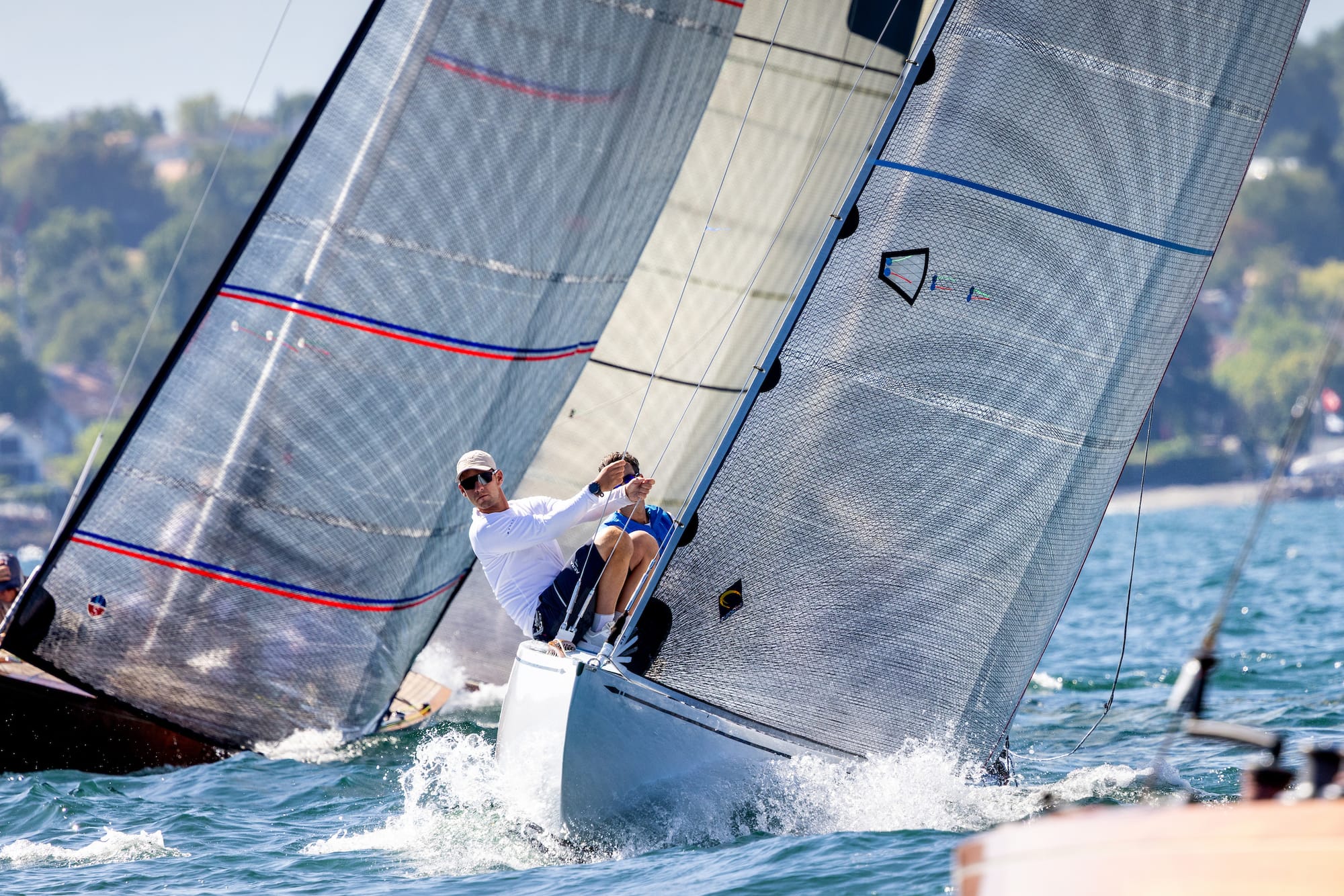
Whilst the Classics are undoubtedly the prettier of the two divisions, the Modern fleet also had its attraction. Viewed from a distance on the water it is hard to tell the two fleets apart. Both sport huge overlapping headsails and have over-sized fractional spinnakers. Under the water is where the biggest differences are. The Classics have full length keels and keel hung rudders, while the Moderns are allowed fin keels with bulbs and winglets, and separate rudders. I’m sure there are many more differences between the two fleets – and I look forward to learning all about them as my relationship with the class develops.
When it came to the racing the Lake Geneva weather gods didn’t really play ball. The three-day Swiss Championships – which acted as a warm-up for the Europeans – was badly affected by thundery conditions that made for some very unpredictable scenarios on the lake.
Just four races of a possible eight were completed in the Open Championship, where renowned Swiss match racer Eric Monnin on the red-hulled SUI100 Duclop emerged as the new Swiss champion. Unfortunately, the final race in the Classic Championship had to be thrown out after the winning boat was found to be outside the time limit by a little over a minute. That denied Violetta Alvarez’s immaculately renovated GBR57 Erica being awarded the overall victory as a minimum of four races was required for a series.
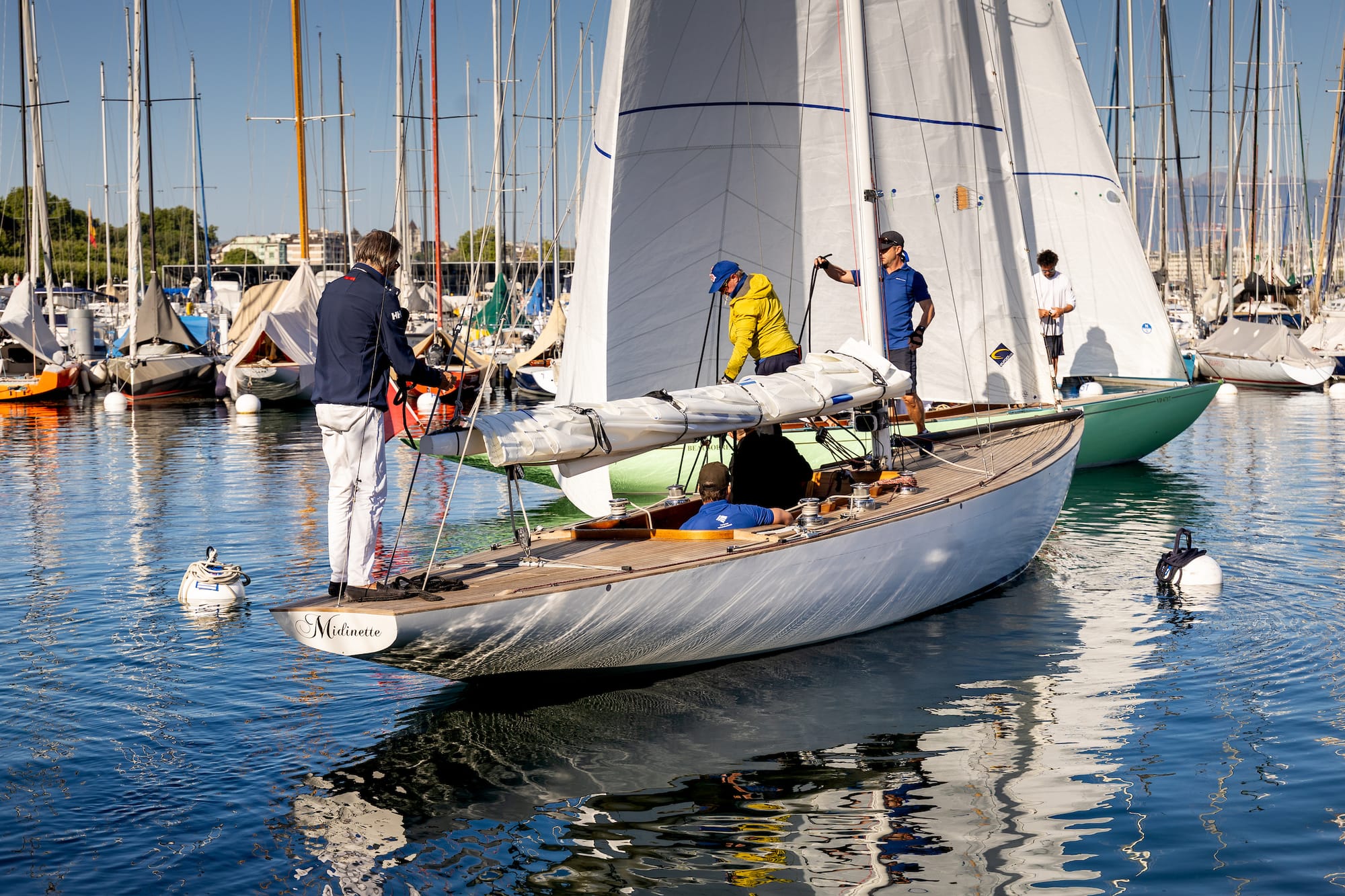
When it came to the Europeans the storm systems had moved away, allowing a more ‘normal’ northerly breeze to develop in the mornings. The race committee managed to get all eight races in the series completed, albeit in breezes that peaked at 10-12 knots early in the morning and typically died away to sub-five-knots over the two-lap windward-leeward races. These tricky conditions put a premium on keeping your eyes out of the boat and meant that the final podium positions in both fleets were not decided until the very last race. Challenging and often frustrating racing for the competitors, but fascinating to watch as an onlooker.
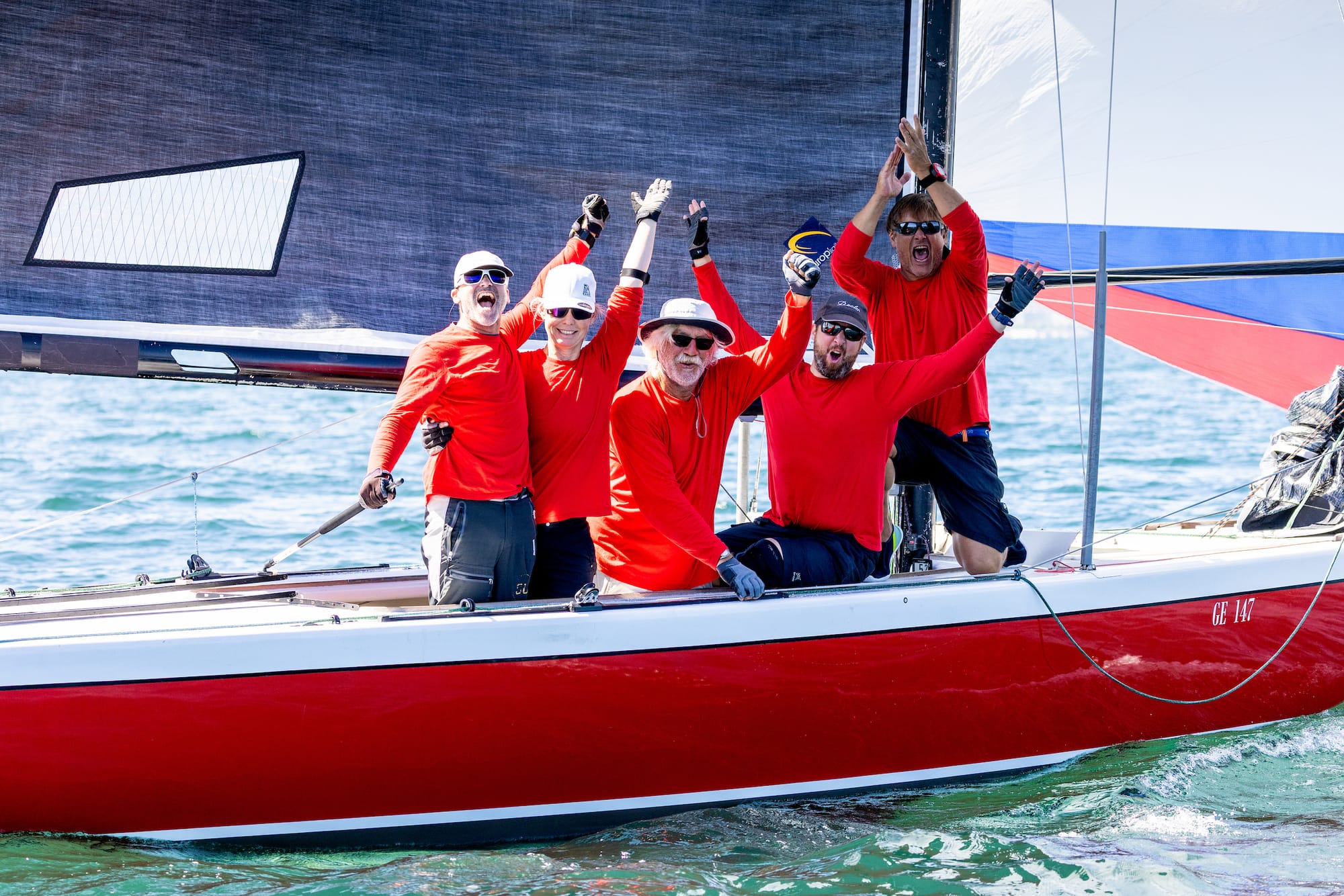
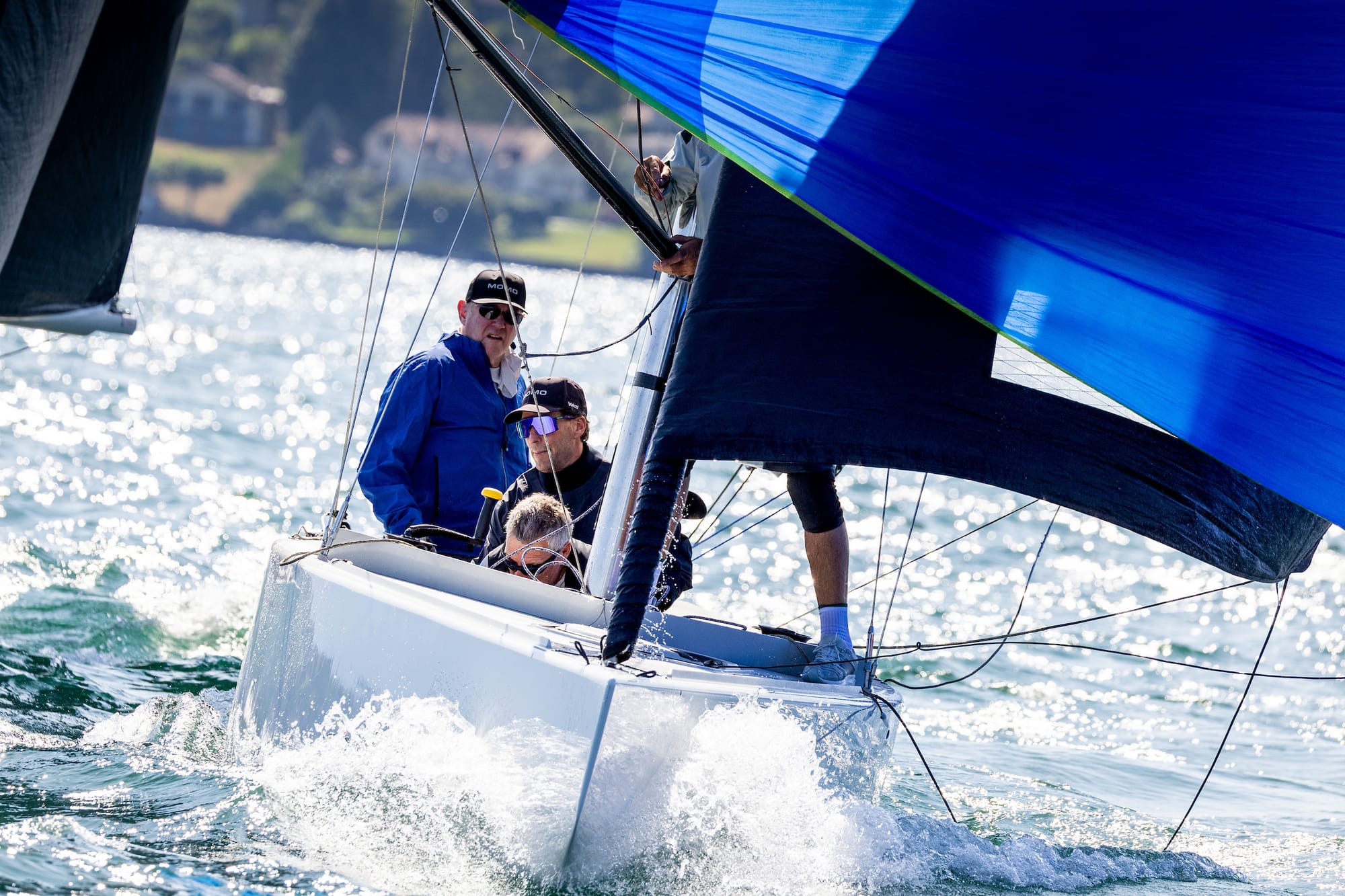
In the end, it was Monnin once again who closed out the Open division with a win in the final race, that saw him relegate Jamie Hilton on the helm of SUI144 Eau Vive to second place. Third was the newest boat in the fleet: Dieter Schön’s IVB145 Momo. In the Classics, a win in the last race for His Majesty King Juan Carlos I of Spain’s ESP16 Bribon, helmed by Canadian Olympic medallist Ross MacDonald, sealed a remarkable fifth European Championship victory for the royal yacht. His Majesty was not sailing on the boat, but was on the water every day watching the action intently from a large support rib. Second in the Classics was Erica, with Reinhard Suhner’s SUI45 Mecara taking third overall.
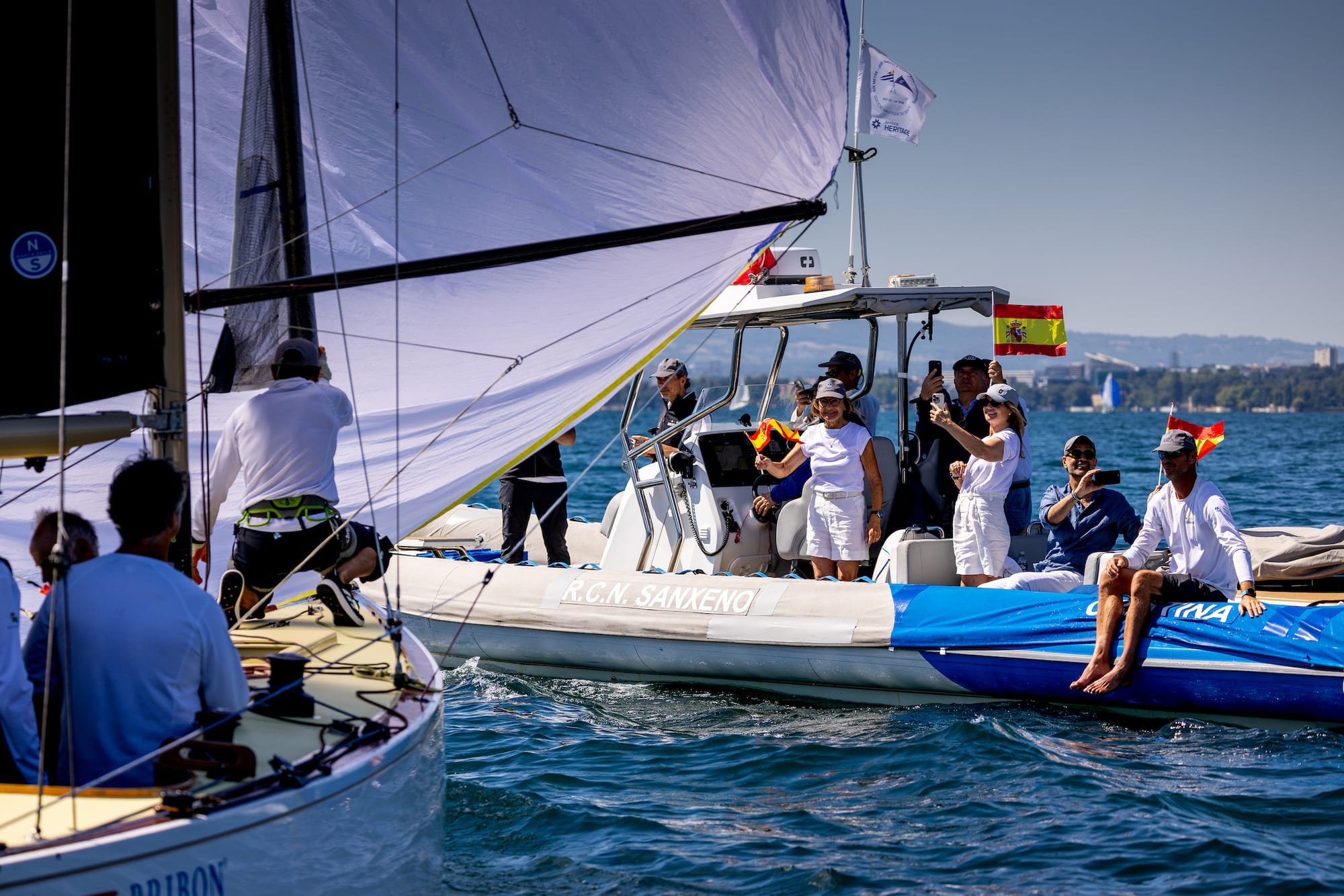
I watched both championships play out from the best seat in the house: behind the wheel a small, but zippy rib capable of getting me to the windward and leeward marks ahead of the leaders in both fleets. One aspect I really appreciated was watching racing without any artificial boundaries. The crews were only constrained by the breadth of Lake Geneva making for some huge leverage opportunities both upwind and down – a welcome change from the grandstand sailing courses I have become accustomed to in SailGP and the America’s Cup.
You can get a real taste of what the atmosphere was like at the Europeans in this video by class videographer Jacobo Bastos – and there are lots more great images from the championships from class photographer María Muiña, here.
Meanwhile, I’m already looking forwards to the 2027 International Six
Metre World championships taking place in Helsinki, Finland next August.
For more information on the International Six Metre Class, check their truly excellent Archive website.


