The long anticipated 2025 edition of the Admiral’s Cup starts today in Cowes with the 30-yacht fleet taking part in the up to 160-nautical mile RORC Channel Race. It’s the first Admiral’s Cup in 22 years and there are plenty of competitors from that edition in key roles in teams this time around.
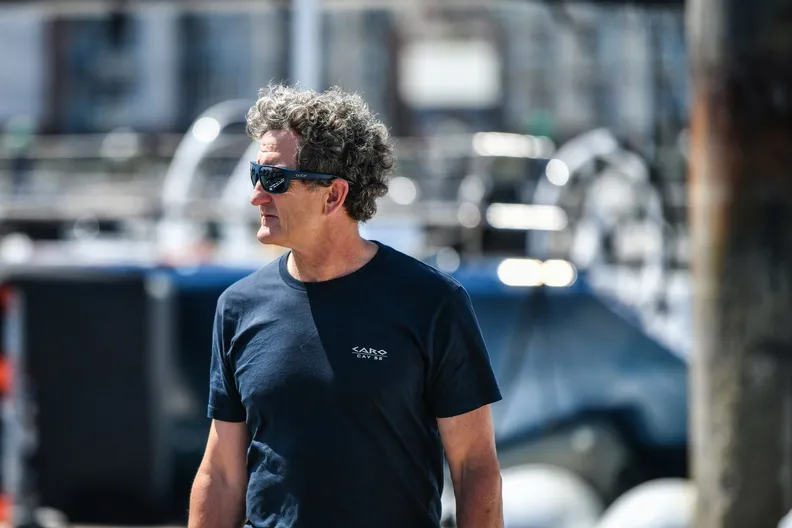
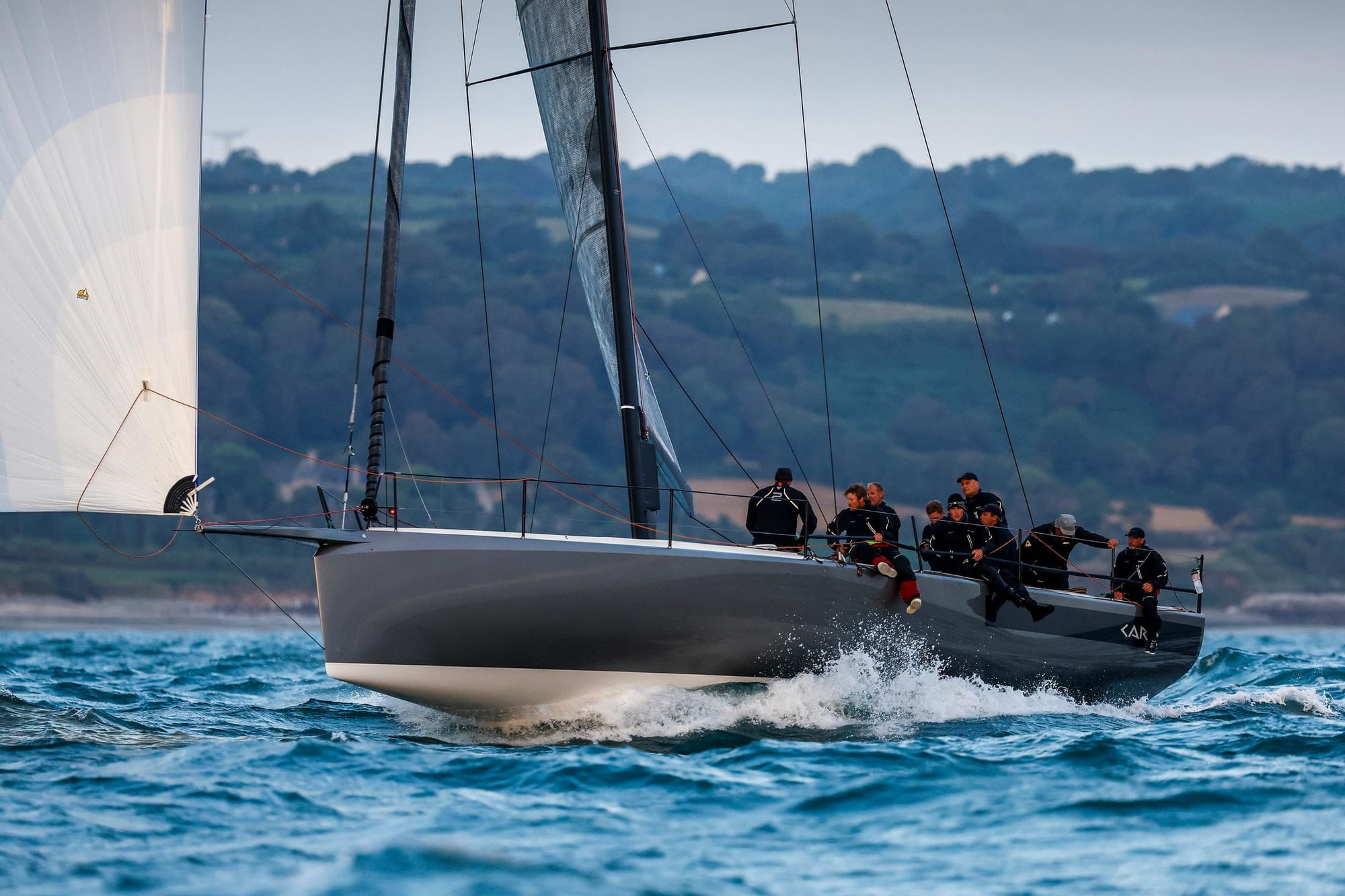
Amongst them is British yachtsman Adrian Stead who is racing for the Royal New Zealand Yacht Squadron aboard the successful Botin 52 Caro, which is paired for the Admiral’s Cup with the GP42 Callisto. As well as Stead – a past Olympian and multiple world champion – the Kiwi lineup includes big names like Mike Sanderson and Dean Barker.
As Stead explained to me, putting together an Admiral’s Cup team is not just about finding two competitive boats that fit the two class rating bands.
“I think it’s not just that,” he said. “It’s about finding two owners that are aligned to doing what’s required to take on the Admiral’s Cup. With the Royal New Zealand Yacht Squadron team we've been very lucky to have James [Murray, owner of Callisto] and Max Klink [owner of Caro].”
Stead and several others in the New Zealand team race on both boats outside of the Admiral’s Cup creating an instant tie up between the two owners, who both embraced the Admiral’s Cup opportunity with enthusiasm.
“So there was that bit of synergy between the two owners and both of their enthusiasm to do this event was fantastic.”
What, I wondered, had been the big appeal of the Admiral’s Cup series, which includes a mix of inshore racing in the Solent and nearby Christchurch Bay, and offshore races like today’s Channel Race – as well as the iconic Rolex Fastnet Race which concludes the regatta.
"I get the feeling from everyone that being back here sailing in Cowes with a mixture of inshore and offshore is so preferable to going to an event in somewhere like San Tropez for five days where there's a 10 degree right wind bend, and on two of those days there's no wind.
"Here there is variety and that's good – it's different to what we have all been doing for the past few years."
The Kiwi campaign is clearly a highly professional operation. Both boats have been situated in Cowes’ Wight Shipyard for several months and prepared meticulously for the Admiral’s Cup.
Both boats are proven winners – Caro won the 2023 Rolex Race and IRC 1 in the Rolex Sydney Hobart Race and has acquitted herself well in other major offshore races like the RORC Transatlantic Race, and Callisto finished third at the UK IRC National Championship after a tight fight with fellow Admiral’s Cup boat Jolt 6.
However, as Stead points out, the Admiral’s Cup requires teams to get their boats to perform well both inshore and offshore – a unique challenge these days.
“Caro is a proven offshore boat,” he says. “It's up to us to make sure that we can race it inshore – particularly in the windward/leeward stuff – but also not be complacent with our offshore experience, as it is not a given that we are going to perform well offshore.
“We've invested in a new keel fin after racing here at Easter. We've invested in different sails. We've jigged the crew around a little bit. We brought in Christian Camp from Denmark who has come back to sail with us. He’s a great inshore trimmer who has done an awful lot of sailing with Max inshore. Max is helming the boat inshore, so we've been working really hard on starting, mark roundings, and getting used to the Solent current.”
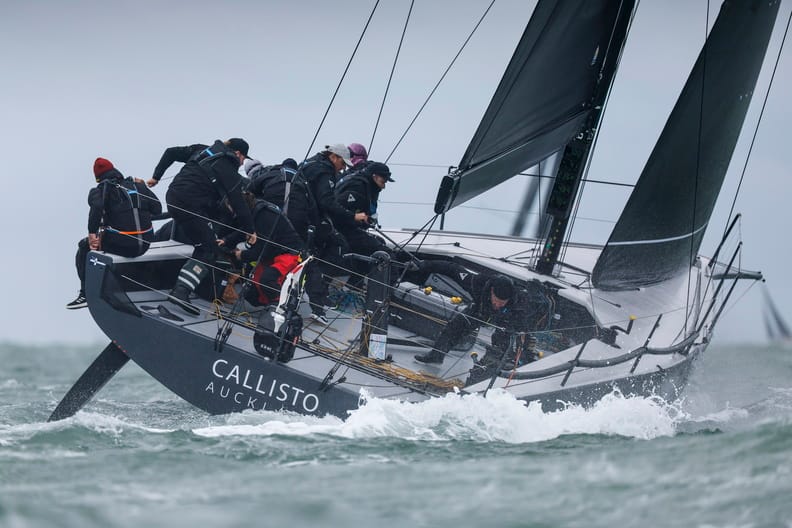
When it comes to Callisto Stead says the crew has done a fantastic job of transforming the boat that he raced last year at Cowes Week in the Fast 40 division into a competitive offshore boat.
“There has been a huge effort on that project,” he said. “Ian Moore has been driving that along and done a very, very good job of pushing things along – with the input of Moose [Doyle Sails CEO Mike Sanderson] and the group of superb sailors they have on there, all working very hard to optimise the boat.”
Stead doesn’t believe that any team is going into this event as clear favourites.
"Some people may think there is a favourite," he says. "But I think we won't really know anything until after the opening Channel Race. That will set the stage a bit, I think. When we see the leaderboard on Sunday it could be that someone picks up two firsts – but more likely teams will be saying to themselves, well collecting seven points between two boats wasn't such a bad thing. We could end up having teams with letters in their scoreline too.
"I think this Admiral's Cup is going to be won by hard graft and avoiding the pitfalls – like picking up an OCS in the first race, or having an incident at the windward mark and not doing a penalty, pushing too hard and breaking sails. It's going to be really challenging."
Consistency and endurance are going to be the keys to success, Stead summarises.
“The way I look at this is that there's 10 races for each boat – 20 races for a team. The Fastnet counts for three and the Channel Race counts for two. So you've got to be consistent over whatever the weather's going to throw at you in the next 10 days – maybe even through until Wednesday of the following week."
As an example, he recalls winning the Fastnet Race two years ago on Caro after putting in 20 gybes along the French coastline, trying to keep out of the current on the way back from Bishop Rock.
“We knew it was an outside chance we could win it,” he says. “Being able to keep going to that energy level that far into the competition might be the difference that means you get the one second on handicap time difference that gives you the point you need to win the Admiral’s Cup.”
“So it's going to be pretty cool to see how it all plays out. There are definitely some boats that we've already seen are very strong in certain conditions. But the Admiral’s Cup is not about just that – it’s a test over a whole range of conditions and situations.
“It’s about when you're in the overfalls off the Lizard, or becalmed somewhere, or trying to win the windward leeward racing in the Solent. It’s about getting all that right.
"I think it’s going to be great, and I’m very excited to see how everyone shapes up. When you ask about who is favourite, well that all depends on what gets thrown at us and how people respond to those conditions.
"And when it's about winning a trophy like the Admiral's Cup, I think that's just about perfect.