
In 1975, a young marketing graduate and keen dinghy sailor had grown frustrated by the near-complete lack of sailing kit available to the sport’s devotees. Ever resourceful, he decided to create a line of technical garments designed by sailors, for sailors. Nick Gill set up in a corner of his father’s lace factory in Long Eaton, Nottingham, and the first seams of Gill Marine were sewn.
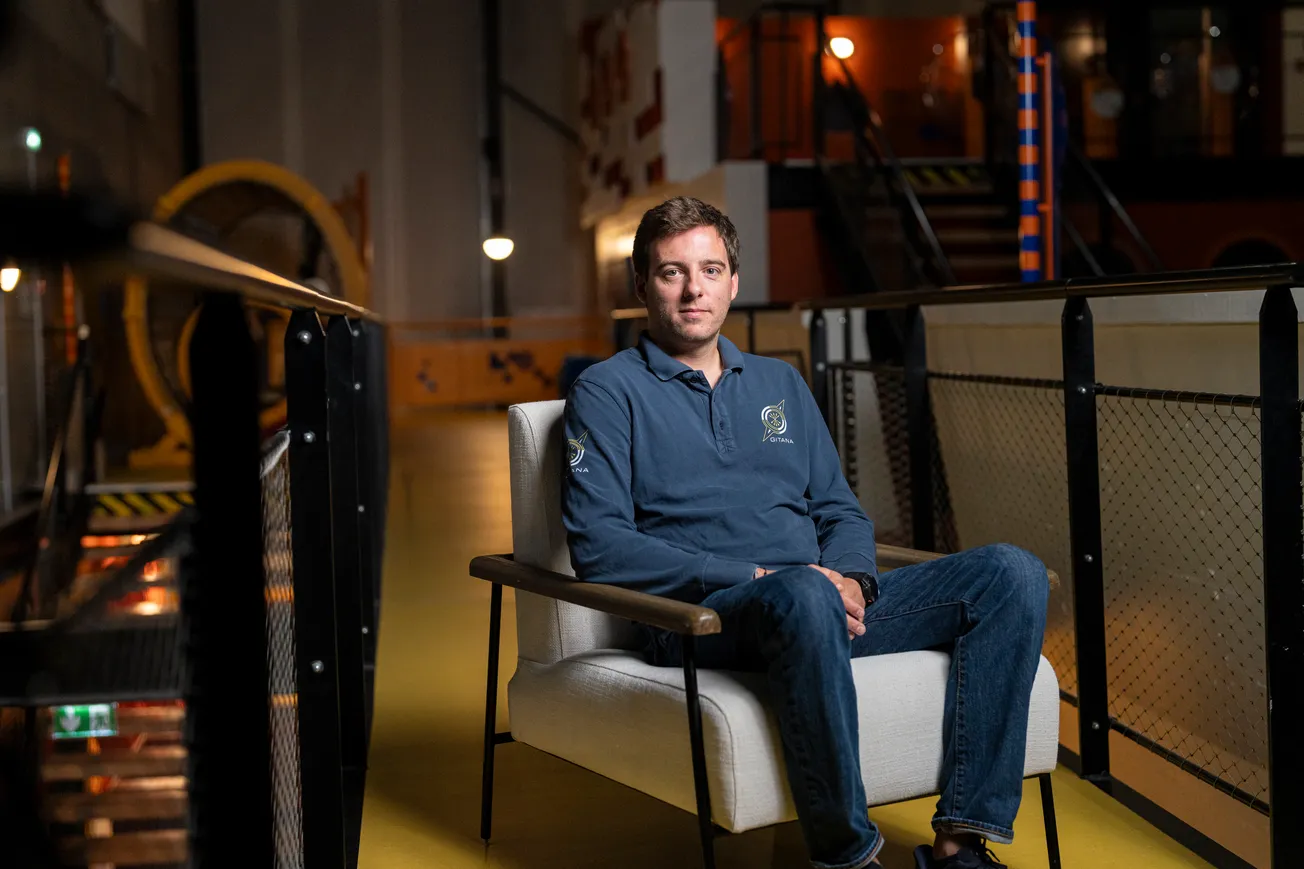
Today, 50 years later, that connection between sailor and studio remains as strong and direct now as it was then. Its latest offering is Gill Marine’s ninth generation, ocean-spec OS1 range, historically its most premium product. ‘It's around 38 years ago, 1987, the first one was launched,’ says Matt Clark, product and sustainability director at Gill Marine.
‘It typically goes on a three to four year launch cycle, depending on fabric innovation, the needs of the business and what our sponsored sailors are getting up to. We always say whenever we launch a product like this, it's the best version of that product at that point in time. There are new things that we learn, fabric innovation comes into play and sustainability is part of the conversation these days. It's a constant evolution of the product.’
One of Gill’s sponsored sailors was Louis Burton, who wore a previous iteration of OS1 aboard his IMOCA Bureau Vallée in the Vendée Globe 2020-21, in which he finished third.
‘Involvement like his is instrumental in terms of improvements and learnings,’ Clark continues. ‘These sailors can put accelerated wear on our garments. A Vendée Globe equates to many years of use by the average sailor. For all the lab testing that we do, having the product out on the open water is key to putting it through its paces and proving it in real life conditions.
‘When the sailors come in and they empty their kit bag onto our testing table here, and we see what they've managed to do to it, it's really interesting. You learn things you'd never pick up in the lab. When you're on a long shift up on deck, those little things start to irritate you, a chin guard that's not quite in the right place and starts to rub, or a pocket that might let in a little bit of water. They're all the little things that we try to engineer out of the garment.
‘But the reality is, it's the everyday sailor that buys the majority of this product, the weekend sailor, husband-and-wife teams or those adventurous couples that are going out, travelling quite long distances sometimes. For them, that's their Everest. Cost comes into the equation, they want the best that they could afford at that point in time, they're looking at practicality, they're looking at day-long comfort.
'You can very easily get tied up with Vendée Globes and Clipper Races, and that's really important, but there's a huge community of people that are doing the Transatlantic rallies, the ARCs, etc, who wear this product day in, day out, and we have to try and meet their needs, as much as those elite sailors. We always react to feedback. We really value that.’
When Clark and his team started planning the new OS1 range, it was that feedback that shaped the design brief. ‘You start with a wish list. That wish list comes from our pros and from forums of people we connect with, everyday racers and everyday sailors. We read every single review that comes in to us via the website. There's a whole host of really useful nuggets of quite critical feedback we get from that. Gather all that information together, and then you start the design process. For a really good designer, that's the little bit of gold dust they need sometimes, just set them the challenge and off they go.
‘One of the areas we wanted to address was fabric selection, the overall comfort factor of the fabric,’ Clark adds. ‘It's a real balancing act at this end of the market. It has to perform and be able to cope with some of the most extreme conditions on the planet, but that's not to say it needs to be as stiff as cardboard, so much so that it stops being comfortable and practical to wear.
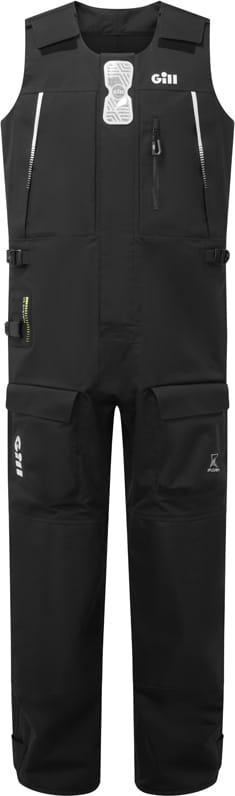
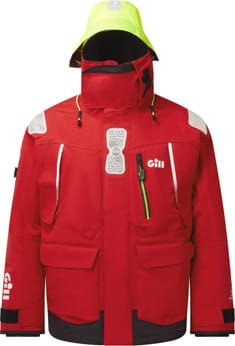
‘We work with some of the best fabric mills. We work with their design and development teams to custom-create fabrics we know are ideally suited for the marine environment. We can re-engineer fabrics to make them more durable, more breathable, more waterproof, softer, lighter, less noisy. We haven't sacrificed any of the durability. Resistance to surface abrasion remains exactly the same as the previous generation, but it's got that extra comfort factor, which is important. It's that first impression you get when you put the jacket on, even in a store environment, you've got to feel comfortable in it. It's got to feel as though it's something you could spend many hours inside, up on the deck.’
The added challenge when designing this generation of OS1 was new legislation banning the use of polyfluoroalkyl substances (PFAS), so-called “forever chemicals” used in, among other applications, durable water repellent (DWR) treatments. ‘The legislation is there for a good reason,’ says Clark. ‘It's eliminating what could potentially be quite damaging, harmful chemicals from the wider ecosystem, so we’re really happy to support that.
‘We talked to three suppliers but the one thing that really appealed to us about Nikwax is they've got a clean, green technology of their own. Nikwax have never used PFAS in their waterproofing treatments and are global leaders in PFAS-free waterproofing for outdoor clothing and gear. We will be their premier marine partner, so the technology and the ability to apply it directly to finished fabrics is a marine-first. Also, as a global brand, we wanted to work with a partner that is globally available.
‘The fabric is pre-equipped with Nikwax Direct.Dry,’ Clark explains. ‘That was the education process for us and for the fabric mill, they had to introduce new manufacturing and finishing techniques to accommodate that, the Nikwax DWR treatment that has to be applied to the fabric. Lots of trial and error, lots of submissions, resubmissions, lots of testing in our lab, lots of testing out on the water. But that was an added component to the product development process this time around.’
While this is a definite “pro” from health and environmental standpoints, at this early stage in its development, it’s not without its “con”, as Clark points out. ‘This PFAS-free chemistry does mean that the finish is less durable. As a result, cleaning and reproofing is an important part of maintenance to restore surface performance and extend the garment’s life.
‘First use, you'll still get that beautiful beading effect where water will just roll off the outside surface. As soon as you notice that water is not beading off as well as it used to and it starts to soak into the outside face of the fabric, it’s time to clean your garments. We recommend cleaning with Nikwax Tech Wash, this removes any dirt, oil or contaminants including salt without removing the DWR and restores breathability.
‘Nikwax Direct.Dry DWR has a high wash durability, staying at a ATCC 22 spray rating of 95-100 (100 being the highest rating) after five washes. After 20 washes it maintains a rating of 80 and will return to full performance after being treated with Nikwax’s reproofer TX.Direct. ‘So, whereas previously, we could expect a DWR finish to last 50 washes, for example, we’re now looking at approximately 20 washes depending on how much abrasion it’s getting.
‘All our garments are machine washable, you can look after them at home, and that also applies to the DWR. Cleaning is as important as reproofing. Typically, DWR’s require heat to reactivate, whereas the Nikwax DWR treatment requires no heat, making it even easier to care for. We recommend one cycle to clean and a second cycle to proof and air dry. Quick, really easy, doesn't require any specialist care. You can do it at home.’
Tried and tested in the high Arctic
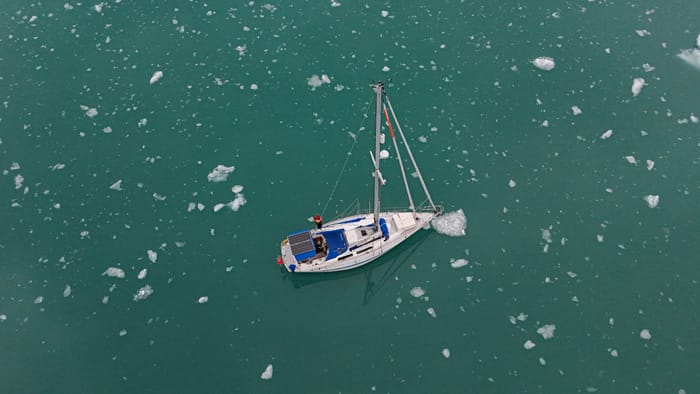
For the Gill OS1, the sailors Gill Marine chose to test their kit are Matt and Amy, YouTubers who film their adventures aboard their 40-year-old Oyster Heritage 37, Florence. Having spent seven years circumnavigating, they set their sights on Svalbard. ‘We did a big refit in the UK in the winter of 2023-24 then did a shakedown cruise around Britain and the Scottish islands in 2024, and then in late June and July 2025, we sailed up to the Arctic, 79 degrees north. It was up there with the highlights of all our time spent sailing around the world.
‘As cruisers, we're used to waiting for the right weather to make exposed ocean passages, because we're living on board and we're cruising slowly. Generally light winds were more a problem than too much wind. We did have 42kts at one point when we were sheltering in Tromsø.
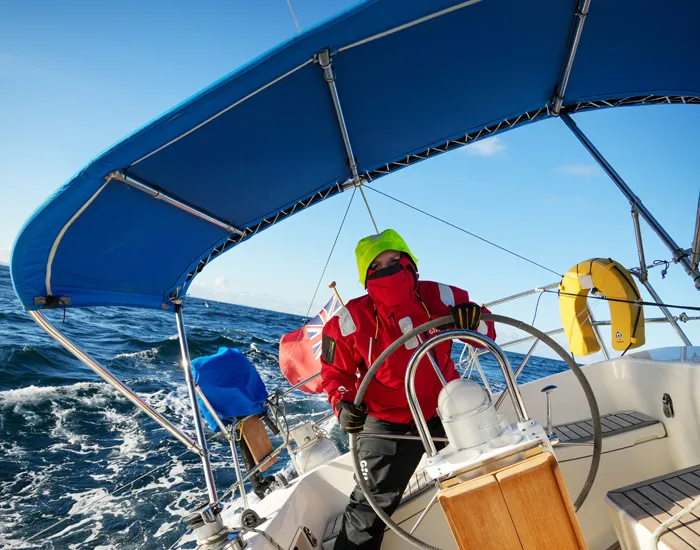
‘The challenge is the wind chill. You've got the wind blowing over the glaciers and the ice that's calved off of the glaciers. As soon as it's windy, it feels bitterly cold. We were wearing the OS1 and it was fantastic. We never had to dry out any of our mid layers or base layers and that really says it's done the job. Whenever it did get wet on the outside, we just shook the kit off and left it to dry in the cockpit. The high neck of the OS1 was brilliant, just keeping us tucked away when we were on deck keeping a lookout for polar bears.
‘What we really like about the OS1 is that it doesn't have a lining, it's just an outer shell. It's very easy to take that outer shell off and leave it in the cockpit to dry, as opposed to some other offshore gear, which has got insulation built into the jackets. When we were sailing the ocean passage between the Norwegian mainland and Svalbard, we had short, confused choppy sea states that were throwing us around quite a lot. When you try to put your feet into the offshore trousers, you're not bunching up the inner lining, because there isn't one. That's quite difficult in some of the kit we've had before. We prefer the single shell construction for that.
‘There wasn’t anything we didn’t like. Amy would like a woman-specific version but high-end sailing gear generally tends to be unisex. Other than that, we loved it, and it's got the new no-forever-chemicals waterproofing, which worked absolutely fine. There were a few things, angles of Velcro around the cuffs, because we had the development kit, we were pre-testing it, but Gill took those on board.
Otherwise no complaints, OS1 did exactly what it said on the tin. And as soon as we put it on, we were protected, warm and dry.’
The team at Gill know sailing. They’ve been cold, wet and miserable and they know how debilitating and demoralising that can be. That’s why they are, by industry standards, absolutely fanatical about testing.
‘We love to push our products to the limit,’ enthuses Clark. ‘We like to break things, and then we work out how it's broken, why it's broken, and what we can do to prevent it from happening. We've got a lab in our R&D centre here in Nottingham, nothing gets out into the market without being put through its paces in there. We lead the marine industry when it comes to in-house lab testing and manufacturing standards.
'Fabric suppliers are really good at sending in fabric submissions with a performance data sheet. The first thing we do is put that to one side and find out for ourselves. We can scrub with sandpaper, soak fabrics in sea water, check for colour migration, durability, pilling, waterproofing. We work with (global test house) Intertek because they can test for breathability, we can't.’
And this rigour is not just applied at the R&D stage. If you pick up a Gill jacket from the OS range and several others, it’s been tested, as Clark explains.
'Typically, across our industry and the outdoor industry, you test 10 per cent of anything that was on the production line. That's 90 per cent of the garments that are not being tested. We don't want to take that chance. Nothing leaves the factory without being guaranteed as absolutely watertight.’
On the jacket, 50 separate points are tested over 153 minutes then it’s dried for 120 minutes before packing. Forty points are tested on the trousers over 123 minutes then dried for 120 minutes. There are 18 testing machines in the Vietnamese facility and during peak production two shifts allow for 24-hour operation.
‘If we find a fault, it goes back onto the production line,’ Clark adds. ‘We can identify the machinist where that error might have come into play, or the person who's on the hot-tape machine that's sealing all of those taped seams. Is the setting not quite right? The temperature, the speed? Have they just made a human error? We can eliminate all of those things and get it exactly as it should be.
‘For all the testing we do, we're still blown away sometimes by what comes back from that on-the-water testing, because it's incredible sometimes what sailors can do to their kit. But that's just reality, it's real life conditions and we have to build our garments to be able to cope with sometimes being put away wet.’