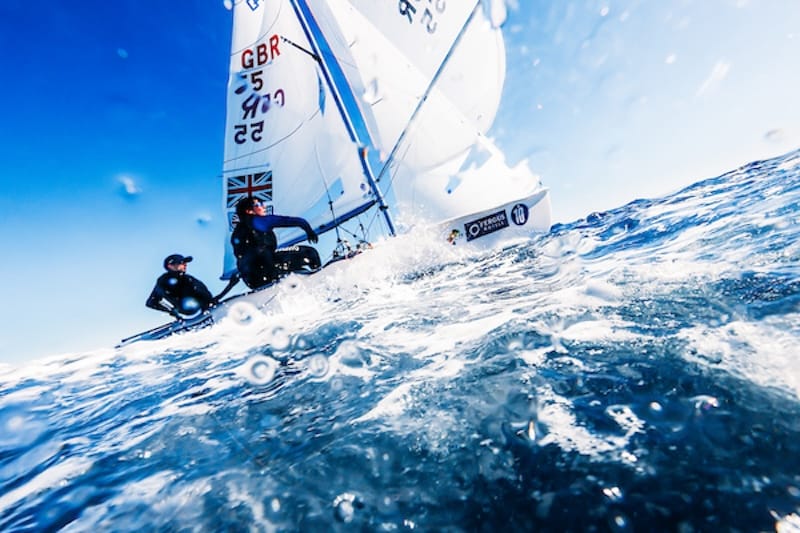
In whatever sport you care to consider, all winning streaks eventually come to an end. In the case of the Royal Yachting Association (RYA) and its dominance of Olympic sailing, the streak had gone on so long, it had become a given.
Britain, it seemed, really did rule the waves. It finished either top nation, or the team with the most medals in six consecutive Olympics, starting when National Lottery funding first came in at Sydney in 2000 and continuing all the way to Tokyo 20 years later.
During that time British sailors collected 29 medals all together and, with the exception of Rio in 2016 (when the team won two golds and a silver), walked away with five medals at every Games apart from Qingdao in 2008 when they pocketed six.
It was a remarkable run that made the careers of some of Britain's greatest modern racing yachtsmen and women, among them Ben Ainslie, Iain Percy, Paul Goodison, Giles Scott, Shirley Robertson and Hannah Mills. And in the run-up to the Paris Games last year the signs were that the streak was going to continue. At the test event for the Marseilles Olympic regatta one year out from the Games, the British team came away with five medals.
But then came something that the RYA could not cope with – an Olympic regatta dominated by a massive high pressure system that saw races cancelled or sailed in vanishingly light winds and an event when the form book in the build-up went out the window.
The British team came away with only two medals – a bronze for Emma Wilson in the iQFOiL to follow her bronze in Tokyo, and gold for Eleanor Aldridge in the women’s kite. It was that victory for Aldridge on the final day that lifted the British team from a lowly 14th in the sailing medal table to finish 6th.
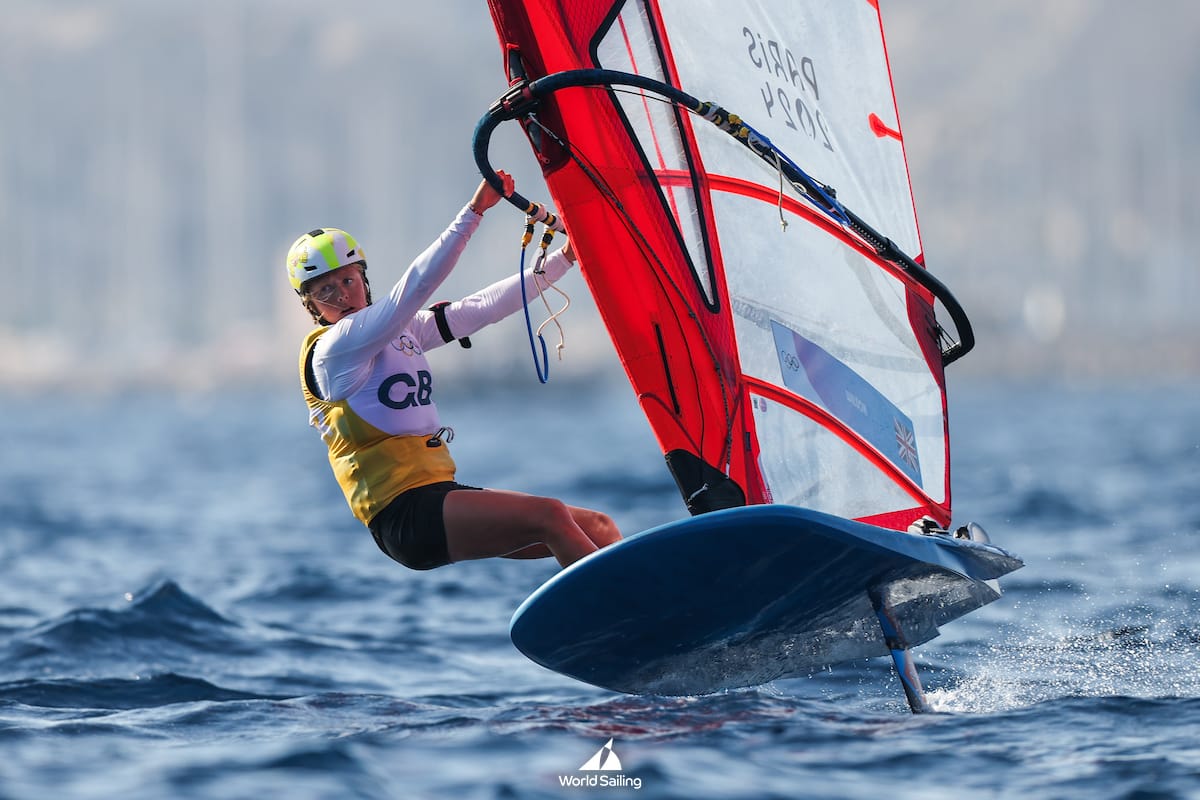
Instead of being another team celebration, Marseilles turned into a painful experience with real heartbreak for some, not least Wilson (above) herself who was devastated to miss out on gold in the medal shootout after winning eight of her first 14 heats. Mickey Beckett in the ILCA 7 saw a bronze medal elude him when his medal race was abandoned, only to finish sixth overall after a re-run littered with penalties. And then there was a cruel end for John Gimson and his future wife Anna Burnet in the mixed multihull Nacra 17 class. They went into their medal race in third, and were looking to do better than that having won silver in Tokyo, but finished fourth overall after being adjudged OCS.
The Brits were not the only ones to suffer. The French team had also performed exceptionally well at the test event – when there was wind – matching the Brits with five podiums, but they came away from Marseilles with just two medals, a silver and a bronze, putting them in eighth place in the table.
Right now the long build-up of European and World Championships and annual Olympic class regattas is beginning again, as the focus sharpens on the next Games at Los Angeles in 2028. For the RYA the game has changed; no longer is it about trying to stay at the top – now the challenge is to get back up there and the man who is shouldering that responsibility is the organisation's performance director, Mark Robinson.
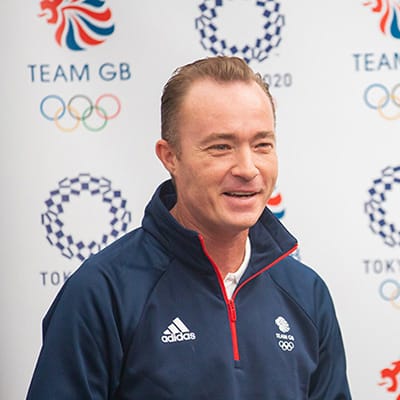
He’s in a fascinating position. He has carried the can for what happened in Marseilles but his reputation has not suffered the hit you might have expected, as the man at the helm when the RYA fell off all those podiums. That’s because Robinson was also in charge at Tokyo when the British team performed to expectations, with three golds, a silver, and a bronze. So Robinson, a straight-talking Aussie, with a long track record in sailing team management, has proved he can get the job done in a way that suggests he might well be the guy to return the team to the top of the pack in three years time.
Talking to him, you are stuck by his unflinching honesty about what happened in the south of France. Of course he mentions the weather – “the conditions were just completely different to what we had ever got before” – and he talks about the inevitable what-iffs. For example, he says, had Emma Wilson not gybed when she did at the first mark she would have taken gold. And he is happy to point out that even if the team did not perform to expectations, it was closer to its potential than the final results might suggest.
“You can nail it down to a few incidents that make the difference between five medals, including a couple of golds, versus what we ended up with, so I think in general we just need to be reminded of that – that we weren’t that far off,” he told me. “But of course you can pick lots of things – things that happened even nine months out from the Games that would have made a difference.”
But his real focus is learning the lessons of Marseilles and you get the impression that Robinson and his coaching team have not wasted a crisis. In fact, they have just finished a thorough review process which suggests that the RYA is not just blaming the weather and leaving it at that. Far from it. The review has looked at coach development, at how to foster more “adaptable” sailors and how to build a stronger sense of team amongst the 14 athletes selected for the Games.
It involved head coach interviews with coaches and athletes, reviews with data analysts, day-long sessions with the Games team plus their training partners, anonymous interviews and even discussions with performance directors from other sports under the umbrella of UK Sport to share ideas on how to respond to Marseilles. As Robinson succinctly said of the process, the results of which he presented this week to the RYA sailing squad attending the Princess Sofia Trophy regatta in Palma: “It was quite comprehensive.”
In his interview for this feature, he was not going to talk about the details because those are the keys to winning in California in 2028, but he mentioned a few of the main points. On the subject of the team spirit of the athletes sent to the Games, he is convinced the RYA can do more to foster stronger bonds and a sense of joint purpose among them that – presumably – may make the team more resilient in the face of setbacks. “There is power in getting them to know each other better,” he said.
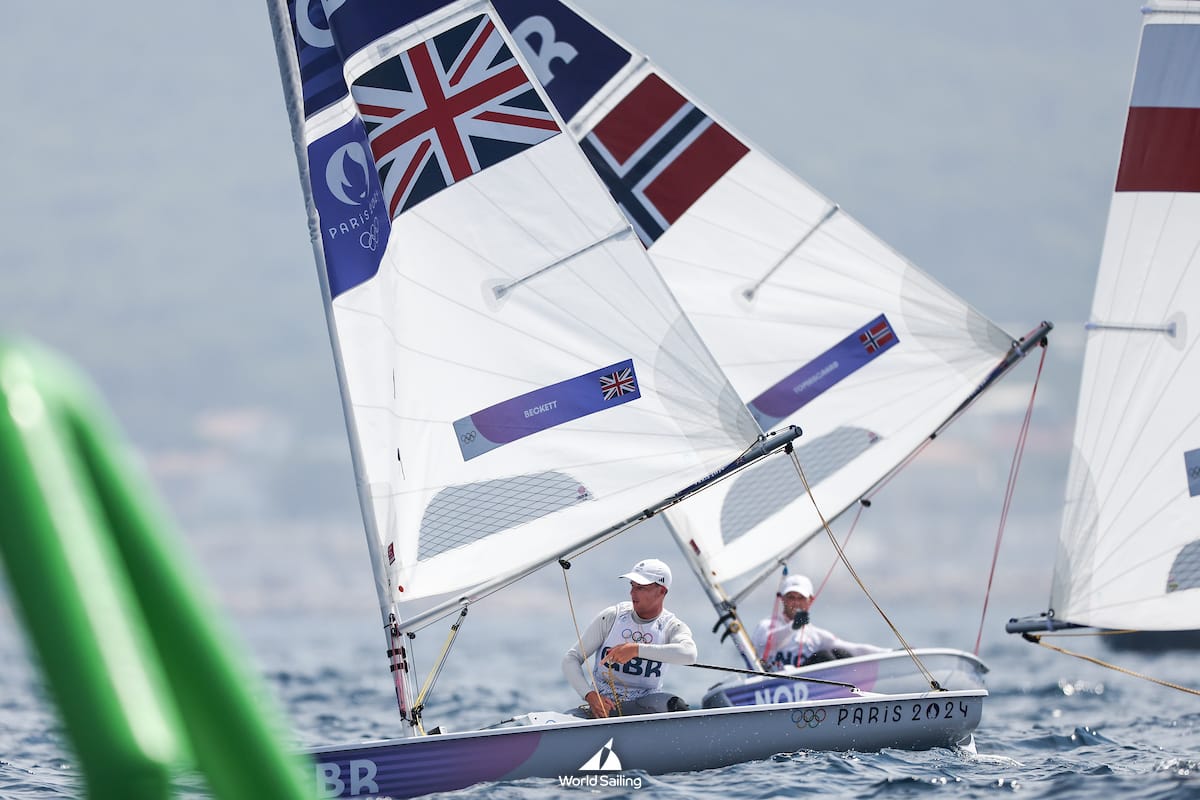
When it comes to the vagaries of the weather, Robinson is clear that his sailors need to be able to deal with anything, and should practise racing in barely viable conditions. “I think we learnt a bit about making sure we can sail in everything,” he said. “Unfortunately during the whole three months prior to the Games there was never a week that was that light. But it does remind us that if we say we are going to launch at 12.00pm and it’s only five knots of wind, we should still launch and not say let’s wait until 1.00pm when the wind comes in. Whatever the window, windspeed-wise, that races can start in at the Games, we should train in those conditions…”
And finally I asked him about pressure – the pressure he must feel to climb back to the top and do justice to the collective experience and comprehensive level of funding the RYA Olympic programme can call on as it begins the new cycle. Robinson is happy to admit that he does feel that level of expectation and pressure.
“Yes, to a certain degree,” he said, “most people feel like we have to go and show who we are again.”