

Skip to content

Dalton and Ainslie speak on new Protocol for AC38

Following on from today’s announcement of a new agreed Protocol for the 38th America’s Cup, Emirates Team New Zealand CEO Grant Dalton and Athena Racing CEO Ben Ainslie faced questions from the international media about the new deal. Here are the highlights of what they had to say…

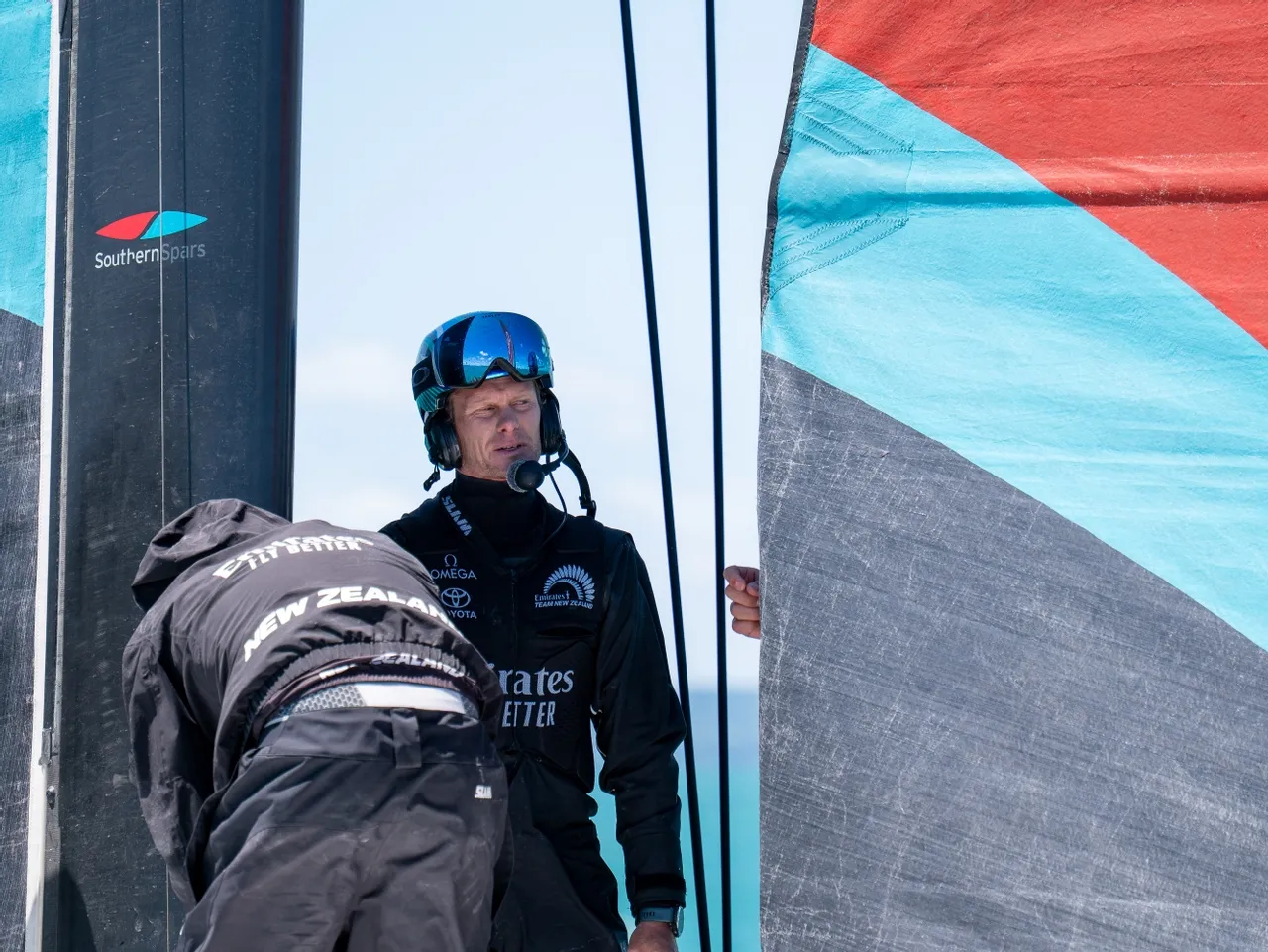
Image © Ian Roman / America's Cup

Grant Dalton opened the call with some thoughts about the new Protocol and the introduction of the America’s Cup Partnership (ACP) – a framework agreement between the teams created to take over the running of AC38 and subsequent editions.

“In terms of the Protocol the moves are significant, but the bigger move is the structure of the America’s Cup going forward,” he said. “The America’s Cup has always had this Achilles heel in that it is boom and bust every two, three, or four years. So it’s very difficult for the teams to plan long-term strategy around employment, sponsors, media, TV, and venues. 

“This move takes that uncertainty away and puts the control into the hands of the teams. Just as an example, the Defender doesn’t necessarily have the venue next time and that venue can be planned. The Cup of 2029 can be started to be planned now. That’s more like other sports and we and Athena just believed this was the right time to make this move.”

Ben Ainslie echoed those thoughts.

“I think all of us who have been following the Cup feel this has been a long time coming, in terms of the continuity that’s required for both teams and the event to be able to plan for the long-term and to give the event the commercial viability the event needs." he said. "But it’s not just that – I think some of the announcements we put in the Protocol are really pushing on from AC37 that again, together as Challenger and Defender, we put in place. So, yes it has taken a while to get there, but it is a really exciting day for the Cup and the sport of sailing.”

The call was then opened up to questions from the journalists.

What were the reasons for the delay in reaching an agreement on the new Protocol?

Dalton: “So it’s been complex. This responsibility that we have between us is over a history of 176 years. There have been sticking points and what’s changed specifically over the last four weeks is that Athena and the clubs – and I can’t emphasise enough that the clubs have been very important in this, because sports teams will just argue – and ourselves have been able to become much more pragmatic. We have taken input from the other teams, but actually made decisions, and that’s what has brought it together in the last few weeks.”
How many teams can we expect for AC38?

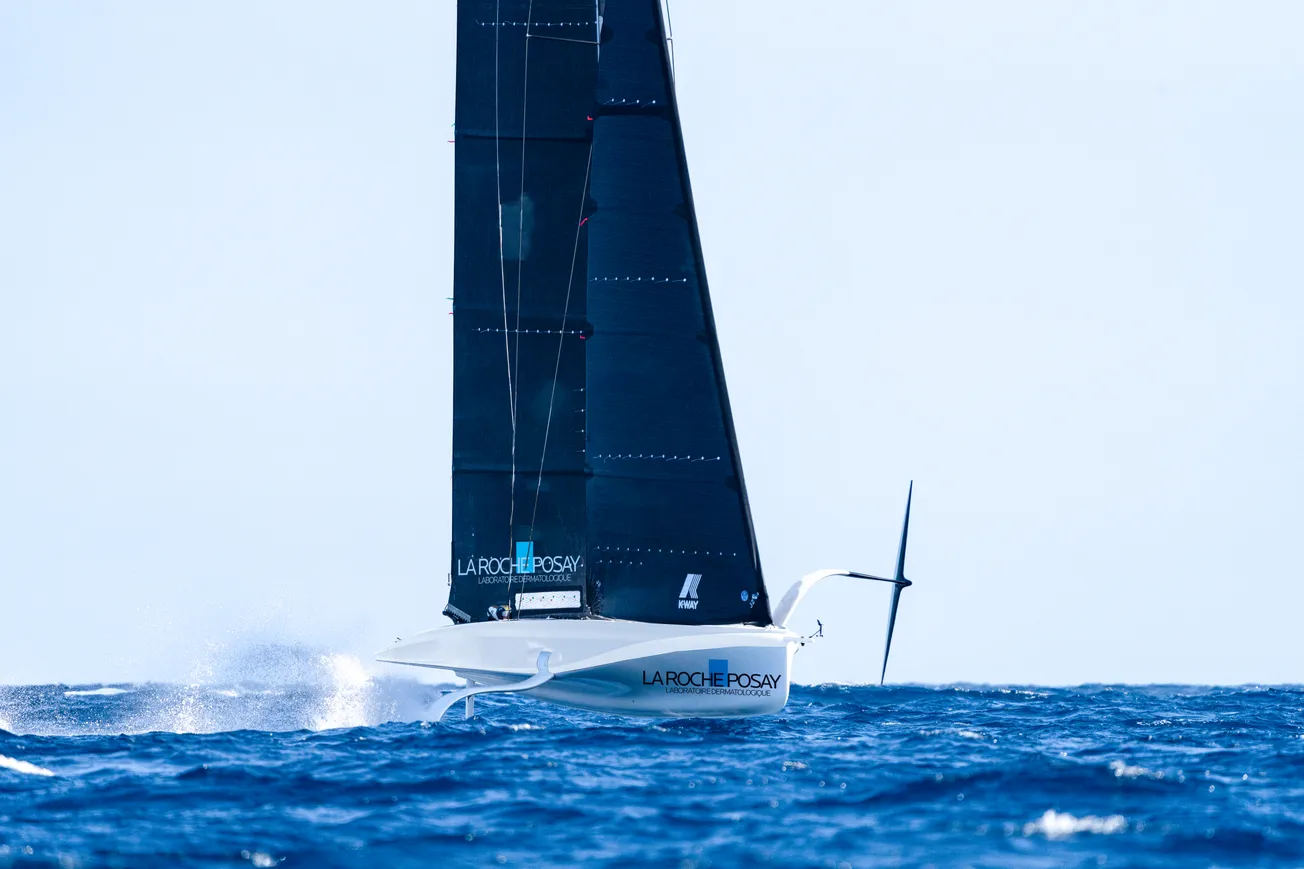
Ainslie: I think we are looking at five or maybe six teams for this next cycle. Of course, the idea is that now we have got more certainty into the future, we are going to attract more teams and that along with the cost caps and other initiatives will make this a more commercially viable product.

Dalton: The members of the partnership are the five Challengers and the Defender from the last Cup. Whether there are any further Challengers, if there is then they are going to come out of Italy, I think it would be fair to say. So there could be an extra one but I'm not sure yet. 

How different is this to the framework of 10 years ago that Oracle Team USA proposed and which Team New Zealand rejected?

Dalton: Actually, I have no idea because I didn’t read it because I was completely against it at the time. I’m not now and I think a lot of things have changed in that time. I think the climate has changed quite dramatically.

Had it gone ahead then you would not have had the AC75, which has changed the world. You would still be sailing the F50s – which have had a great role in their second life, but a quite different role than to what the America’s Cup is. One of the things I do remember of that era was that the boats were going to be quite one design. That was one of the things that we disagreed with in that framework – stopping technology, because the America’s Cup is a technology race. 

This partnership is not about creating a one design environment. This is to cap expenditure, but not to stop technology. That's a hallmark of the Cup, and so it should be – as it is in Formula One. 

Ben, how much do you believe SailGP has forced the hand of the America’s Cup to do what it is doing now?

Ainslie: SailGP has done a fantastic job and it's no secret that we have a hand in SailGP as well. I've been very much an advocate for the fact that America's Cup and SailGP can stand side by side at the pinnacle of the sport, and actually complement one another. 

SailGP, as Grant says, is one design, and trying to grow out to 20 events a season. America's Cup is not going to try and compete with that. The America's Cup is a very special event – it’s the World Cup, the Ryder Cup – and as a biannual event it is trying to position itself, not in the face of SailGP. 

I think it is exciting for the sport that we've got these two events that are really making a lot of headway now, in terms of the foiling boats, the interest coming in, particularly from the younger audiences. So it's a very different environment from when we were looking at it 10 years ago now.  The sport’s in a much better place and I also think that the investment in global sports in general is actually opening up possibilities to do something like this.

How often will we see the America’s Cup take place?

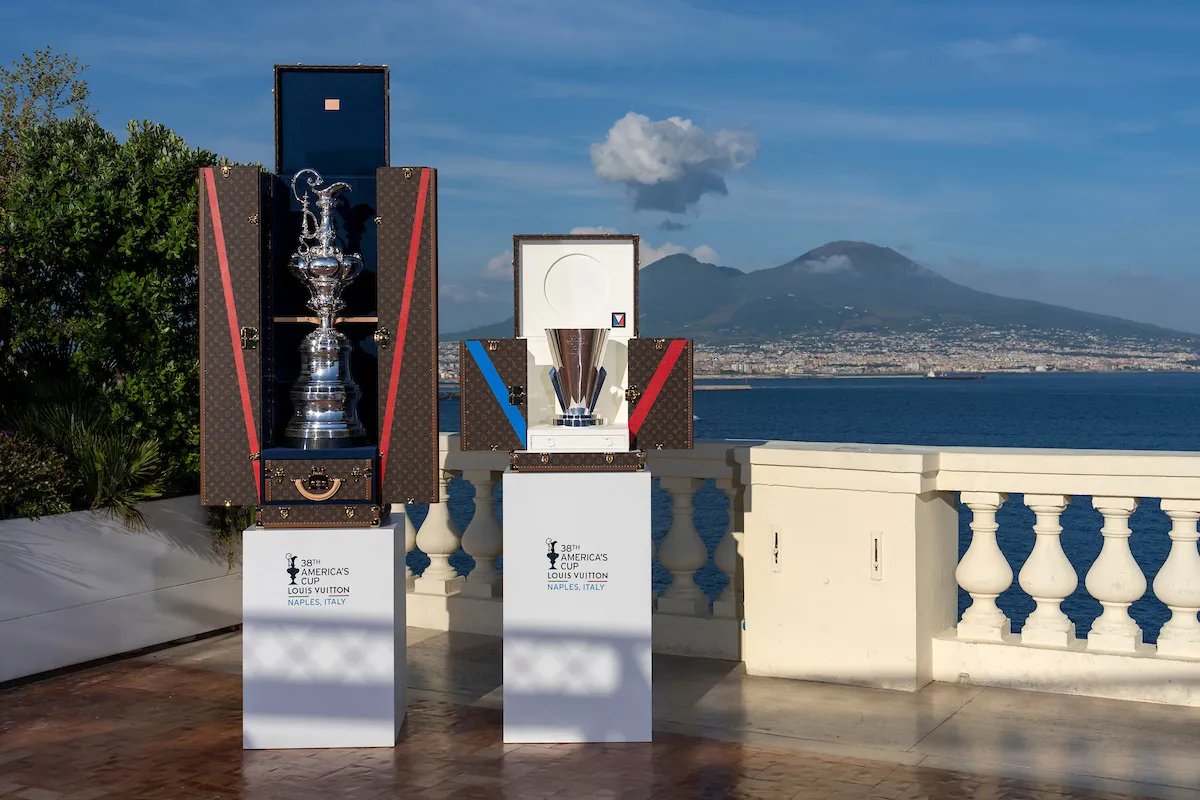
Dalton: Every two years. It is already committed for 2029 and, under the basis of the partnership, planning on that could start tomorrow. The whole purpose of this is that the partnership could start talking to the likes of Louis Vuitton, Omega, TV for longer term deals. That’s the key bit that’s been missing that drives value into the teams.

How does the budget cap work?

Dalton: It's difficult for this one to try to limit a budget to the point of penalty on a team that's already well in process. And I use our own team as an example of one of them. Luna Rossa is the other one. 

So there are exceptions within this campaign to make sure that we are reasonable. And it also gives time for a study – because there's best practice in this. You talk to three people and they'll tell you it can't be done, and there's 1000 ways around it. But some sports are doing it and so there's definitely best practice and sports we can learn from. So that, by 39, everyone's got warning and it's more realistic to clamp it down a bit harder.

Will Peter Burling be able to sail for Luna Rossa?

Dalton: Yes.

Do we have to wait for an amendment to the Deed of Gift or will it remain stable?

Ainslie: We have a framework now, by mutual consent, where we can make this happen for AC38 and into the future. But that said, we are looking at potentially amending the Deed of Gift to support this structure. As you've seen in the press release, we've had really good conversations with the New York Yacht Club, who were obviously the original settlers of the trust, and they're supportive of this process as well. So I think we've got a huge amount of support within the America's Cup community and the sailing community to make this happen for the long term.

Dalton: Right now, we have a structure that will support the partnership, but we also want to look at amendment of the deed at the same time. But right now it's done. We can move forward with agreement of teams, continual agreement of teams. But we also want to look at the alteration as just belt and braces as well.

Will there be new boats designed and built for AC39?

Dalton: That's a decision that the partnership will take in due course to allow teams to plan for the future. There's been no discussion of that because it's not our place to decide that.

A two-year cycle is a very fast turnaround. Is there a risk that this actually might stifle development a little bit? And is there a risk of making it potentially even more expensive and onerous for new teams to get into, when they may need to be looking at two Cup cycles at least in order to get on the bandwagon?

Dalton: Formula One has known for some time that the rules are changing for 2026, and they've been working on that, yet they're still developing their 2024 and 2025 cars. So there needs to be enough warning given. You wouldn't want to wake up in a year's time and tell everybody they’ve got to have a new boat in a year and a half.

Ainslie: I think what you're going to see, again like in Formula One, is that there are design packages that are available to certain teams, particularly to new teams coming in, to get them up to speed. And it may not be the whole design package. 

Looking at AC38, depending on whether you have a boat or not, you may or may not need the whole design package. You may just need a foil package, or a sail package, or whatever it is. 

So I think we're going to see that kind of structure whereby there are new teams coming in who need to get up to speed and there are commercially viable packages available, But we can't have a situation whereby it’s just a free for all there is no budget cap and you're into a biannual cycle where you're trying to chase onto the cycle ahead So that's why we think this works.

Under the new framework agreement is the option of a team winning the America’s Cup and taking the event home, now gone?

Dalton: No. That’s pretty important because that's fundamental, not fundamental to the deed, but it's fundamental to the principles of America's Cup. Auckland's a really good example, because the only reason it's not in Auckland is that it's not financially viable. So if it was financially viable and we lost, it could still be in Auckland. Now Auckland very much can stay in the frame if it can make itself financially viable. But it's not a right.

In the Deed of Gift no defeated challenging yacht can compete for a period of two years unless there's an America's Cup in between. Ben, are we going to see an amendment to the Deed of Gift on that specific issue? And secondly, will we see Britannia back by way of that exemption for the 38th America's Cup?

Ainslie: I'm going to say no and no. Because we're not going to change the Deed of Gift in this respect. And no, because Athena Racing's boat is not going to be called Britannia.

But it would be the same hull?

Ainslie: Correct.

Was it an easy decision to introduce a woman on the AC75?

Dalton: The interesting thing is that both Ben and myself both shared the view that the woman should not be mandated, that she should actually earn it by success, skill – call it what you will. People within our own team and particularly the other teams believed it was the right thing to do. 

Ainslie: Nationality and the female athlete representation were two of the hotter discussion points amongst the teams. There was a clear mandate from the group that this was where they wanted to go. So yes, really positive.

Ben, on the cost cap, how much in basic terms will that open this up to more teams – and in the short term perhaps help you for the next race?

Ainslie: It does to a certain extent. We have now developed over four campaigns, so we have great IP, we've got a great core team that we've been able to hold together over these last 10 months who've been beating away on the technical side of things. We have some backers that we've been talking to, in terms of investors, sponsors, that are really excited about what we're discussing here today. 

So it's more important really what the cost cap means for the event long term and bringing in more teams. And we want to have really good quality teams. That's important for the partnership. And those teams have got to see the big picture and want to invest. As you see in Formula One, you've got to have really good quality in your participation to make the event credible. And that's what we're looking for.

Comments

Latest

Maxi Edmond de Rothschild launched in Lorient

Maxi Edmond de Rothschild launched in Lorient

After more than two years in build, Gitana 18, the 32-metre Maxi Edmond de Rothschild has been launched, marking the culmination of an ambitious construction programme and the start of a new chapter for the Gitana Team.

Free Members Public