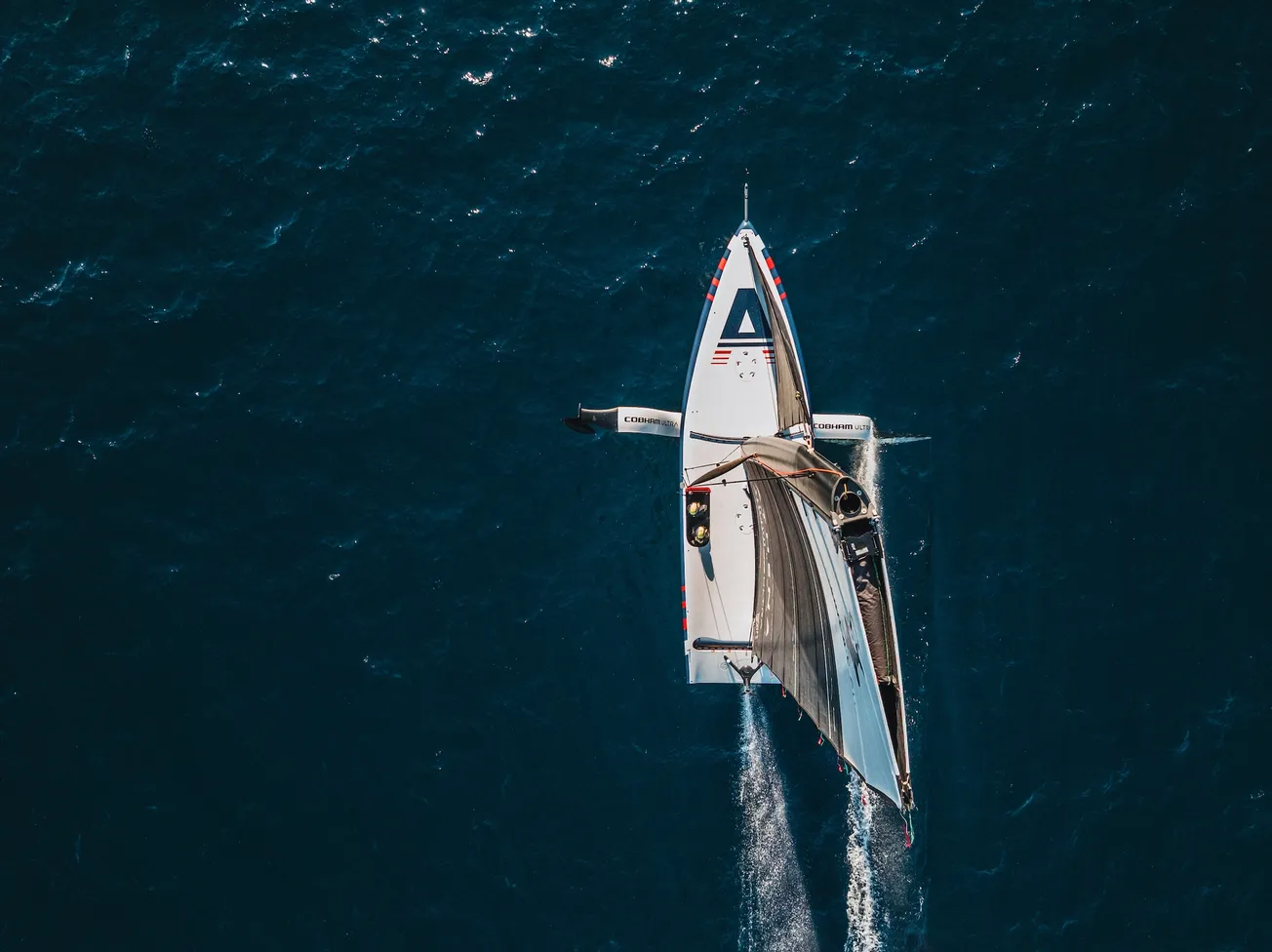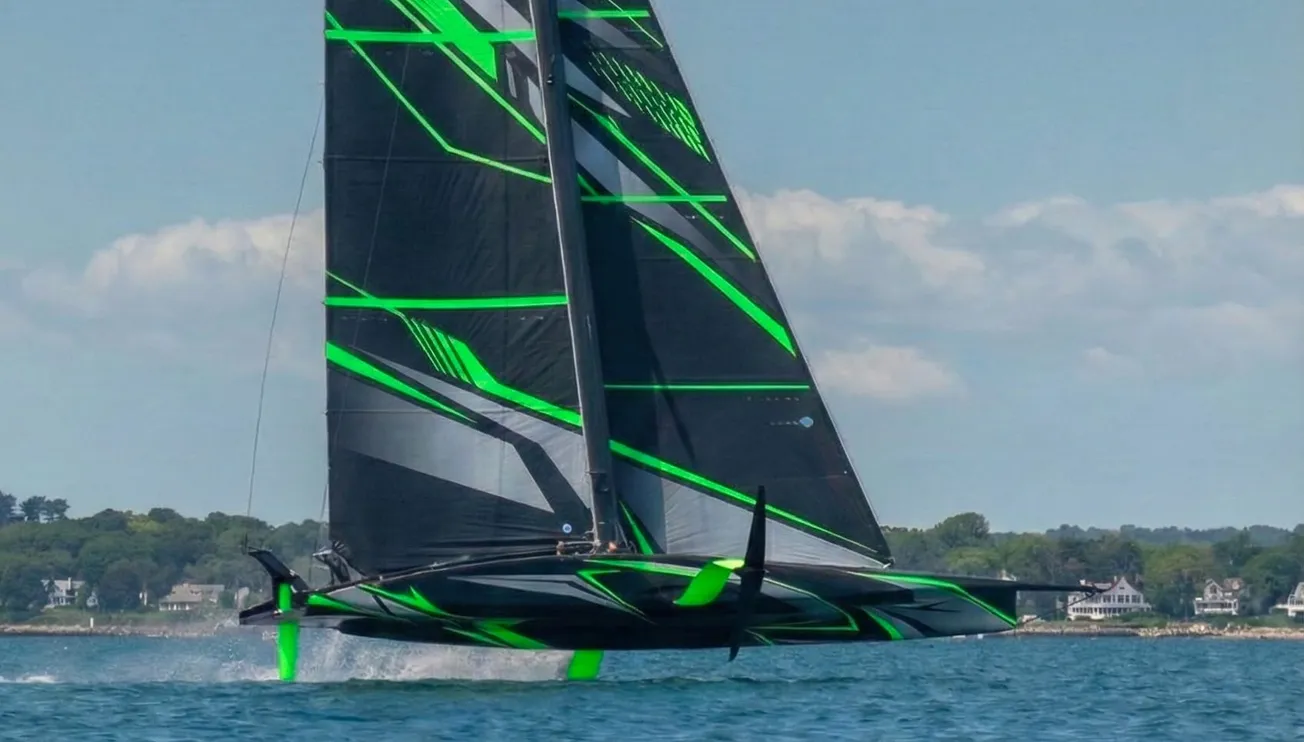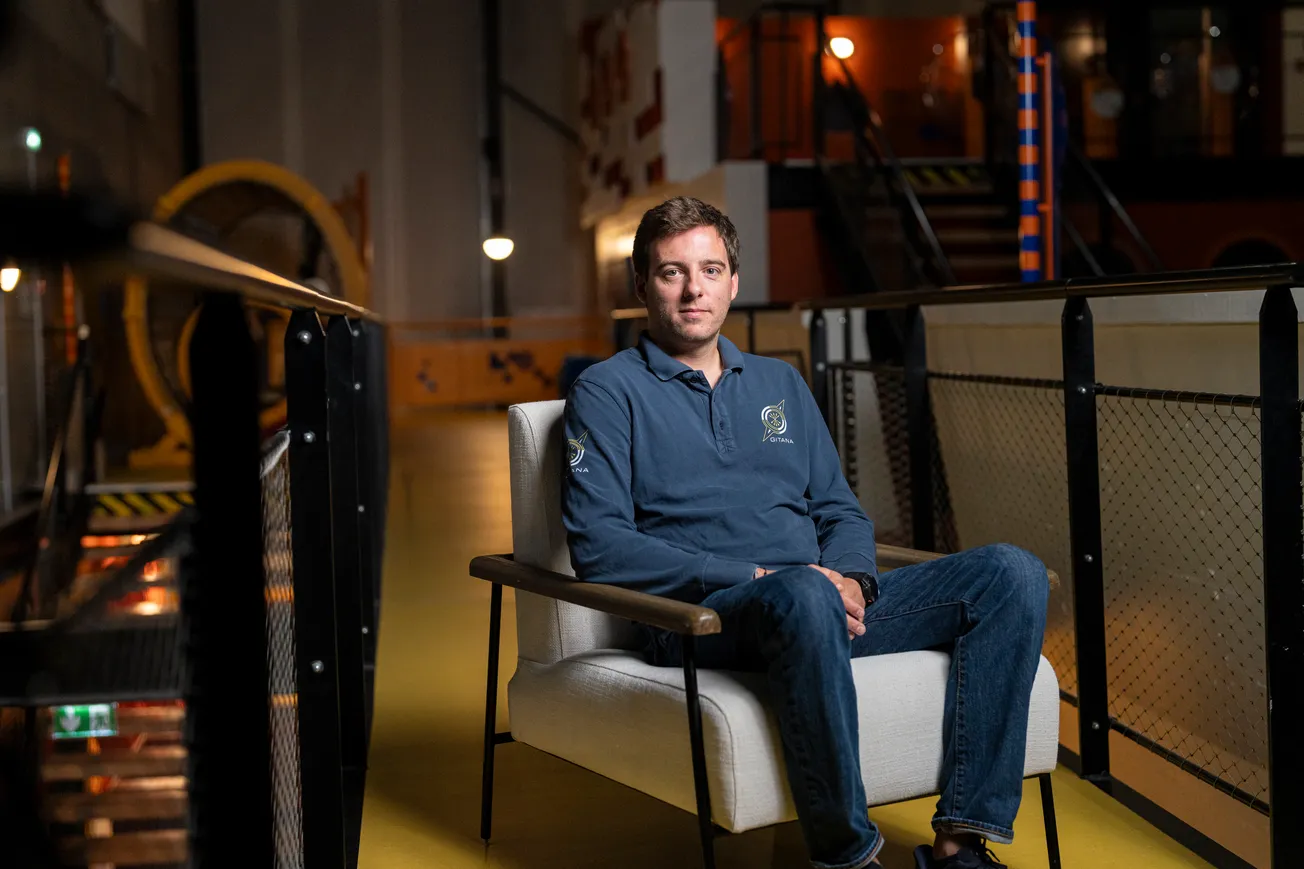
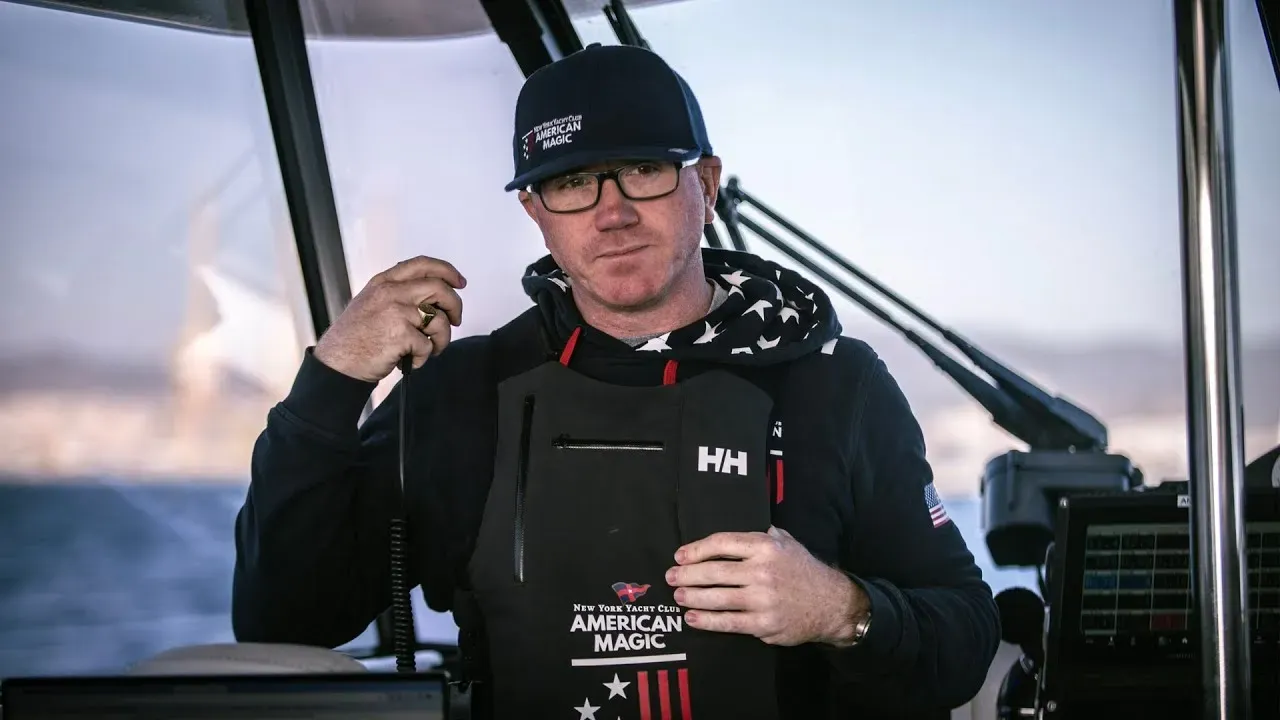
Few understand this better than Anderson Reggio, former Head of Testing for the US syndicate NYYC American Magic in the 37th America’s Cup. Reggio played a crucial role in analyzing and optimizing the team’s performance. His job was to oversee the collection, interpretation, and application of vast amounts of data generated by the yacht’s hundreds of sensors.
Working closely with the analytics team, he helped streamline testing protocols, improve real-time feedback systems, and ensured that every training session and race provided actionable insights. From evaluating the effectiveness of onboard controls to refining the team’s simulation models, Reggio helped shape the American team’s strategic design decision making.
Reggio says the growth of the team from him and one other in the previous Cup to six people for AC38 was a testament to the team’s recognition of the increasing importance of data gathering and interpretation in the America’s Cup.
“That’s how important data has become, not just in accuracy of information, but also deploying appropriate resources to sift through it all. The amount of data that you have on an AC75 is enormous and no one person can turn it over in just one night and produce accurate information and reasonable reporting that allows you to conclude and determine what you want to do differently just from one day to the next. It requires a team. And so we expanded that team and worked really, really hard on making sure that our accuracy improved as well."
Yacht racing has always been a mix of human intuition and technical innovation, but recent America’s Cup campaigns have pushed the boundaries of data-driven decision-making. “We had about 300 sensors on the boats, producing around 4,000 different variables worth of data,” Reggio explains. Some of those data points are captured at rates of up to 100 times per second, tracking everything from wind conditions to foil performance and crew inputs.
Gone are the days when a crew relied solely on instinct and experience. Now, machine learning and AI help teams process vast amounts of data in real time. “The goal is to shorten the time gap between collecting the data and making it actionable,” Reggio says. “During this past campaign, by the time our sailors completed an upwind leg, we had charts and performance metrics being sent from shore back to the boat within minutes.”
One of the most significant advancements in yacht racing analytics is the use of digital twins—virtual models of race yachts that allow teams to test thousands of variables without ever hitting the water. Originally deployed by the now three-time America’s Cup winners Emirates Team New Zealand, digital twin technology is now believed to be a staple across all the teams.
“It's been elevated to the level of essential,” Reggio says. “But the quality of the data is key. If your model isn’t accurate, your simulations won’t produce meaningful insights. The teams that get this right have a major advantage.”
In the 37th America’s Cup cycle, teams leveraged AI to not only validate their own boat designs but also to reverse-engineer competitor yachts based on limited visual and performance data. “Everyone does some level of modeling on the competition,” Reggio acknowledges. “You can get accurate hull shapes, and you can make educated guesses about foils and aerodynamics. It’s not perfect, but it helps position your own design philosophy.”
Beyond data collection, AI is changing how sailors interact with their boats. In past campaigns, each button or lever controlled a single function—raising a foil, trimming a sail, or adjusting rudder trim. A change to the rules for AC38 meant teams were allowed to develop integrated systems that allow sailors to press one button to trigger multiple simultaneous adjustments.
“The holy grail was to get controls to the point where a sailor could, for example, increase camber and decrease twist on a sail with a single input,” Reggio explains. “That kind of seamless automation saves crucial seconds during a close race.”
Despite all these technological advancements, the human element remains vital. New Zealand's dominant performance in the 37th America’s Cup was, in part, due to the way their sailors were able to stay focused on tactics while trusting the boat to perform smoothly. “They spent more time looking outside the boat, making racecourse decisions, while other teams had to keep their heads in the boat, managing stability,” Reggio observes.
This highlights another crucial area of analytics: sailor training and decision modeling. By using AI-driven simulators, teams can teach sailors how to maximize boat performance, just as fighter pilots or Formula 1 drivers train in virtual environments. In some cases, these digital models perform so well that they outpace human sailors, providing benchmarks for improvement.
As America’s Cup teams prepare for the next cycle, it seems certain that data analytics and AI will only become more influential. Computing power continues to increase, and AI models are becoming more sophisticated, enabling teams to process and react to performance metrics faster than ever before.
“It’s not just about the data you collect; it’s about how fast you can make sense of it,” Reggio says. “Every campaign is a lesson in how to improve the efficiency of learning.”