How long have you been involved with the International Dragon?
My first year in the Dragon was in 2004 and the 75th Anniversary Regatta in St Tropez was the first real event that I did. So it’s been a good while.
How did you first get involved in the class?
I sailed the Soling three-man keelboat in the Olympics [1996 in Savannah, 2000 in Sydney] and then I got quite into the Etchells Class – another three-man boat. So the Dragon appealed to me because it was a similar concept to those classes. I got asked to help someone race their Dragon and so I started learning about the boat – and I have been learning ever since.
The Dragon Class is 96-years-old this year and still going strong. What do you think is the appeal of the class?
The Dragon Class benefits massively from the fact that a lot of past Olympians, world champions, and America’s Cup sailors have been attracted to the class. I am not entirely sure why that is, but I think Poul Richard Høj Jensen had a lot to do with it. He got involved with Petticrows after the Dragon got dropped from the Olympics, and he did a good job of developing the class and getting a new crowd of people involved.
I was amazed this year how many young people were racing in the fleet. A lot of them are ex-Olympic sailors who are getting into professional sailing and have teamed up with a Dragon owner. That means the class’ age group is coming down rather than going up – and that’s great to see for sure.
I also think that the Dragon’s Grand Prix-style regattas have proved to be very appealing. Plus the fact that we have one big event each month where you can be pretty sure there are going to be 30 to 50 boats at each one. You know the events will be well run, the racing will be competitive, and it will be socially quite fun. It’s a good concept: to go to nice places to sail a great boat against nice people with great competition.
There are no rules restricting professionals in the class?
No rules. If you want to race as a corinthian then all three of you have to be amateurs. If you have just one pro then you are in the open division. It’s something that’s been debated in the class: whether the pros should be restricted and if it should be owner/driver. Personally, I think one of the draws of the class is that you get to race against the Olympic medallists and America’s Cup sailors.
There are not many sports where you can compete against the professionals and I think it is one of things that appeals about the class. Some people shy away from that and don't want to go racing and get beaten up all the time, but others like the opportunity to have a go.
Tell us about the ownership of the boat and the team set up?
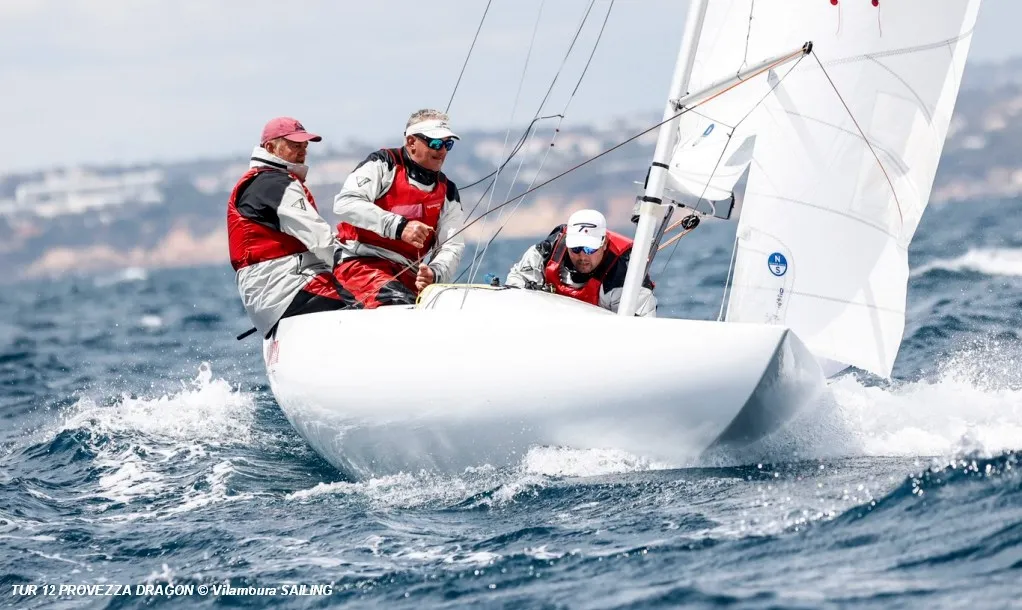
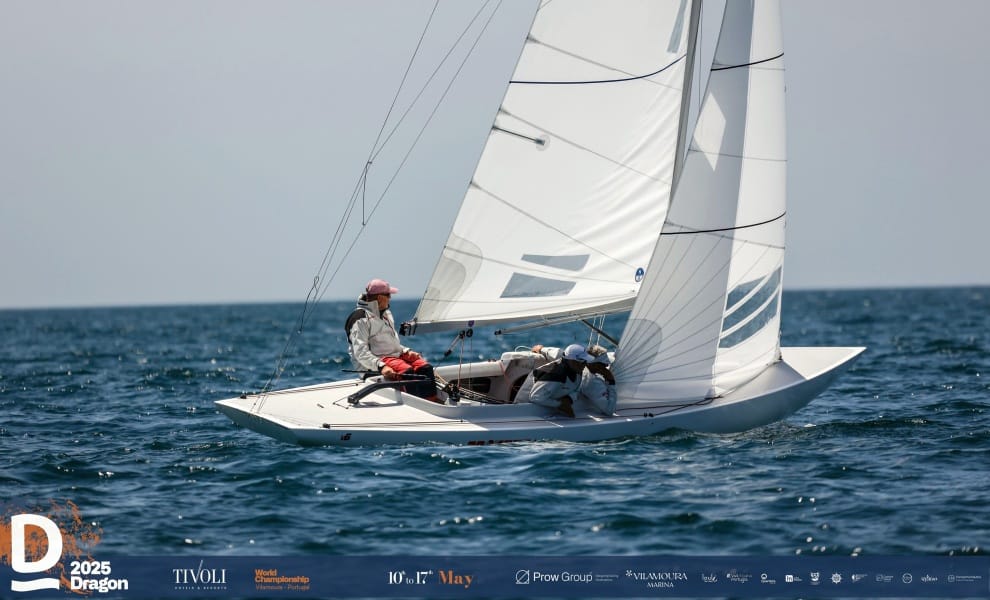
We are part of the Provezza Sailing Team owned by [prominent Turkish yachtsman Ergin Imre] Ergin Imre. [The team also includes the TP52 Provezza racing on the 52 Super Series circuit]. Ergin has a passion for the Dragon and I used to sail with him on the TP52. We were having dinner one night and he told me he had a burning desire to build ‘the perfect Dragon’.
I knew that could mean one of two things: either a beautiful piece of wooden furniture, or a boat that is perfect from a technical standpoint. When I asked him to clarify he said it would have to be wood. I suggested he think about buying one of the Pedersen & Thuesen ‘seven sisters’ boats [that date back to the 1950s]. There’s a real folklore surrounding them and they are beautiful boats, they’re very competitive, and they are held in very high esteem in the class. So we found one called Josephine that had just been beautifully restored and Ergin bought it.
When I stopped helming the TP52 – when I was sacked, actually – he told me he wanted me to race it as often as possible along with [British sailor] Simon Fry and, back then, Ali Tezdiker. The boat was beautiful. Built in 1957 and fully restored by Tim Tavinor at Petticrows, it was super competitive and a real privilege to sail. Petticrows were developing their V6 series of boats and that design originated from a scan of Josephine’s hull. Then [renowned British dinghy designer] Phil Morrison did the development. He massaged it a bit, made it symmetrical, and made it fit the templates properly.
Along with Ergin, we got involved in the development of the V6 and Simon [Fry] and I put a lot of time into developing the systems in the boat, making it go fast, and the rudder designs. Ergin bought a boat and that’s what we won the worlds in at Cascais, Portugal in 2017. It was a big adventure for Ergin and us to go from the beautiful 1957 boat to this new highly developed plastic boat. It was good for Tim and Petticrows because the class was being dominated by Premiere Composite boats that were built in Dubai. He was struggling to sell boats but having a boat win the worlds changed the landscape for him.
Ergin is an amazing benefactor. That’s quite an unusual scenario?
It is hugely unusual and we have been very privileged to be able to enjoy it. I enjoy being part of Provezza and representing the team. We get a lot of support, not only from Ergin, but from the Turkish fleet. We try to go back there once a year and try to put a bit back in through coaching and other stuff. Ergin has been a great supporter of Simon and I and he has a deep love for the Dragon Class.
Introduce us to your crew?
I first met Simon Fry back in J24s in the late 80s / early 90s. Then we were competitors in the Soling, before we sailed together in the 1993 Admiral’s Cup. We also did an America’s Cup campaign together as part of the GBR Challenge. We went on to win the 2007 Etchells World Championship in Cowes – that was our first big victory together. We started to sail together quite a lot in the Dragon fleet and that led to the Provezza Dragon campaign where we won the 2017 and 2019 worlds [second in 2022] together with Ali Tezdiker – and now the 2025 worlds with Enes Caylak.
Enes is Turkish and we met him at the 2023 worlds in Bodrum. We were looking for a new third person and he was super keen. I remember he told us that as a kid he used to travel three hours each way to go sailing. He also sails on an RC44 and a J70 and he runs a packaging business with his father. He’s a nice guy who loves sailing and has taken his opportunities when they have presented themselves. He’s done well to survive the ‘process’ of getting used to sailing with Simon and I.
Enes does the middle upwind and the bow downwind. Upwind his job is the runners, which is super important on a Dragon – well on my boat, at least. It would appear that we are a lot more aggressive with runners on and off than many of the other boats. We are very much a three man team. Simon and I are very strong at a lot of things and that means Enes doesn’t need to be good at those things – but he does need to be good at the things we need help with. He has done a really great job of stepping into that role.
How do you and Simon split the rest of the roles?
I do my own mainsheet and traveller. Starting is sort of primarily me but I get a lot of help from Simon who is very good at calling the line, telling me accurately how far we are away. He is very confident in his judgement of all that and that’s just fantastic to have when you are the helmsman. We work super well together like that. We don’t get it right all the time but we do so more often than we don’t. At these worlds we were pretty conservative in our starting – although on two or three races a boat next to us got called OCS or was black flagged.
Simon and I talk through the tactics together and I would say that was one thing we really got right last week. Our strategy was very good: what we were going to try and do on the racecourse, whether we wanted to go left or right, all of that worked really well because he understood the racecourse. Sometimes the way it works is that I am asking questions and he is answering them. Other times he takes a strong lead because he is confident of his strategy and tactics. His worst fear is when he says ‘tack now’ and I say ‘are you sure?’ Then he will look at me and say ‘no of course I’m not sure!’ Generally though it's all pretty calm between us.
Simon trims the jib upwind and the spinnaker. He is also responsible for the rig setup. He has a very intimate relationship with the rig. He spends hours and hours tweaking it. I’m not really sure what he’s doing, but he spends a lot of time on it. That means he knows the rig setup so well. If we sail with seven millimetres more rake then he knows how that changes the rig tension. Every rig we have ever had has been different. The one we have now always ends up with a little more tension in the starboard lower shroud than there is on port. We don’t know why, and that’s the stuff that could send you running around in circles – but Simon knows how to deal with it.
Let’s talk about technical specifications: the boat, the sails etc.
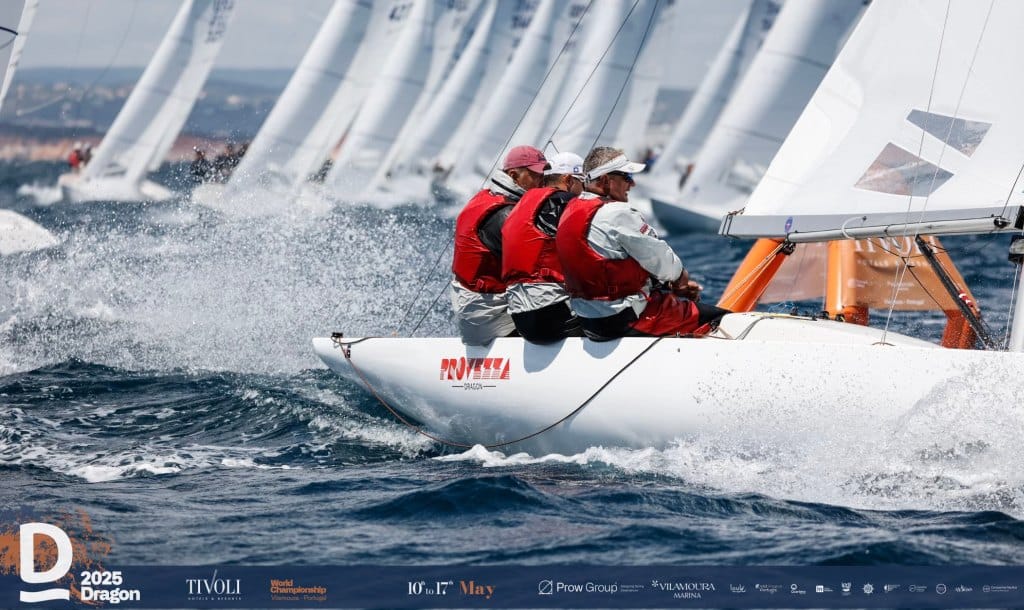
The boat is a year old and was built by Petticrows in Portugal [in 2021 Petticrows was sold to a group of Portuguese Dragon sailors led by Pedro Rebelo de Andrade]. It’s an important boat for them because they struggled a little early on to get the build process right. But this boat has performed exceptionally well – as well as everybody hoped it would. We are pleased with it and so are we and hopefully now they will be able to attract a bit more business and sell a few more boats.
The sails are Norths. I have worked with Norths for a long time developing sails for the Dragon and the Etchell. The sails we have now are a combination of input from Norths, Andy Beadsworth and Simon Fry – in that we have taken North designs and massaged them. That’s been a continuous process since around 2013. The mainsail we were sent for the Vilamoura worlds got damaged in transit and we had to use a ‘standard’ sail that Theis Palm from Norths in Denmark had in his box. That was about the best mainsail I had seen in about three years and had a lot to do with our performance during the regatta.
What did you know about the venue before the regatta? What kind of conditions did you get?
I did a whole season there once and I don’t think I sat on the windward side once. I made it no secret that it is not one of my favourite venues. In the end though, this time, there was generally more wind than less. I was a bit worried about the locals who had done quite a lot of practicing there to try to understand it. But worlds events are very different from anything else. The beats were generally 2.2 miles and we sailed much further offshore than a regatta normally would be.
We were racing in a thermal breeze direction. That kind of made it less complicated in that it paid to go left…right up until it paid to go right. And when it paid to go right, it really paid.
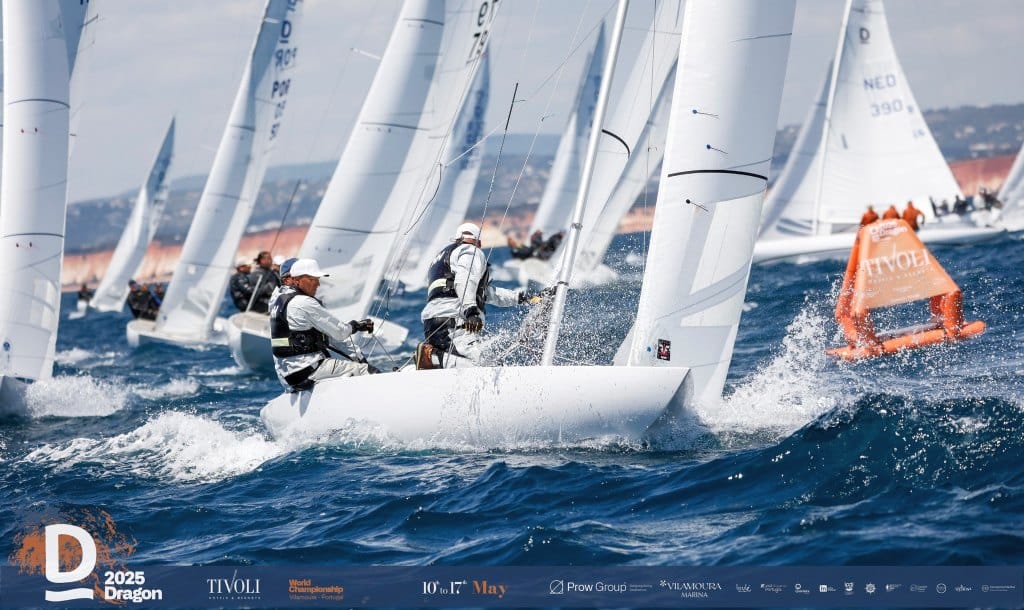
Half the races were in 9-14 knots. The other half were 14-20 knots – except for the last race that started in 6-7 knots and finished in no more than 5 knots. It was never really windy – just one race that was 20 knots – but the sea state was quite big. It was difficult steering the boat upwind. Downwind, it wasn't just the 180 degree highway – the Dragon was getting up and surfing and there were lots of opportunities to light the boat up. Normally you have to work really hard to make one boat length on a run. But with one wave you could take three or four boats if you got a wave right. That played into our hands – we were generally fast downwind.
Tell us about that downwind technique?
You desperately need to sail the least amount of distance. Generally the 180 highway is a strong mode. But you need to steer the boat very accurately, and the Dragon rewards anticipation. The boat gets pushed around alot by the waves. If you wait for the boat to do something and then try to steer it, you end up with a very large rudder movement. But if you anticipate it, you can put in a very small runner movement, just in time, and the gains are ridiculous.
The biggest difference between the faster boats and slower boats is how much you steer. The rudder is a massive brake and the less you can use it the better. That's a big key in going fast downwind in the Dragon is not using the rudder. You obviously do have to use it, but using it as little as possible is the trick. It’s about seeing the waves, good timing with the mainsheet trim, the spinnaker trim, the kinetics, getting the right angle of heel on the boat. That’s the three of us having to work together. If you move three people half a metre, that's a lot better than moving one person a metre and a half, or two metres.
Simon and I have done a lot together, and we have a good feeling in the boat together. We are quite hard on the third person in the boat. We give him very clear instructions on what we are looking for. Downwind Enes is the eyes looking backwards to make sure nobody gets on our breeze.
You turned in a 1,3,1,4,2,1,5,10 scoreline and won the championship with a race to spare. What’s the backstory to those results? Did you always start well and round the first mark in the top bunch? Or did you have to claw your way back at any point?
Early on in the regatta we backed ourselves and executed our own strategy without worrying about the competition. Later in the series we started to think more about our closest competition. We would pick them out on the startline and try to work out what they were planning to do. There were a couple of races where we wanted to do something different, but decided the safest thing was to stick with them.
Generally we felt we were fast around the course. We had one race where we rounded the first mark back in 20th or so. First we managed to get back into the teens and then we converted that into a fifth. We were generally low risk all week – but if you are starting well and going fast, then…
Was there anywhere you felt especially strong or especially less so around the race course?
I think our performance profile is relatively even across the range. However, the windier it gets, the less competition there is. What I mean is that, when it’s blowing 5-10 knots everybody is quite competitive. It's relatively easy to sail the boat and the boats sort of all go the same speed. But, as it gets windier and the boat gets harder to sail, other people's performance profile drops away. So when you get to 20 knots, instead of racing against 50 boats, you're now only racing against 20 boats. And when it gets to 25 you're probably only racing against five or 10. We do do well when it's windy, but that's not because I'm particularly good at it. It's because other people fall away. There's less competition.
Overall, I think we spent less time going slow than anyone else. That’s a concept that Dave Curtis told me a long time ago and I use it a lot with owner drivers. He told me, ‘it’s not when you are fast that counts. It’s when you are slow that hurts you.’ In one design racing like the Dragon, when you are going fast, you are only going the same speed as everyone else. There’s a limit to how fast you can make one design boat go and generally all the top guys are going that speed. The people who are less good spend more time going slower, rather than the good guys going faster.
How was your fleet management?
It was good. Simon is primarily in charge of that. I try hard not to look around – and the older I get and the stiffer my neck is makes that easier. He is very good at managing my anxiety levels. He paints a clear picture for me. But still, sometimes I will be asking questions. Like: ‘Lawrie dipped us five minutes ago. Where is he now? Have we gained or lost?’
What can you tell us about how you tune the boat?
We've got a relatively good matrix now on the rig. From our lightest to our heaviest conditions there are three different settings of [mast] butt, there's four different settings of head stay, and actually our range of shroud tensions is not as broad as it used to be. We leave the dock with our base setting: 20 on the caps and 10 on the lowers. Then we go up and down from there. But we'll always look at the boat, feel the conditions. OK we are a bit over-wicked here or a bit under-wicked – so we will do this, or we will do that. I would say one of our biggest strengths is that, when we get caught out of range, we're quite good at adapting and making it work as well as it can work.
With the light position on our mast butt we know that we can get away with that up to about 10 knots. If we want to go safe, we go forward one hole. When it's windy, we probably go forward to another two holes, if it was going to blow 25 or 25 knots and we knew it. But the biggest tools in our toolbox are the runner, jib sheet and main sheet. Probably, the big thing we probably do is to pull the runner harder than anybody else.
Off the water did you manage to enjoy yourselves? Or were you tucked up in bed early every night?
We had a beer most evenings, a nice dinner and a bottle of wine. We didn’t stay out late. We're getting old these days so we're not quite so good at late nights anymore. In fact, we got into a bit of a routine. Beers at the club after racing and then we ate at the same restaurant every night on the way home.

Get all areas access to Yacht Racing Life with a Full Membership free 30-day trial. There's no obligation and you can cancel at anytime.