


He has been looking at the weather for this critical section of the race and has identified some interesting options for the skippers once they turn south on their way back to Les Sables d’Olonne.
This morning Sam Goodchild on MACIF Santé Prévoyance is continuing to lead the fleet after three days at sea (follow his position on the race tracker). He has about 260 nautical miles to sail to cross the Arctic Circle, and has a lead over second-placed Élodie Bonafous on Association Petits Princes-Quéguiner of around 56 miles.
In third place it is Violette Dorange on Initiatives-Coeur, another 67 miles back, with Ambrogio Beccaria on board Allagrande MAPEI in fourth position, another 33 miles back. He is 161 miles behind Goodchild, with Francesca Clapcich on board 11th Hour Racing in fifth position, seven miles behind him.
After two hard days of power-reaching in a strong west-northwesterly air stream, conditions have eased somewhat and the skippers in the leading bunch are taking advantage to recover, as they sail between the Faroe Islands and the Shetlands. Behind Beccaria, Arnaud Boissières (April Marine-Recherche Co-Partenaires) and Nico d’Estais (Café Joyeux) are clearing the northern tip of Ireland, while Manuel Cousin (Coup de Pouce), in eighth place, is still mid-way up the Irish coast.
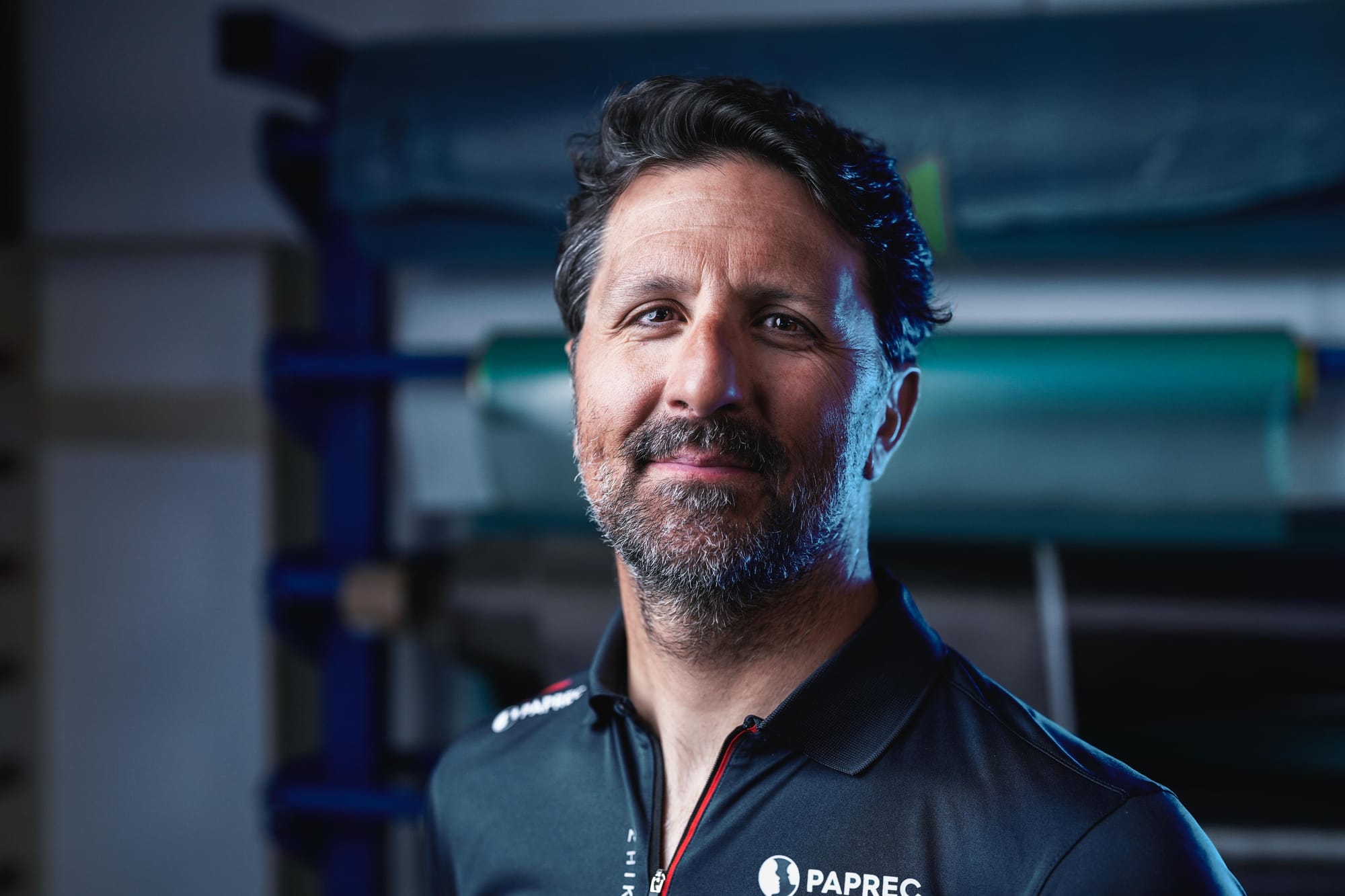
Richomme says the lighter conditions will prevail over the next few days, as the leading boats negotiate a static depression sitting to the west of Norway which will dominate the passage to the Arctic Circle and back.
“They are going to have an easier ride most of the time, except for maybe the front pack is going to get a little bit of a 35-knots day or afternoon going up to the Arctic Circle,” he told the Class.
“As they have the freedom to cross the line anywhere they want, it makes for a lot of possibilities of where to cross it. But it does look easier to cross it to the east,” he added. “They will pick their point and there will be some manoeuvres to do – maybe a few tacks to do and sail changes, so they can pick up the easiest route to go back down.”
Exactly how they tackle the centre of the low is hard to predict, however. “They will be going near the centre and then back down, and might be able to go down the west side of the depression, but what we can say is that the weather isn’t that certain even in the next 48 hours,” explained Richomme. “The difference between the models is quite pronounced and the position of the centre of the low isn’t precise at all, so that does influence the way back down.”
And this is where it gets interesting. Richomme reckons heading south, to the east of Scotland and into the North Sea, is not realistic. So the favoured route will be back the way they came, but with the possibility of going through the North Channel between Northern Ireland and southern Scotland and into the Irish Sea.
“Obviously when you first look at it, you will be tempted to go inside the North Channel – it’s much shorter than going outside Ireland and it’s pretty much in a straight line,” Richomme said. “You will be tempted, but to do that maybe upon further reflection you’ll want to avoid it because there is more traffic to manage, more wind shadows and more sandbanks – the whole lot. But it will be fun to follow if there is a split in the fleet.”
Overall, the dominance of MACIF Santé Prévoyance has come as no surprise to the Vendée Globe runner-up. Richomme says the boat is faster in the transition to medium winds and Goodchild has made the most of its speed advantage. We put it to him that the MACIF skipper has looked pretty much error-free so far in this race, much as he did in the season-opening 1000 Race.
“That’s true,” said Richomme, “but it’s easy not to make errors when you’re the fastest boat. That is not a comment on Sam’s level, it’s just the way it is. It’s the same in the Figaro class. If you’re faster than the others, you’re smarter than the others…so he’s looking good all the time right now.”
A skipper who has caught his eye is Bonafous, currently in second place, and he is hoping she will get on terms with Goodchild before the race is over. “I feel Elodie is doing really well, at least since Ireland. Before that, not so much. But since Ireland she has really put the throttle down, especially since yesterday afternoon and hopefully we are going to see a little bit of a match at one point.”
We asked him about Beccaria’s dive to the bottom of his keel to free a lobster pot, or fishing net line, that had stopped his boat on Tuesday afternoon. It was an impressive feat, all captured on several video cameras, including one showing the Italian skipper wrestling with the orange float at the bottom of his keel.
“It is quite a tricky move…and because the boat is attached by the rope and the net to the ground, you can feel the effect of the current. So usually it is not easy to dive and make it to the keel and then get back on board the boat. So it is quite a dangerous situation, but sometimes you don’t have a choice,” said Richomme. “Ambrogio’s a nice guy. He’s a really good sailor. He’s not really shining now, but he’ll get to the top,” he added.
The other episode that Richomme has followed closely was the failure of the tack fitting on the J3 stay on board MACSF – formerly Richomme’s Paprec Arkéa – which forced Corentin Horeau to retire from the Vendée Arctique.
Richomme says he was surprised and disappointed to see what he believes is a structural failure where the tack is connected to the hull. He is planning to see the damage for himself. “Obviously it didn't happen to us, but I feel we’ve been lucky on that one…” he said, “it does sound like a fatigue failure on that piece, but I mean I’m more thinking that it wasn’t well-designed in the first place,” he added.
Finally, we asked Richomme to comment on Nico Lunven’s victory for a third time in the Solitaire du Figaro, an event he too was planning to sail in, but had to drop out because of injuries to his ribs from which he has now recovered.
Richomme was delighted to see his fellow IMOCA skipper triumph. “It was special,” he said. “Obviously I know Nico well – we are the same generation. You know, he sailed beautifully – really a master at his game, very stable in all aspects of the game. I did follow it really up close because I gave up my seat to give Martin le Pape a chance and he did really well, finishing sixth. It was great to follow – I still love that class and I hope I will give it another try another day.”
In the meantime Richomme will be racing in the TP52 Class on board Paprec this summer as he waits for his new Antoine Koch/GSEA/Finot-Conq designed IMOCA to be launched in March next year.


