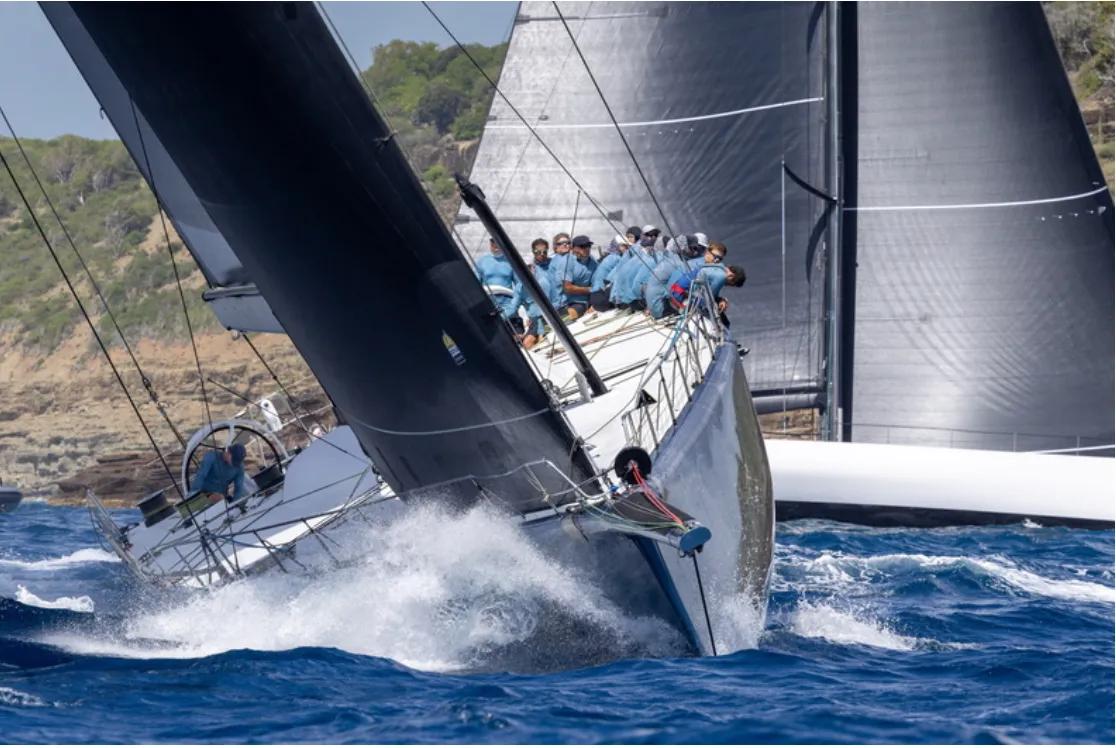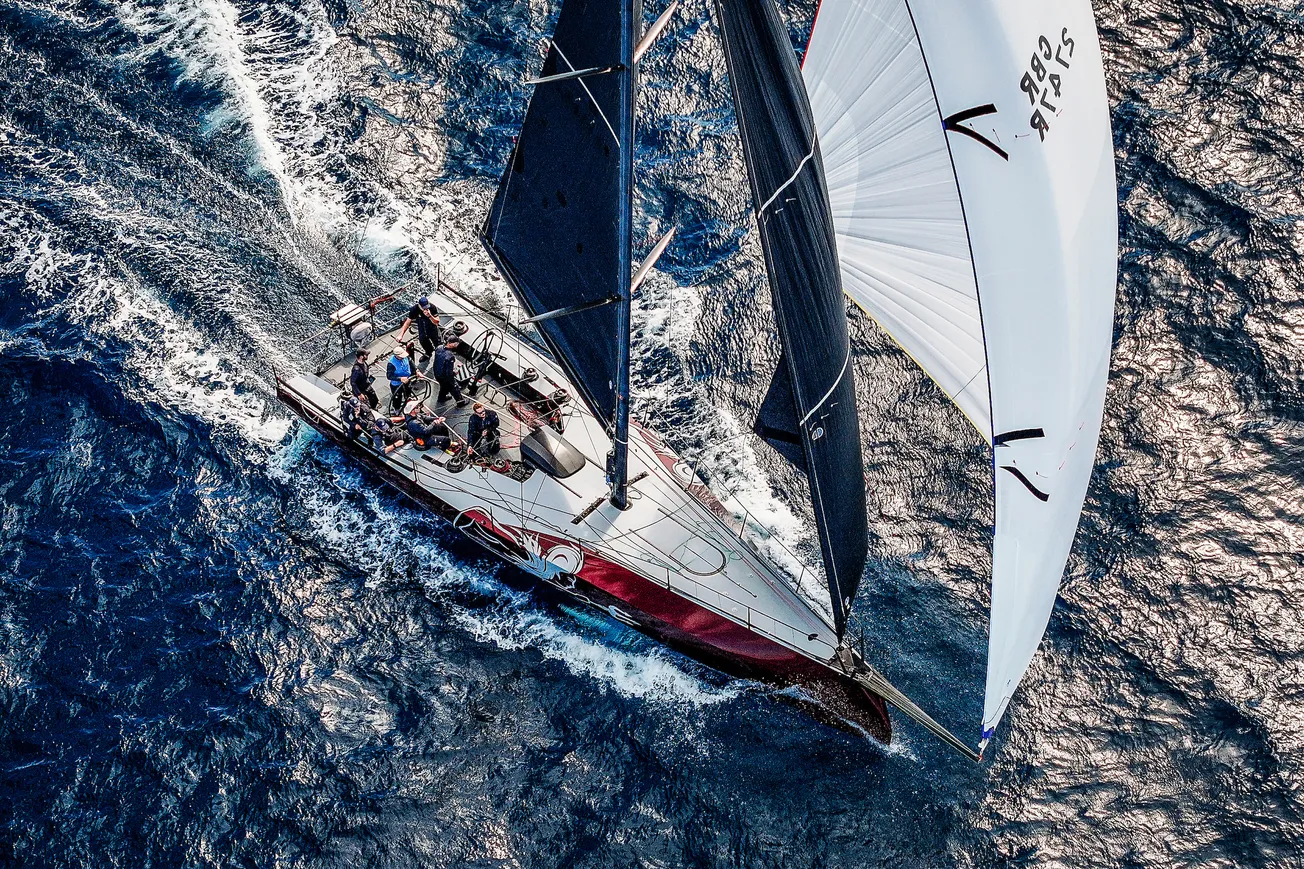
A remarkable quartet of offshore boats can be counted among the favourites for the overall win under IRC for the RORC Transatlantic Race Trophy. Yves Grosjean’s Neo 430 NeoJivaro, James Neville’s Carkeek 45 Ino Noir, Xavier & Alexandre Bellouard’s Lift 45 Maxitude, and Antoine Magre’s Manuard 50 Palanad 4.
Between them they bring technical experimentation, design breakthroughs, and the hunger to win an endurance race where average speed, reliability and mental composure will define the outcome.
For Yves Grosjean, finally making the start after a skiing accident forced him to miss the 2025 edition, this race carries a sense of both excitement and belief. “This is going to be our first RORC Transatlantic Race,” he says. “We are looking forward to crossing the start line with great anticipation.”
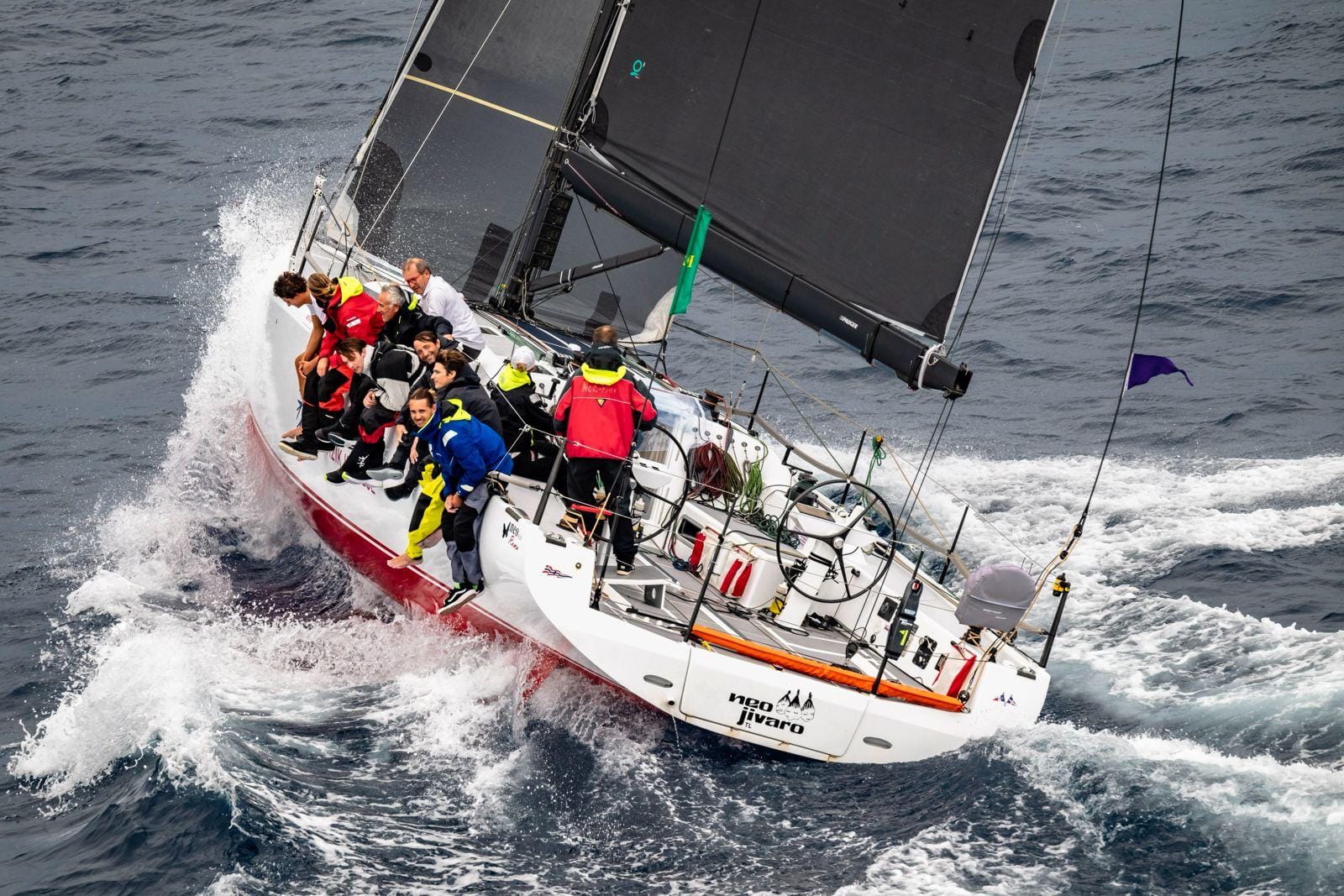
NeoJivaro, a light 6-ton Giovanni Ceccarelli design has already clocked bursts of 28 knots. NeoJivaro is a boat built for acceleration and sustained high average speed, something Grosjean’s crew hopes to exploit. “Our preparation has revolved around the simple truth that human endurance is as important as boat speed across the Atlantic Ocean. Recuperation and nutrition are key, right down to choosing the right mattress for the sleeping racks.”
James Neville returns with Ino Noir, the boat that finished third overall last time. Now refined with lessons learned from a season marked by reliability challenges. “We’d like to do better than last time,” Neville says with typical calm focus. “The slowest speed is actually more important than the fastest. It’s about managing the boat, managing the chafe, and looking after the sails. It’s about consistency.”
For him, the race is not a sprint but an exercise in discipline, keeping the boat in her sweet spot, removing small problems before they become large ones, and sustaining high averages without overreaching. “If the boat is going faster than the waves, we can plough into the one in front; that puts tremendous wear and tear on the sails and the equipment. Ino Noir will have much the same British crew as the last race, with the addition of Spanish navigator Juan Vila.”
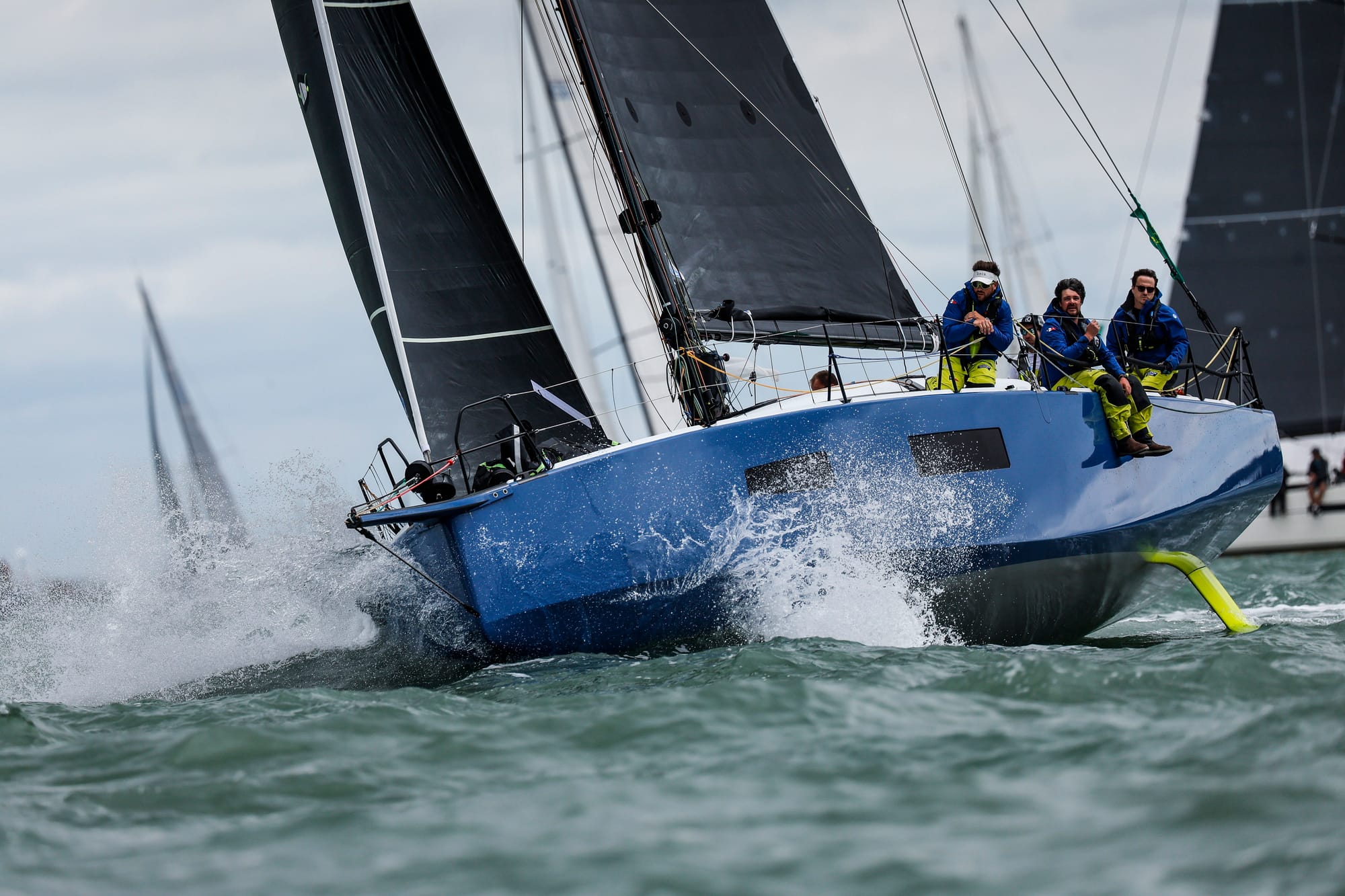
The father-and-son team of Xavier and Alexandre Bellouard bring a radically modern Marc Lombard designed Lift 45 Maxitude. The boat has a broad scow bow and a philosophy built on simplicity, power and joy for racing and cruising. Xavier grins when asked about expectations: “We know people will be watching us closely, the boat surprised a lot of people during the Rolex Fastnet.”
With their scow bow, the Bellouards hope to demonstrate that wide-forward volume isn’t just a Class40 trick. “It is a direction the offshore world at large will eventually follow. Maxitude is an upgrade from the previous boat, also a scow bow Pogo 12.50,” continued Xavier. “My wife will be joining us in the Caribbean, one of the advantages of a huge forward cabin. Maxitude really is a dual purpose boat for cruising.”
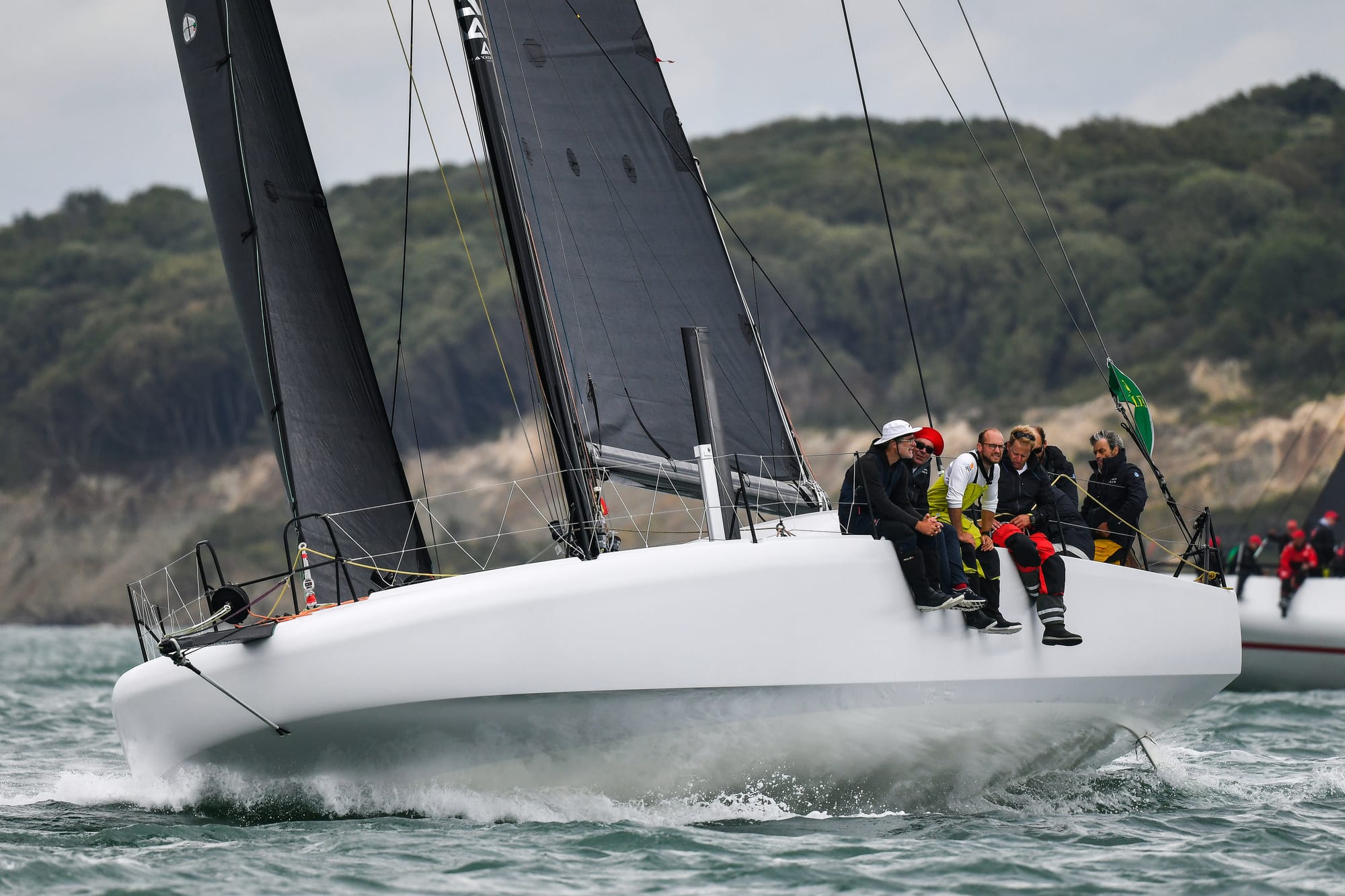
Palanad 4 is the only 50-footer in this group and also sports a pronounced scow bow and minimalistic cockpit. A new Manuard design with deep lineage; its predecessor Palanad 3 won the 2021 race, setting the IRC record for Lanzarote to Antigua in the process. Palanad 4 carries the confidence of the latest chapter in a project that knows how to deliver results. “We want to go as fast as possible,” says skipper Antoine Magre. “A laser-focused crew, a strong weather strategy and playing to the boat’s strengths, that is what will matter.”
Palanad 4’s crew is mostly French, from Brittany, except Simon Koster who is Swiss and Pablo Santurde from Spain.
“The team has spent the autumn mapping every performance lever on the boat, fine-tuning polars, analysing trimming modes and ensuring we can hit 100% efficiency from the moment the gun fires in Lanzarote.” For Magre, a win would be more than a trophy; it would be validation of a design philosophy. “A recognition that this new generation of scow-influenced 50-footers represents a breakthrough in performance sailing.”
Despite their differences, these four teams speak with remarkable alignment about what really wins the RORC Transatlantic Race. All of them acknowledge that the winner is not determined at the top of a surf. The defining moments are when the boat is becalmed, or when fatigue creeps in, or a breakage forces a compromise.
“The critical speed is your slowest speed,” Ino Noir’s Neville says, and the others echo him. “Holding momentum, protecting sails, keeping manoeuvres crisp, and dealing with the sea state rather than fighting it, that is how you create the high daily averages needed to stay on the competitive edge.”
All of the teams’ preparations reflect the need for the right mindset. NeoJivaro has focused heavily on sleep systems and crew rotation. Ino Noir has reinforced its approach to wear and tear and durability. Maxitude has used the season to refine trimming benchmarks and learn the limits of its powerful hull. Palanad 4 has treated preparation almost like a science programme, isolating each factor that could reduce average speed over 3,000 miles.

Yet beneath all the technical focus lies the human drive that powers each project. Grosjean races with deep personal motivation connected to the project Afazik Impulse, a project for the employment of people with cognitive handicaps, a philosophy shaped by a close friend’s brain injury and recovery. Neville races to prove a season’s worth of effort and setbacks will finally pay off. The Bellouards race for challenge, innovation and the shared joy of a father-son campaign. Magre races to push a new design philosophy as far and as fast as it can go.
When asked what overall victory under IRC would mean, the answers reveal the emotional heart of the race. Grosjean calls it “proof that we prepared well and maximised collective intelligence.” For Magre, it would be “major recognition of a design breakthrough.” For Neville, “a huge amount, showing the work has paid off.” For the Bellouards, it would confirm that the future lies in “bold design and simple systems.”
Together, these teams form a concentrated core of talent, innovation and ambition. Four contrasting interpretations of the modern IRC offshore racer. Four different ways of solving the same 3,000-mile puzzle - and four crews who all believe, realistically, that they can win the RORC Transatlantic Race Trophy.
The RORC Transatlantic Race in association with the International Maxi Association and Yacht Club de France will start from Marina Lanzarote on 11th January 2026.
Full entry list here.