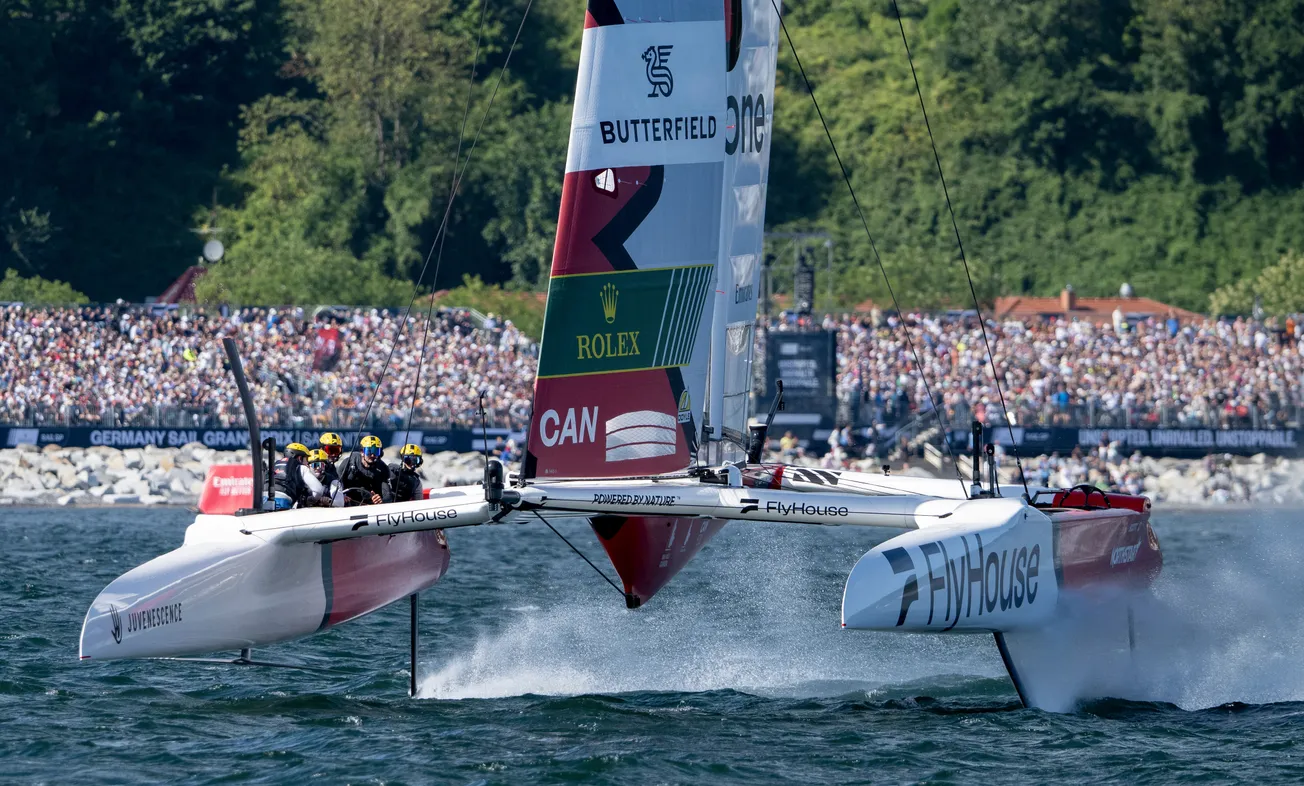
Giles Scott’s first season as skipper of the NorthStar SailGP team saw the Canadian-flagged syndicate close out 2025 in sixth place overall. Not a disastrous result, for sure, but the British double Olympic medallist says the team set its sights on becoming a top tier contender on the international circuit in the long term.
There’s no denying the Canadian team had its fair share of highs and lows in Season 5. After starting with a sixth in the opening event in Dubai, a pre-race high-speed nosedive on the second day in Auckland saw Canadian flight controller Billy Gooderham hospitalised and prevented the team from any racing on the Sunday.
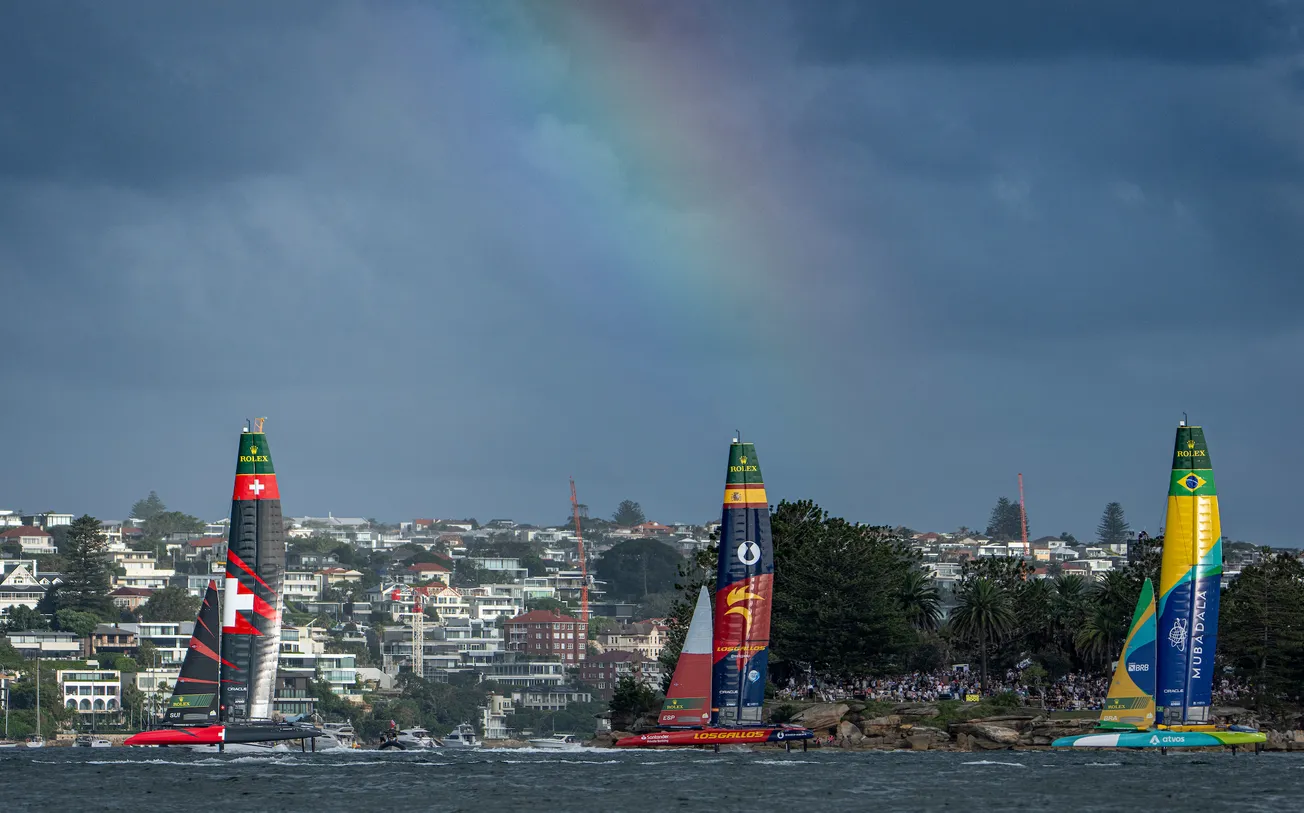
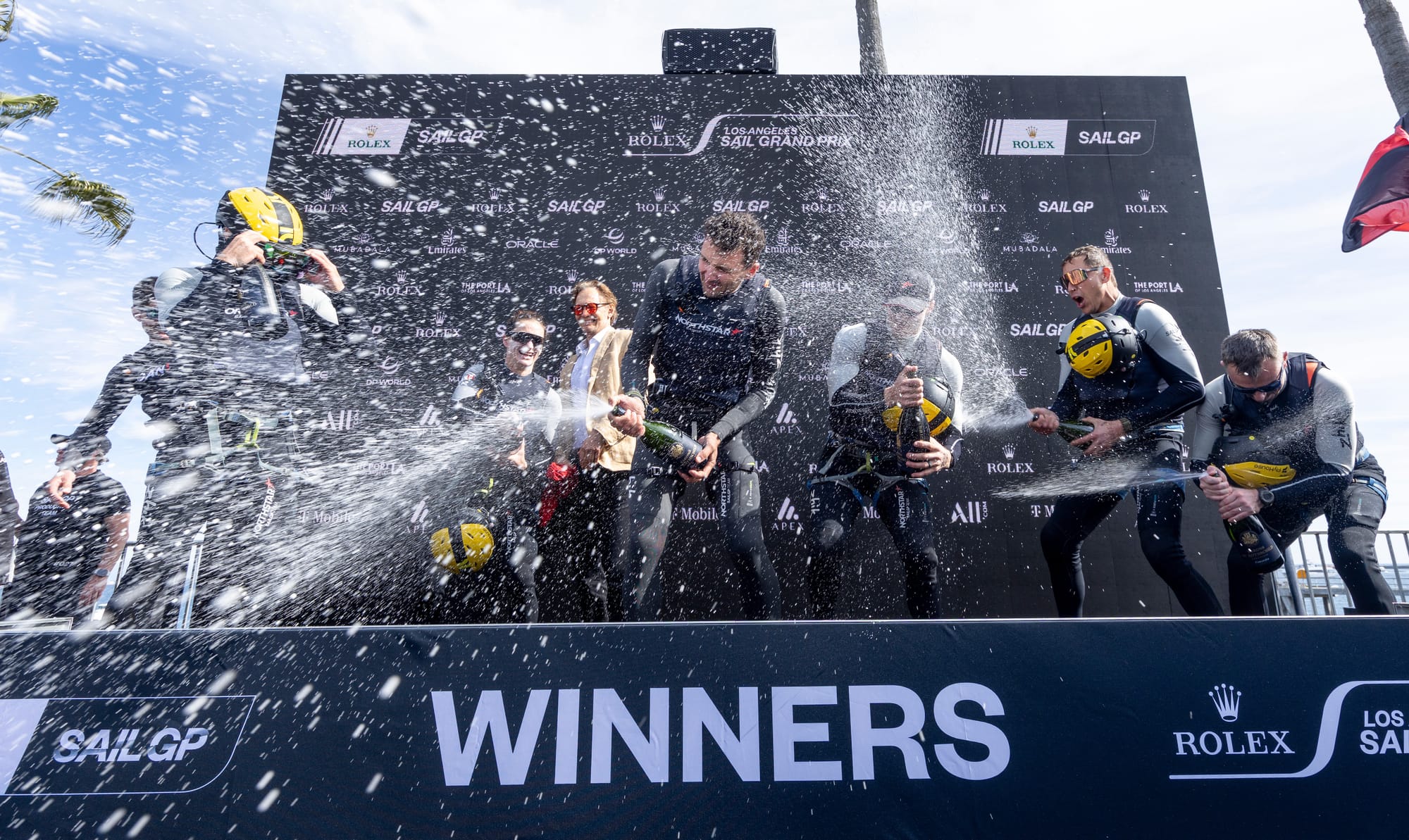
However, this crushing disappointment was soon forgotten after the NorthStar crew bounced back with a string of event final appearances, including a second place in Sydney, an overall victory in Los Angeles, and another second place in San Francisco. I was there for the third of those regattas and I can vouch first-hand for the fact that the Canadian crew looked for all the world like Season 5 title contenders at that event.
A disappointing seventh in New York followed the San Francisco win, and when the circuit made its way across the Atlantic for the European stage of the season it quickly became apparent that the sparkle had gone out of the Canadian campaign. After a pair of eighths in Portsmouth and Sassnitz, a tenth in Saint-Tropez, a ninth in Geneva, and a tenth in Cádiz, the team finally rallied for the final event of the year in Abu Dhabi to finish fourth.
Reflecting on his team’s Season 5 performance, Scott told me he believed that sixth overall was “a fair result, given our form over the year”.
“When I look back on the season we were a yo-yo team, ultimately,” he said. “We were either all good and flying, or we were struggling. I think sixth is where we deserve to be, given how we were racing.”
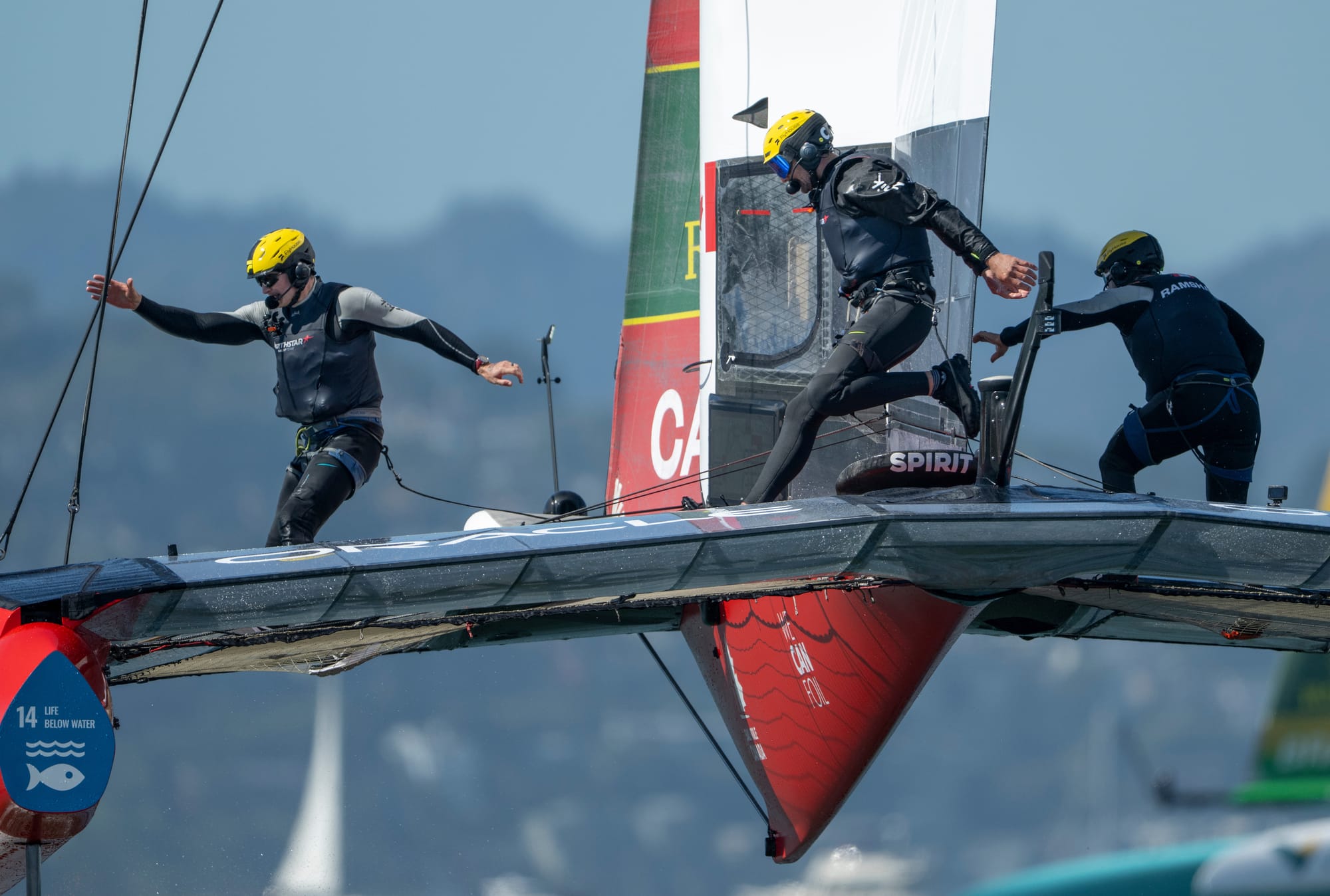
So how did the team manage to deliver those three impressive early-season podium performances?
“That’s an interesting question,” Scott replies. “The conditions were actually quite varied across those three events. We had generally good breeze in Sydney and San Fran but the outlier was LA – where we managed to win in quite light conditions.”
I think it’s fair to say that the breezier conditions suited us. But I think what was happening was that we were doing a few key things really quite well that just gave us the jump in those conditions. By the time we came back to Europe that success had kind of masked some other issues we were having a bit further down the wind range.”
Scott admits that the team’s lacklustre mid-season performance was all-the-more difficult to deal with for the sailors because it came right on the back of those previous three stellar results.
“That was a struggle for everyone,” he recalls. “To be honest, at that early point in the season – and after the disaster in Auckland – we had no real certainty about what kind of team we were aiming to be. Were we a top-three team? A top-five team? A top-10 team? Naturally though, the expectations rise tenfold when you get podium results across three events at reasonably varied venues. So it was a pretty hard period when we didn’t really back up those successes until the final event of the year.
“All in all I think of it as a season where we were very much finding our feet. You have to remember that in many ways we were a brand new team – a new driver, new ownership, new management structure. There was a lot of change for everyone in the team to adjust to. I think, having been through what we have been through, hopefully next season the team is in a good spot to be able to better ride out the highs and lows that a SailGP season entails.”
Looking ahead to Season 6 Scott says a lot of effort has been put into the cultural makeup of the team.
“That’s to make sure that we're in a position going forward where hopefully, we are better placed as a unit to ride the lows out. Equally, though, to respond correctly to the highs too.
“I think if you'd have asked any of us after San Francisco to list the things we needed to work on, the list would have probably been pretty small and not necessarily a true representation of where we were actually at.
“I think the best teams in SailGP are those that can pick themselves up and deal with a bad race or a bad event, but equally, know how to keep their heads down when they're on a winning streak.”
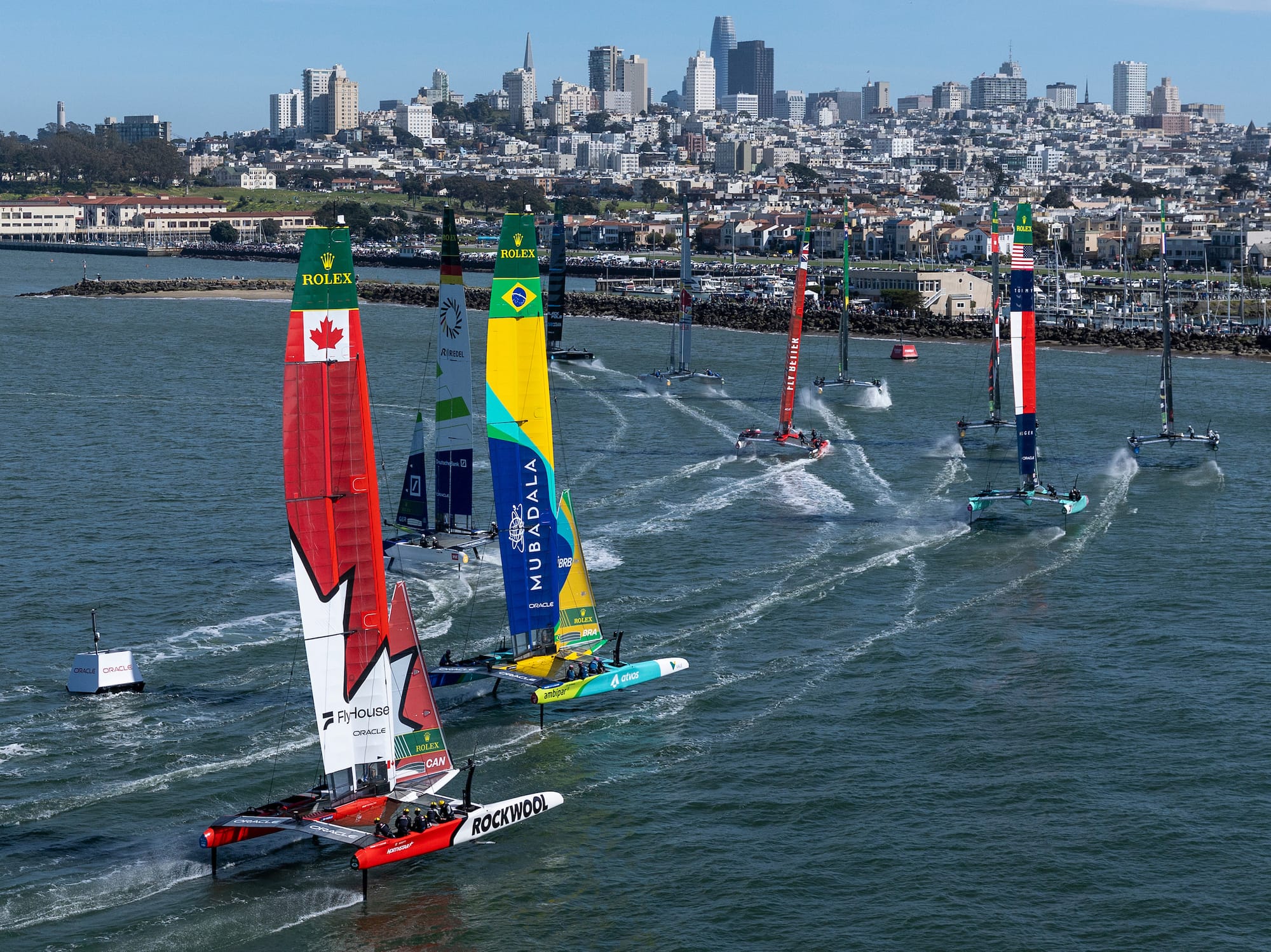
All that said, and despite learning the painful lessons from last season, Scott believes that Season 6 will be an even tougher stage on which to have to try to succeed.
“I don't know how many event winners we had in Season 5, but it feels to me like that there are 10 crews out there that are well capable of winning events. And pretty much everyone is capable of winning a race.
“In earlier seasons – one and two and even three, to some extent – if you could get around the course on the foils you were basically in the top two or three. If you got a bad start but you managed to stay foiling you could still maybe pass everyone. That doesn’t happen so much now and the margins are just getting finer and finer.”
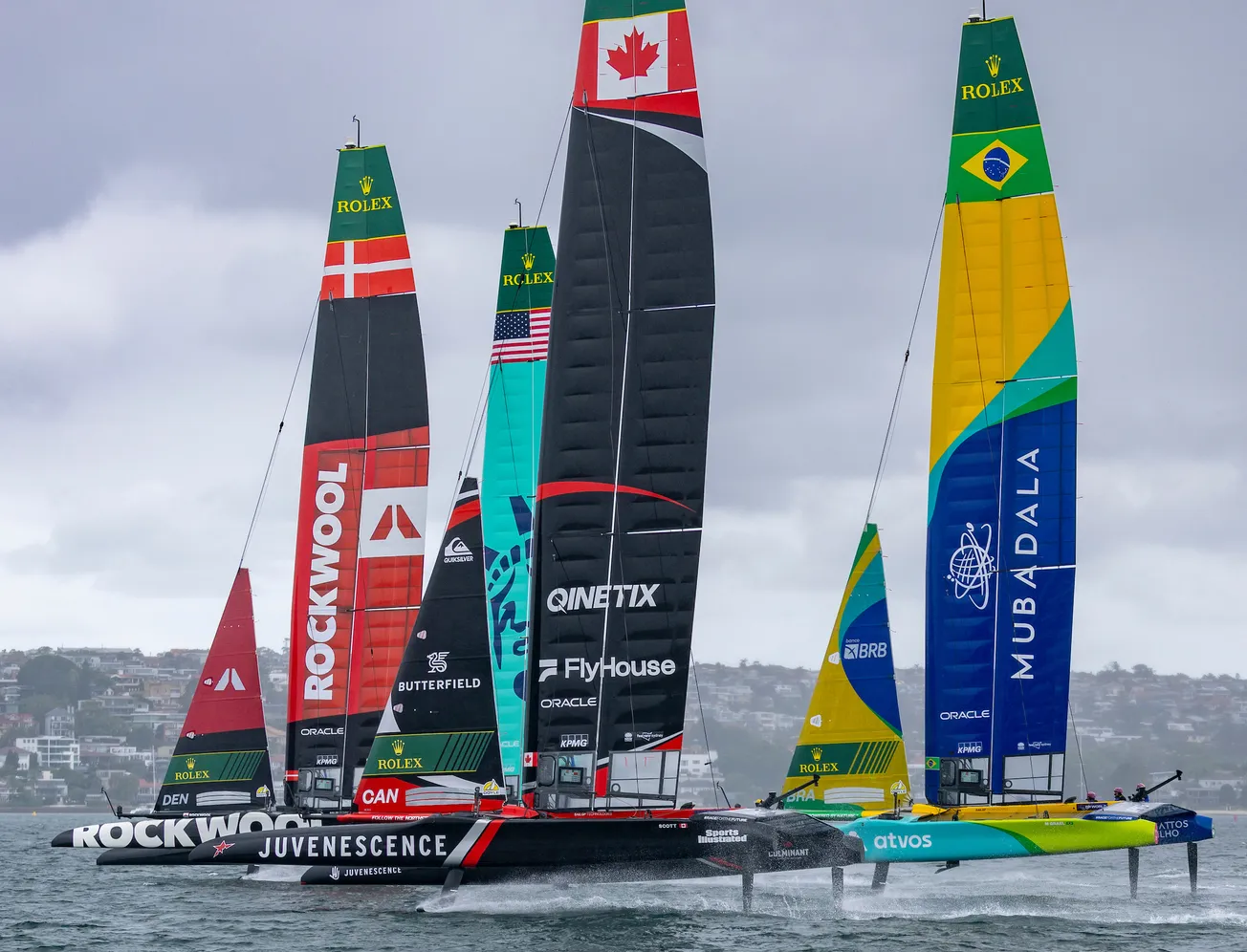
It’s no secret that – like in all sailboat racing – getting a good start in SailGP has always paid dividends. Now, with the expansion of the fleet to 12 boats in Season 5 and 13 for the coming season, the need to consistently get off the line cleanly is yet even more important.
“I think that last season if you averaged a 4.8 position at mark one it basically led you into being capable of hitting those top threes overall,” Scott explains.
No surprise then that for Season 6 British seven-time match racing world champion Ian Williams has been drafted into the Canadian team as a specialist starting coach.
Outside of Williams’ arrival and the recruitment of Kiwi grinder Alex Sinclair from the Red Bull Italy team, there have been no other changes to the NorthStar lineup – a strategy which Scott says he is hoping will reap rewards in 2026.
“There have been quite a few changes across the teams in the key positions, with wing trimmers and pilots doing a bit of shifting around,” he says. “We've not done any of that. We have made a concerted effort to stay the same, because we really value the level of cohesion that brings. We have, though, made some other pretty small changes which we think are going to help us push forward.”
In terms of goal-setting for the coming season Scott says that other than having the same ultimate target of any team in SailGP – making the end-of-season Grand Final race – the Canadian syndicate will have a huge focus on progression over the coming year.
“That’s about getting the team moving in the right direction,” he says. “We laid a marker down last season that we want to improve on. Obviously the result sheet is the primary driver there, but there's a lot more metrics that we will use to monitor our progress other than that.
“I think that as a team, we ultimately want to evolve into something that's not just a one-hit-wonder for one season – but rather an organisation that is capable of becoming a top-tier SailGP team in the long term.”