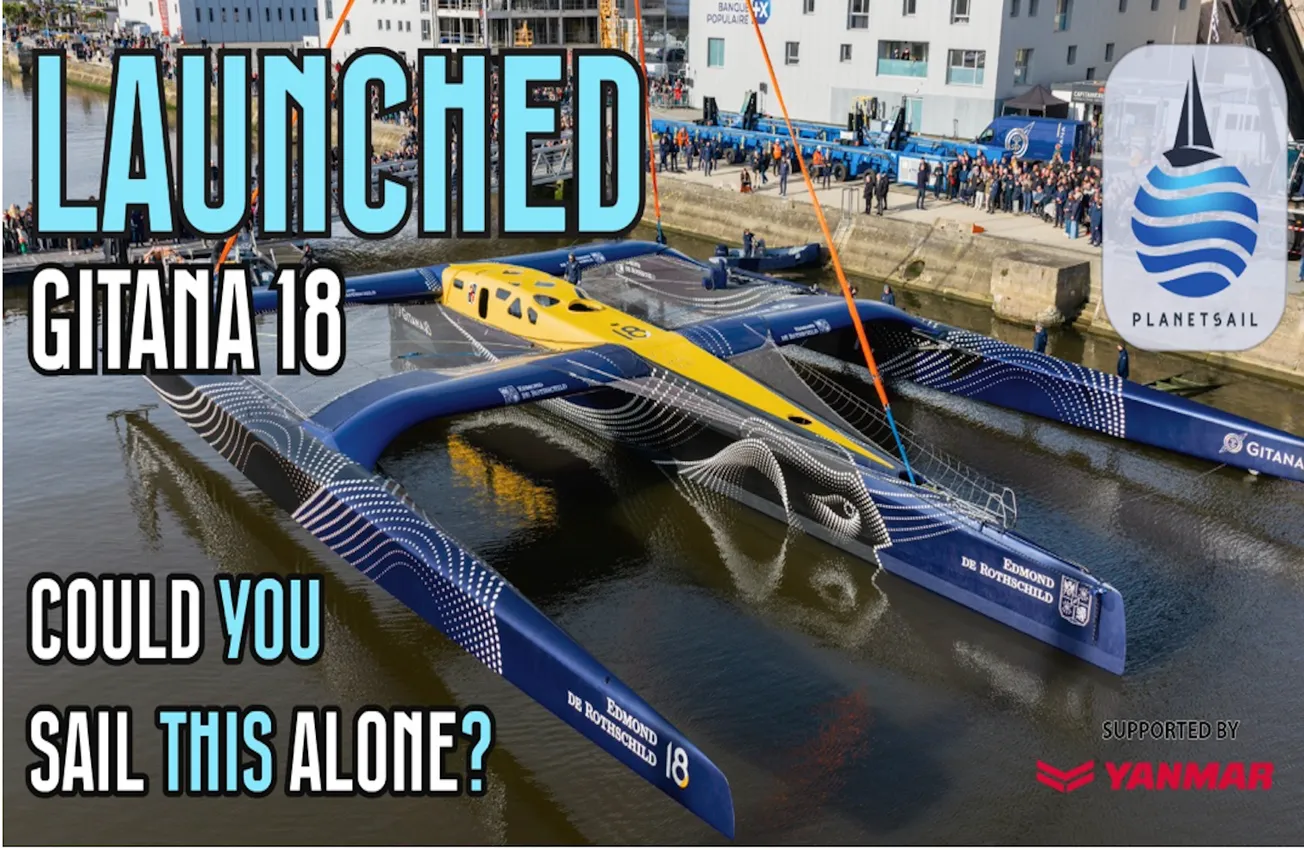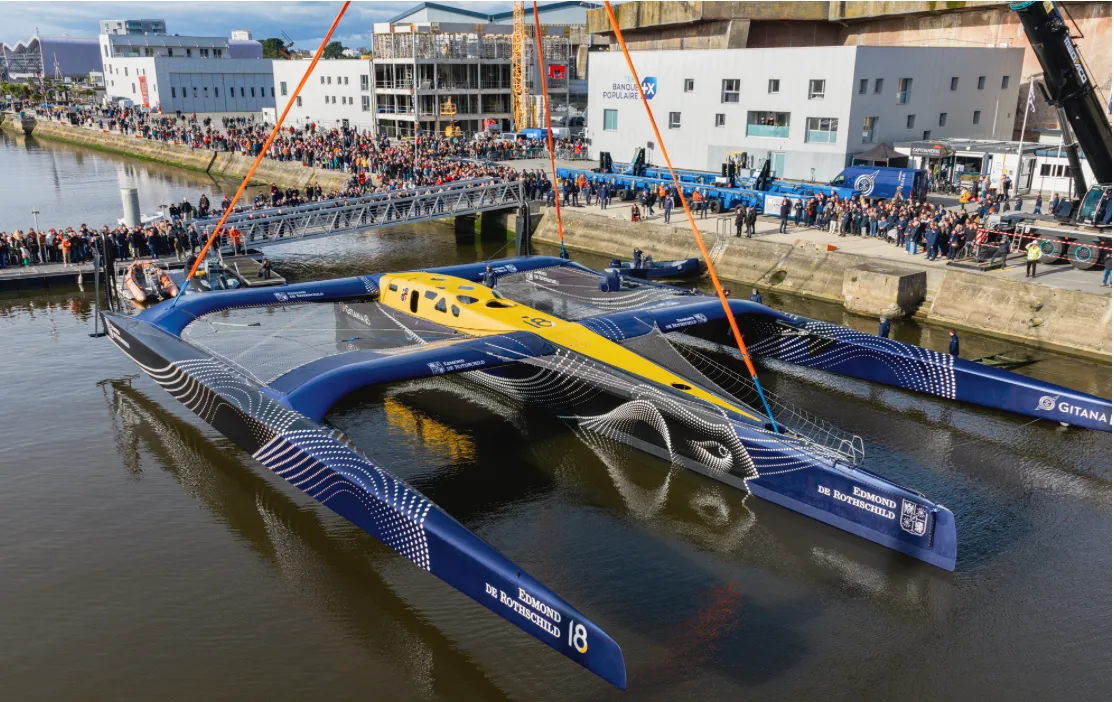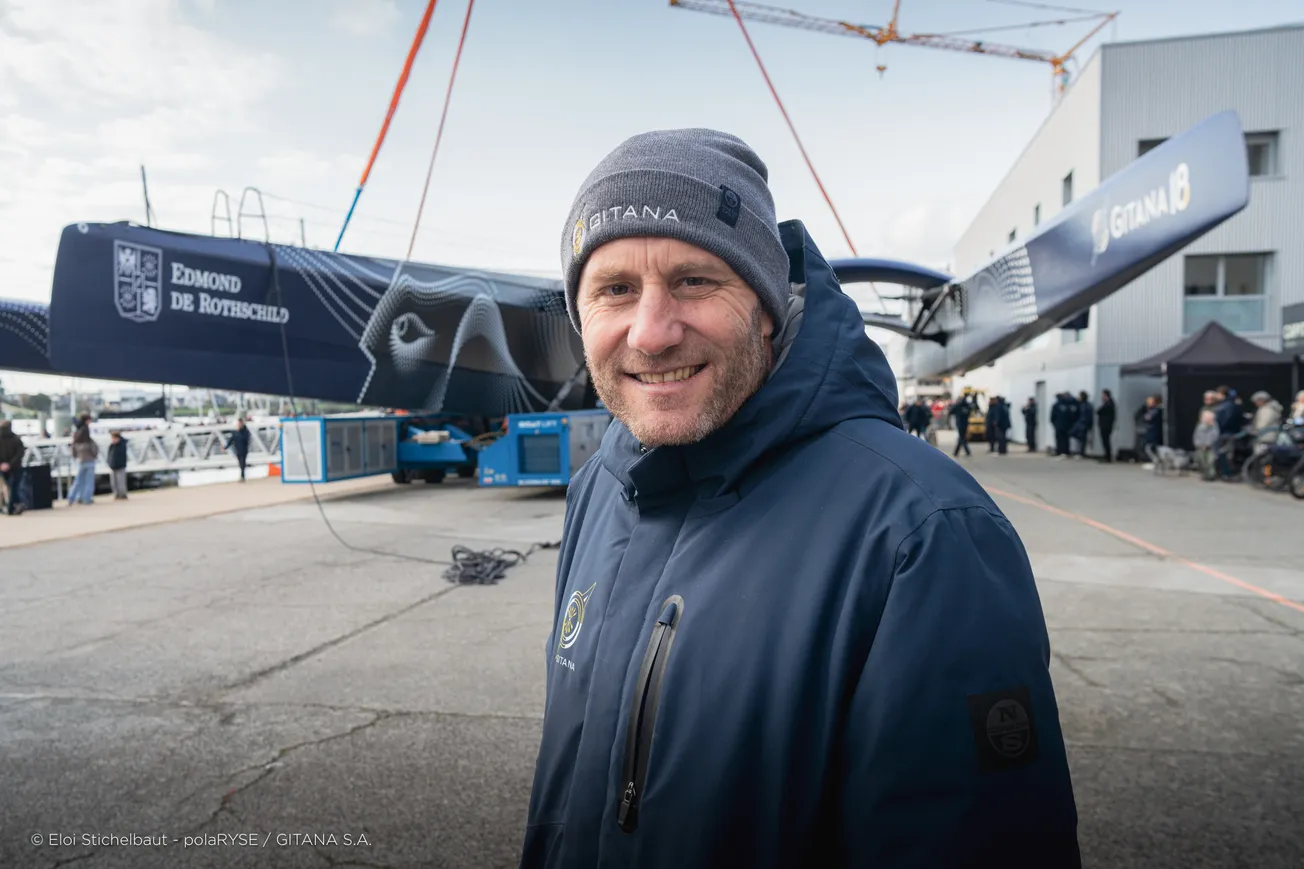
Anyone attending the spectacular boat’s launch at the Edmond de Rothschild team base in Lorient recently cannot have failed to notice the permanent smile plastered all over Caudrelier’s face as he watched the remarkable boat that he has put his heart and soul into during its prolonged development process be lowered into the water for the very first time.

Join 20,000+ sailing fans receiving free race analysis, exclusive interviews, and behind-the-scenes context from SailGP, the America’s Cup, IMOCA, and across the sail racing world.
The launch was a milestone moment for the French team who believe the innovation that is baked into the new boat will transform the multihull ocean racing world forever.
Caudrelier will of course be itching to sail the boat for the first time, but he will need to remain patient as the maxi trimaran undergoes potentially weeks of intricate system checks before it can leave the dock for the first time.
In reality though – as is the way with modern high-tech racing yacht design these days – Caudrelier had already clocked up thousands of hours sailing on this remarkable boat, or more accurately, aboard its virtual digital twin.
Asked how managing a massive craft like Gitana 18 on his own differs from the bulk of his previous solo experience, which he gained back in his Figaro campaigning years sailing considerably smaller boats Caudrelier said he believed there were few fundamental differences between the two.
“For me it’s the same game,” he replied. “I don’t see much difference, except that the boat is much bigger and you have to anticipate more. The size of these boats means you can’t be late. If you don’t anticipate, with the size of the sails and everything else, you can capsize.
“So you sail with that sort of pressure on your shoulders – and that changes things a bit – but otherwise I think it’s very much like the Figaro. I feel very comfortable with the idea of sailing this boat on my own. I have never thought ‘is it possible or not?’ because in my mind I know that to manage a boat like this is all about anticipation: thinking about the next manoeuvre, tidying up the boat constantly, trying to get enough sleep. But that is the same game as on a smaller boat, for me.”
Caudrelier put all his other sailing projects on hold for the last two years as he engrossed himself in Gitana 18’s complex design process, which was led by the legendary Guillaume Verdier.
“Sometimes I just listened and watched,” he says. “But we have also spent hours and hours sailing this boat on the computer. We have been able to give a lot of feedback to the designers and they have really changed the design of the foils a lot.”
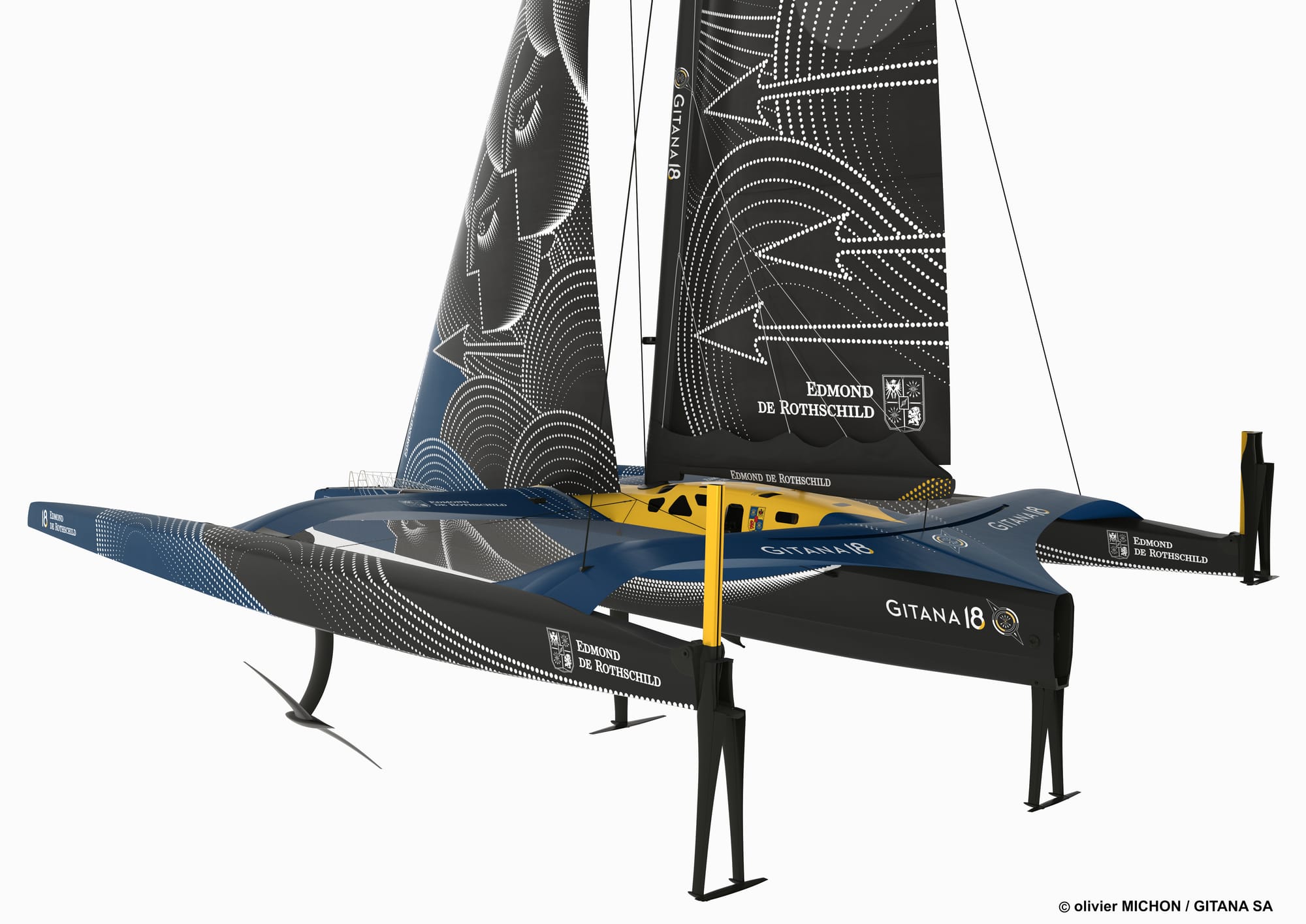
A key element to making the boat manageable across a range of conditions in the open ocean is the 126-foot mast and its complex rigging setup which includes spreaders that can be raked aft to flatten the sail and reduce power in the upper wind ranges.
“The mast is a revolution for canting wing-masts,” Caudrelier declares. “But the principle is the same as with all masts. On a Volvo boat when you want to bend the mast, it is easy to do it with a backstay and spreaders.
“But on a wing mast it is very complicated because it is so stiff longitudinally. So we came up with the idea of being able to cant the spreaders up to 35 degrees. It’s the first time it has been done on such a big boat with a wing mast that can move in every direction – It can turn, cant, and now we can bend it.”
According to Caudrelier, the impact on performance from being able to quickly de-power the mainsail is huge.
“You need power to start flying – especially in the light air – but as soon as you fly you immediately have too much sail area. It's just the same as in the America’s Cup: as soon as you fly, you go faster, your apparent wind speed increases, and you need a flatter sail. It’s a huge gain for us, I think.”
One of the most noticeable design elements on Gitana 18 is the twin-bladed design for the boat’s three rudders. This development came, Caudreilier says, after feedback given by the sailors on the simulator about loss of control due to the lack of rigidity in the carbon rudders.
“Sometimes we had to ease the sails when we lost control because we flew too high and didn’t have enough rudder in the water. We wanted a longer rudder and it had to be stiffer. It was impossible to build, unless you made them very large or out of metal – which was very heavy. So Guillaume imagined this [twin-blade] solution which was very interesting for a number of reasons.”
“Most of the time you are adapting the foils and the rudders to the speed of the boat and the sea state. The goal is to be stable [flying] in big seas – which is not easy. When I am alone, the pilot is driving the boat most of the time, but I spend a lot of time ‘playing’ with the set up of the pilot to achieve that.”
In terms of sail trim Caudrelier says the speed of the boat means that trimming is kept to a minimum because the apparent wind angle remains extremely constant. A key factor in adjusting anything is to minimise the amount of hydraulic power consumed.
“Everything that I want to change uses hydraulic power and to generate that I need to use my hands – because I cannot use electrical power [under Ultim rules]. So you have to be smart and find the best average trim – which can be very complicated.”
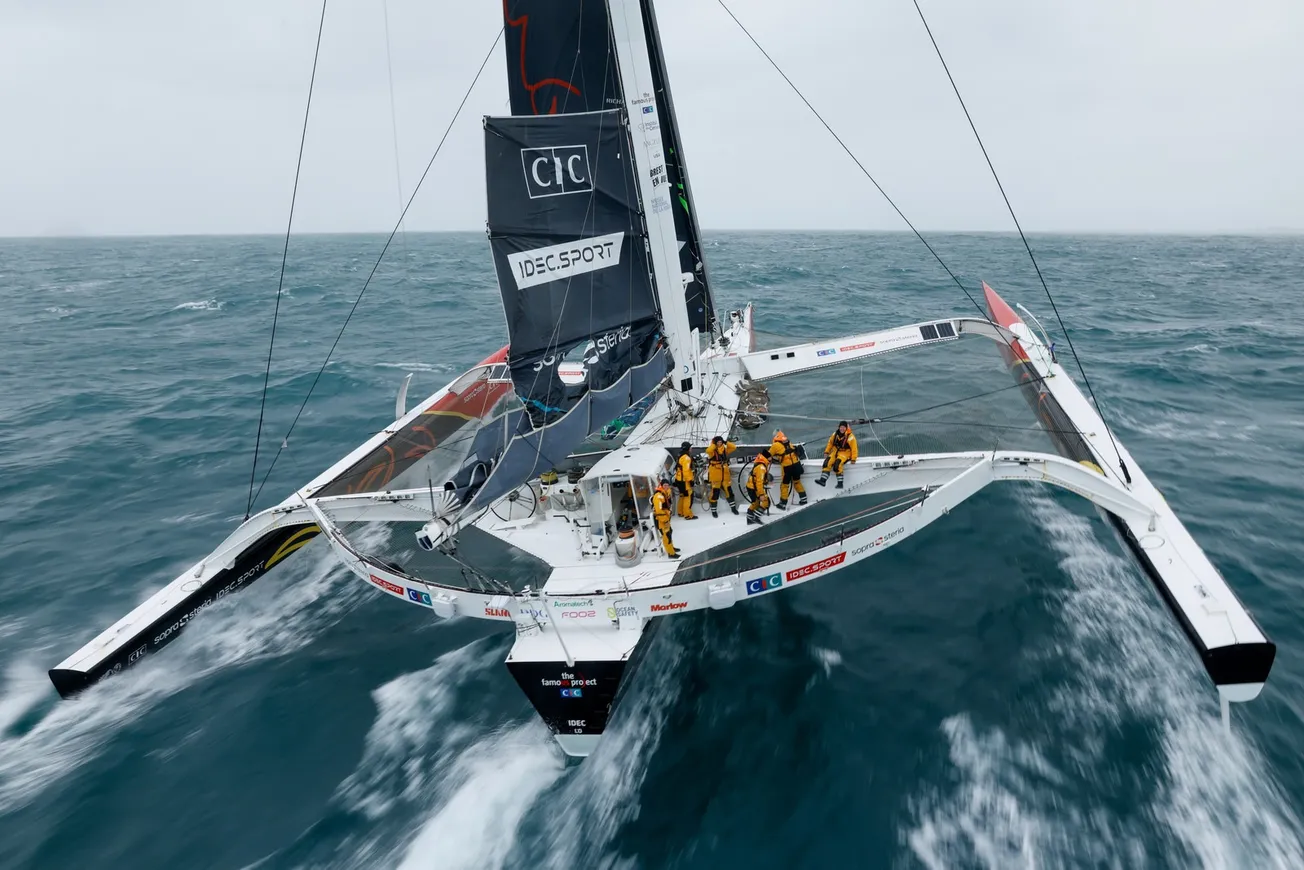
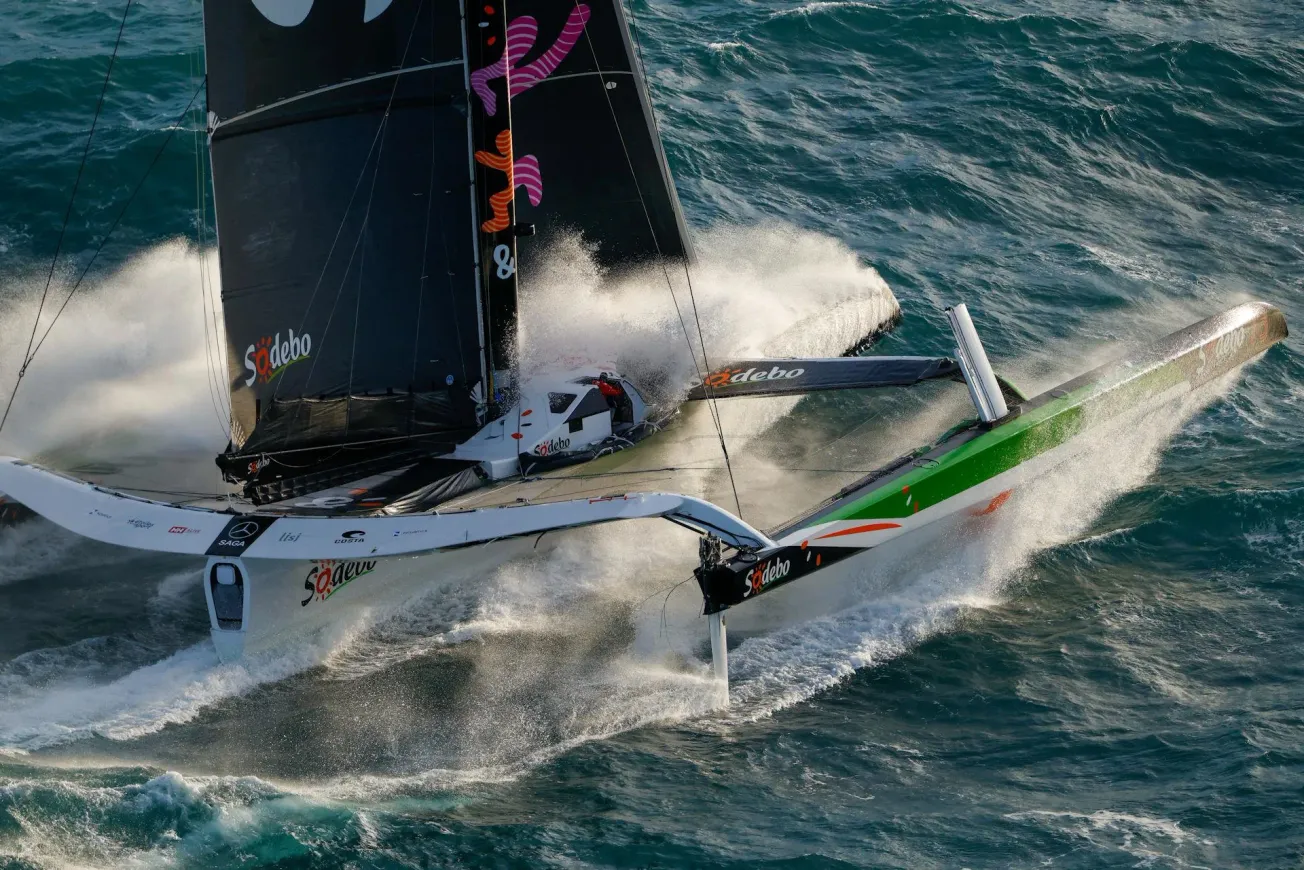
To help him deal with the mental pressure of sailing alone on a giant flying boat capable of travelling above the waves at 40 knots or more Caudrelier worked with psychology experts in the build up to the last Route du Rhum transatlantic race – which he won aboard the previous Gitana Ultim iteration.
He was also coached by sleep specialists to help him learn how to fall asleep quickly.
“That’s the goal when you are sailing alone. If you have 10 minutes to grab some sleep but it takes you eight minutes to fall asleep, then you only get two minutes sleep. So I learned how to breathe and relax when I try to go to sleep – and to forget that I am in a race, because otherwise it’s very difficult to calm yourself down.”
On the Route du Rhum Caudrelier estimated that he slept four to five hours each day, but tried to sleep at least six hours each day during his record-setting solo lap of the planet during the 2024 Arkèa Ultim Challenge aboard Gitana 17.
Unsurprisingly on such a complicated boat Gitana 18 is bristling with sensors measuring the multitude of loads spread across the hull, foils, and rig. This data is fed back ashore where a technical shore team monitors everything remotely.
However, as Caudrelier points out, they are there principally to watch out for signs of overload and cannot give performance-enhancing feedback.
“They cannot give us any advice on how to go faster. But they can tell us when we might be pushing the boat too hard. They hear all the alarms – we don’t want to hear them on board because the alarms will never stop – and they make sure there is no risk of damaging the boat, but cannot help with performance.
With Gitana 18 now in the water and the technical team poring over it as they conduct the myriad of tests needed to enable a boat such as this to sail for the first time, Caudrelier is all too aware of the amount of work that needs to be carried out to work Gitana 18 up to be ready to try to defend his title in 2026 edition of the Route du Rhum this November.
“The goal is to be ready in nine months,” he says. “That’s a huge challenge for a boat like this. For us, November feels like tomorrow. To be ready I need to spend the maximum time sailing, so I hope there are no surprises.
“It will take at least three years to make the boat reliable enough to go around the world. The Jules Verne Trophy is one of the main goals of this boat but I cannot imagine it will be possible to do that before 2029.”