
Yacht Racing Life is a reader-supported publication. If you enjoy our free content please consider signing up to receive our free email newsletter, or help the development of the website by becoming a paid subscriber.
As ever the Caribbean 600 takes competitors on a complex course zigzagging through the Leeward Islands, from St Maarten and St Barth in the north, to Guadeloupe, Les Saintes and La Désirade in the south, starting and finishing beneath Fort Charlotte at the mouth of Antigua’s English Harbour.
The first start is at 1100 today with the warning signal for the maxis competing in IRC SZ at 1120 followed by the multihulls at 1130.
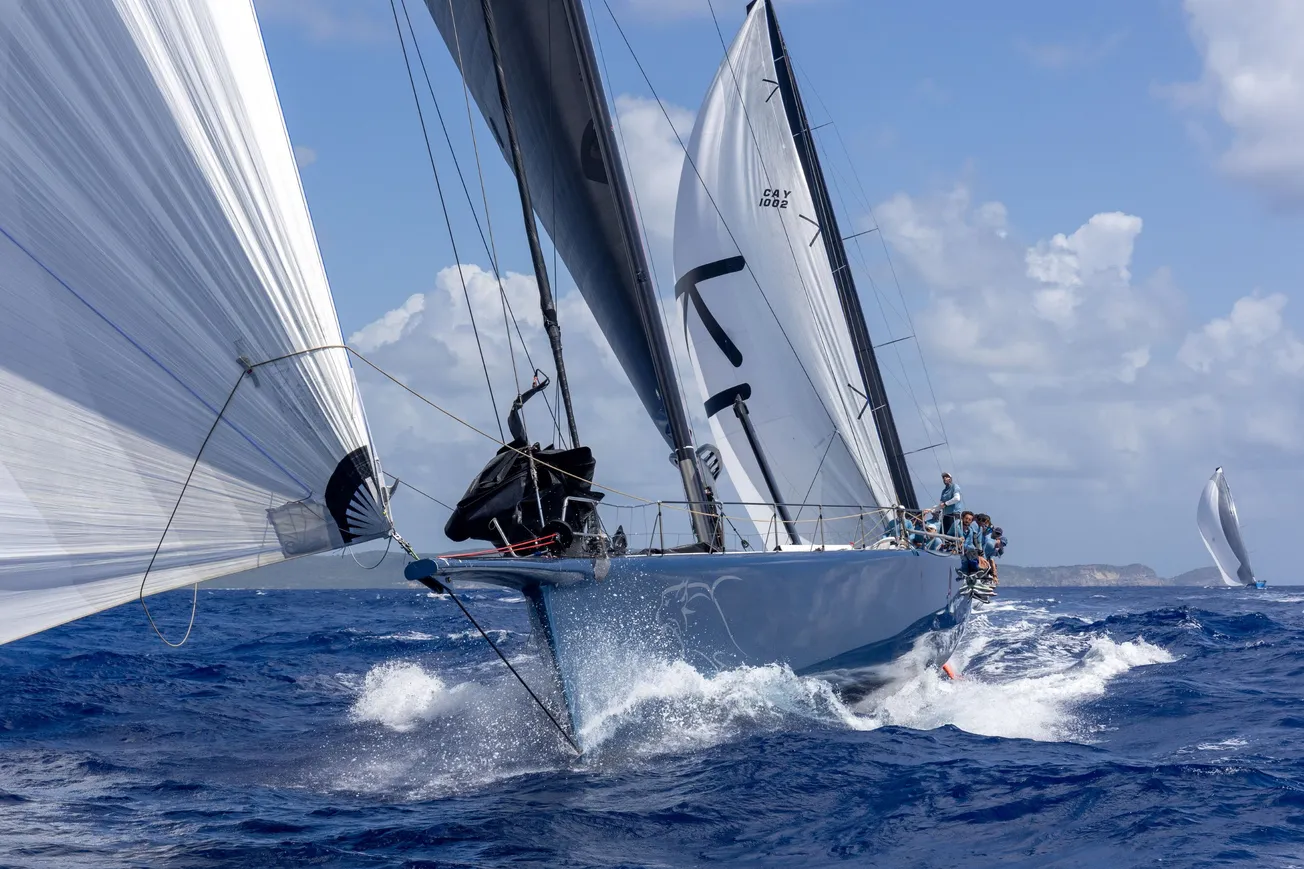
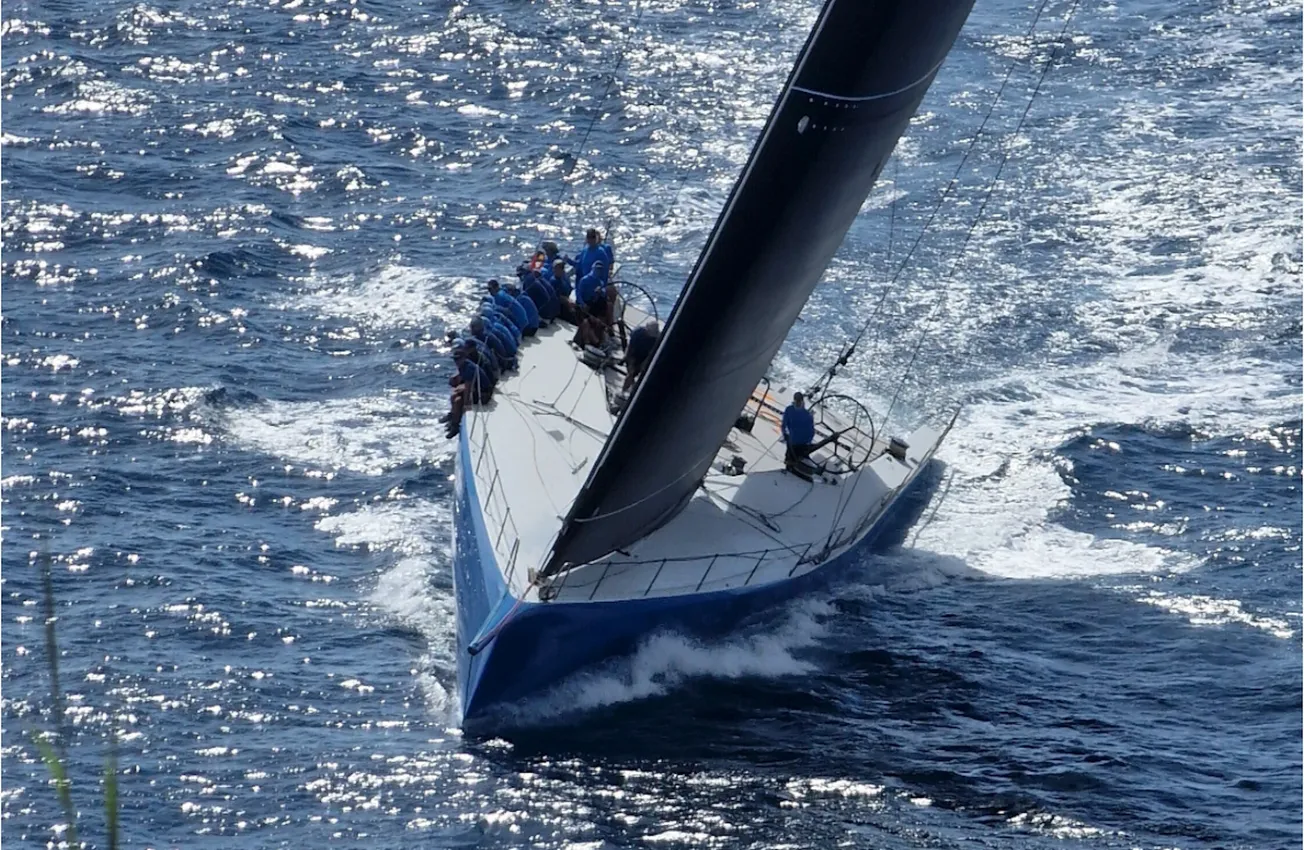
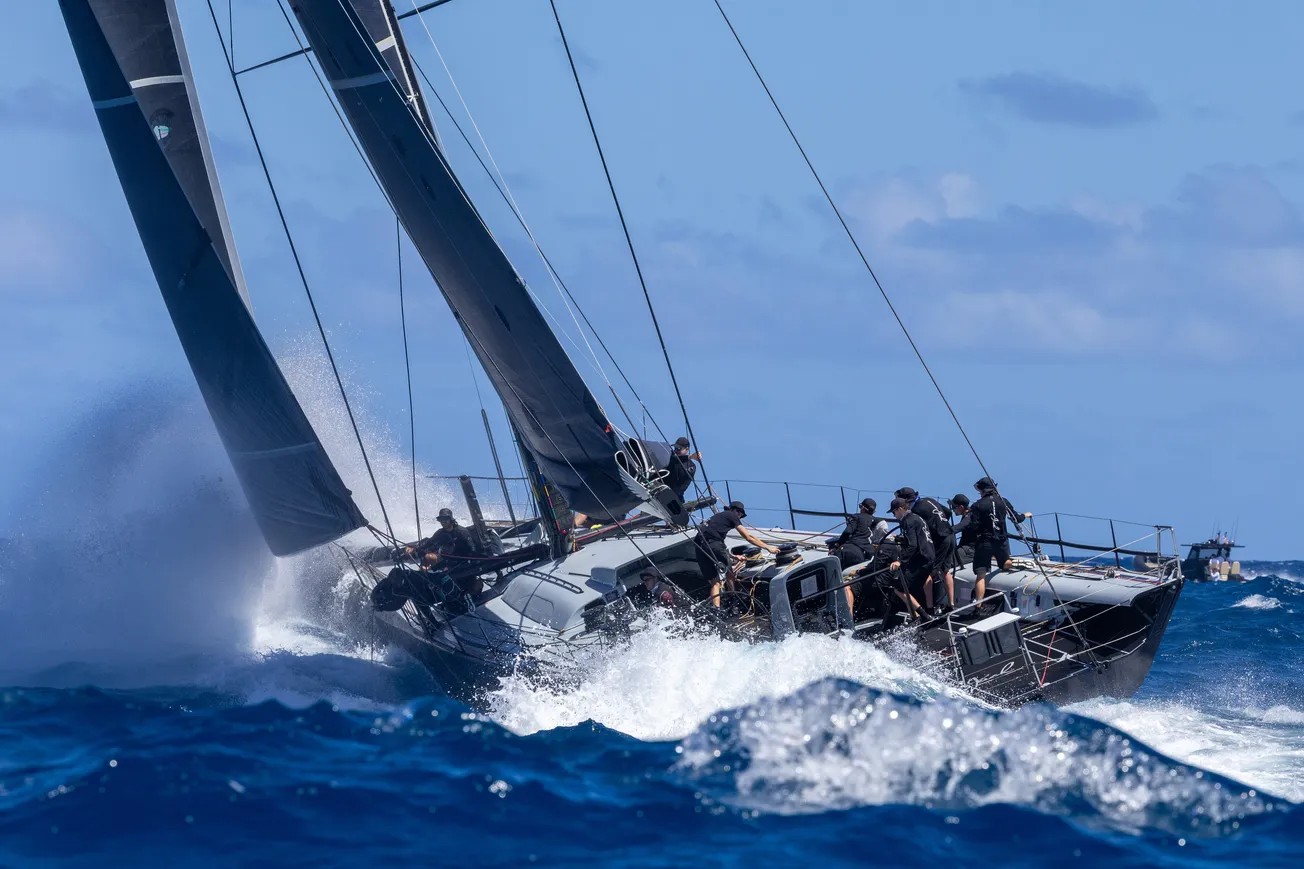
The monohull line honours fight will be between the 100 footers Remon Vos’ Black Jack 100 and Joost Schuijff’s Leopard 3. The former is faster – her IRC rating is 1.933 compared to Leopard 3’s 1.775 and the largely Franco-Dutch crew led by skipper Tristan le Brun and Jelmer van Beek has proved her potential recently claiming monohull line honours in both the Rolex Fastnet Race and Rolex Middle Sea Race.
Both are canting keel yachts of a similar vintage – Black Jack 100 originally launched as Neville Crichton’s Alfa Romeo 2 in 2005 and Leopard 3 first hitting the water two years later. Black Jack 100 is much more slender with a beam of just 5.19m compared to Leopard 3’s 6.8m and much lighter too. However Leopard 3 starts the race with the advantage of being ‘race fit’ having just won the IMA Maxi class in the RORC Nelson’s Cup series ahead of stiff competition and setting a new record in the Antigua 360.
The last time the two lined up was in the 2025 Rolex Fastnet Race when Black Jack 100 finished in 2 days 12 hours 31 minutes but Leopard 3 arrived just over an hour later beating her on corrected time.
While the forecast has the wind in the high teens, gusting to 20-22 knots in the acceleration zones between the islands, the biggest issue this year will be the wind being some 30˚ further right (ie around 120˚) compared to the prevailing direction.
The wind is forecast to back into the east late on Tuesday night. This means that for the faster boats the race’s long leg from St Barth down past Guadeloupe will be a one tack-favoured beat rather than the usual speedy close reach. It will also affect the position of the lee behind the numerous islands the race passes, which will be more to the northwest.
Bigger picture this means that the race may favour the slower half of the fleet says Leopard 3 navigator Will Best: “What will be predominantly upwind from St Barts to Guadeloupe for us should be a nicer fetch, if not a reach, for the smaller boats."
The wind being 30˚ right will also a change in complexion of other legs. Some that are usually a beat or a run will be a straight line.
“So straight out from the start, from Barbuda down to Nevis, it's going to be more of a jib top than it was traditionally - a downwind sail, getting headed at the end,” continues Best.
On board, the crew has been busy converting Leopard 3 to offshore mode, installing necessary equipment such as bunks. They have also got a new A2 kite for the race.
According to Best their routing shows a fastest race time of 1 day 15-16 hours, but more like 1 day 20-22 hours. This is outside of the record time of one day, 13 hours, 41 minutes – set by George David’s Rambler 88 in 2018.
As to the corrected time prize there are numerous contenders. The Maxi 72 Balthasar starts race fit also having competed in the RORC Nelson’s Cup and with Balcaen son Louis taking over the helm from his father Filip. Louis Balcaen, tactician Bouwe Bekking, and the rest of the crew come with plenty of offshore experience – Balcaen himself sailed in two Volvo Ocean Races.
As usual there is a strong turnout of former round the world race boats, the fastest in terms of her rating being the VO65 Sisi. One to watch will be lower-rated sistership Team Jajo, which has been chartered to American Alex Laing with the highly experienced Tony Rey calling tactics.
Britain’s Philip Rann is entered with his Carbon Ocean 82 Aegir. Rann won the maxi class in the Aegean 600 with his previous yacht, the Swan 80 Umiko and Aegir represents a significant step up in performance.
At the slower end of the maxi fleet is high speed cruiser, Alejandro Gonzalez de la Peña’s Y7 Viento and the Swan 76 Loevie of Vendee Globe skipper and two-time Barcelona World Race winner Jean-Pierre Dick.
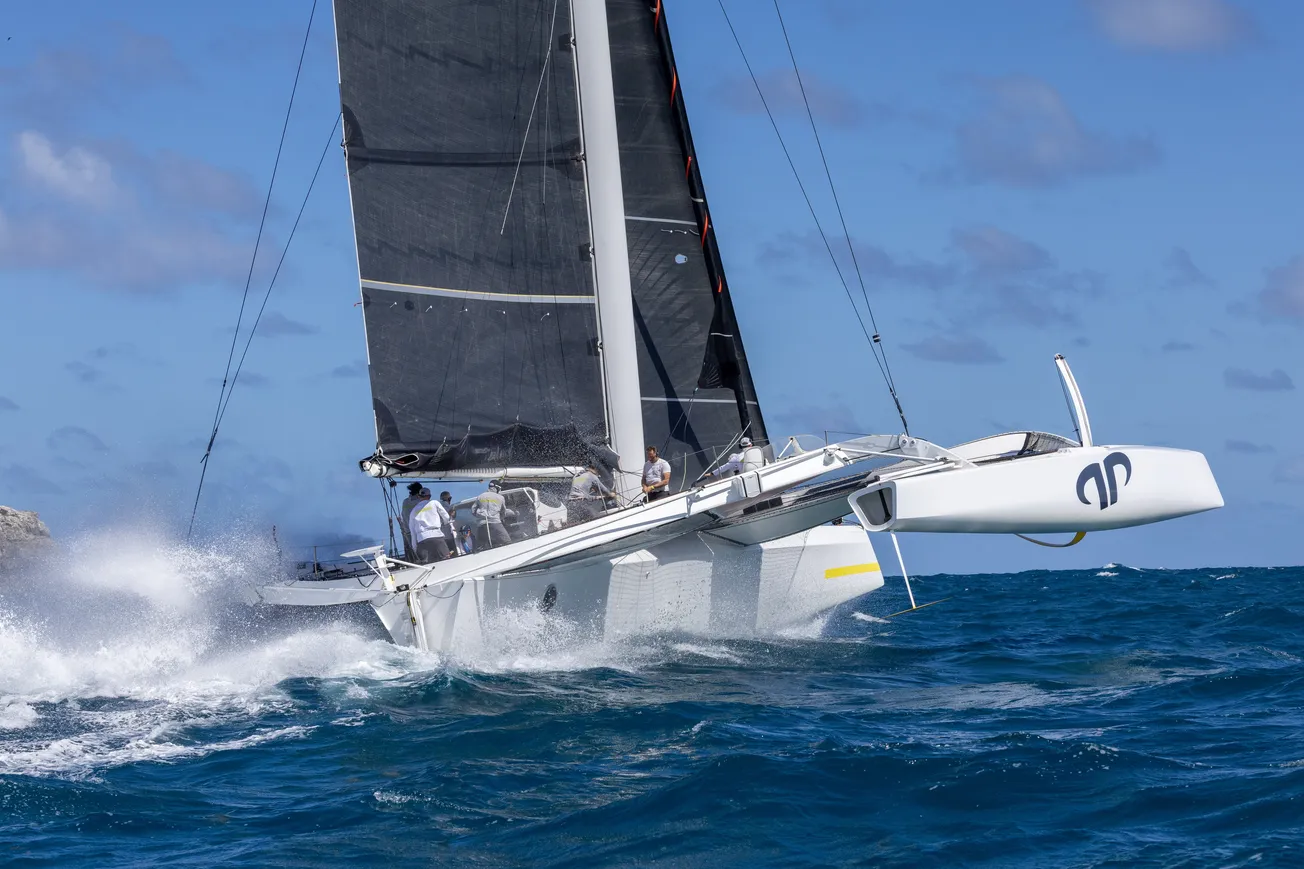
But leading the 57-strong fleet on the water will be the multihulls, notably the two turboed MOD 70 trimarans, Jason Carroll’s Argo and Erik Maris’ Zoulou, chartered to Jon Desmond’s Final Final team but with some regulars on board such as Ned Collier-Wakefield and Thomas le Breton.
Argo’s Brian Thompson shared his assessment: “There's going to be moderate to good trade winds but shifted 30˚ more right than normal for the first day and a half. So anything that was a beat will be more of a one-tack beat. And anything that was a reach turns into either upwind or downwind.
It looks a touch slower than normal, because the biggest leg, which is usually fast to Guadeloupe, is now going to have some tacks in it for the fast boats whereas the boats behind will probably lay it in one. But other legs, like Saba to St Barth, will be heading at the mark upwind, rather than tacking fully upwind. The fastest leg is probably going to be Barbuda to Nevis, which will be a beam reach.”
In addition to the MOD70s, the Irens 63 trimaran formerly known as Paradox (line honours winner in 2018) returns as Marcos Sirota's Sophia. Also in the mix is Richard McKinney Gunboat 68 Little Wing on which round-the-world veteran and the ‘fastest man on the water’ Paul Larsen is calling the shots.
So the scene is set for some fantastically competitive racing. But, exactly how this latest edition of the RORC Caribbean 600 will play out over the coming days will very much depend upon the accuracy of the weather forecasts and the skill of the competing crews.