Back in March 2022 I was at a SailGP event in San Francisco. I had just finished an interview with Kiwi sailor and then New Zealand SailGP Team coach Ray Davies and we were making small talk about the America’s Cup while I packed up my recording equipment. Little did I know that this seemingly mundane bit of chat was about to open up a life-changing opportunity for me.
I had just asked Ray what was keeping him busy in the AC world and amongst the numerous topics he listed off one – helping organise the ‘recon programme’ – caught my attention.
“What’s that?” I asked while zipping up my backpack and standing up to leave.
“Well, we are bringing the reconnaissance/spying element of the America’s Cup in house this time around,” he explained. “We are hiring two people per team to become the eyes and ears of the other teams. Each pair will be given a fast rib by the teams and there will be one driver/reporter and one photographer/videographer. Whenever the boats come out of the shed the recon team will be there to photograph/film and report on what goes on – ashore and on the water.”
I quickly sat down again. Precisely what kind of people were they looking for to take on the driver/reporter role?
“Oh, they would need to know about the AC, the people, the teams, the boats, ideally have some journalistic experience,” Ray answered. He paused for a moment and then exclaimed: “Hey! You would be well suited for that role!”
Bloody right I would. Becoming an America’s Cup spy was nothing short of my ultimate dream job and from that moment on securing a spot on the AC37 Recon Team became my primary focus.
Circumstances played in my favour somewhat when Sir Ben Ainslie’s British INEOS Britannia syndicate announced they would be setting up a winter training camp in Palma, Mallorca – roughly three miles around the bay from where my wife and I live.
Despite this happy coincidence I knew I couldn’t count any chickens. The recon team roles had been advertised globally and there had reportedly been a huge influx of applications. I am famously bad at waiting patiently in situations like this but after several agonising months I finally got confirmation I had been chosen – along with Mallorcan filmmaker Ugo Fonollá – to carry out recon on the British team.
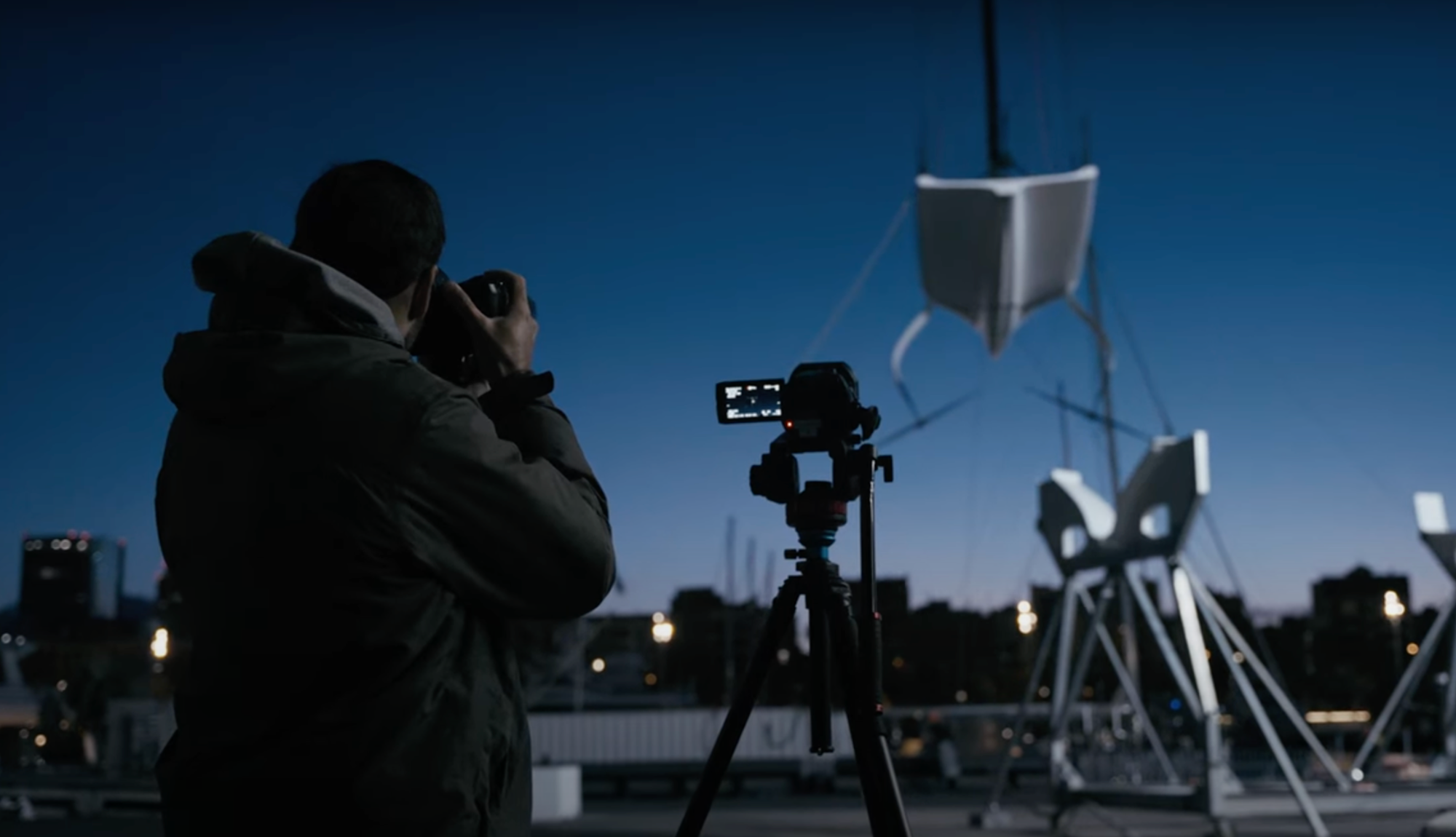
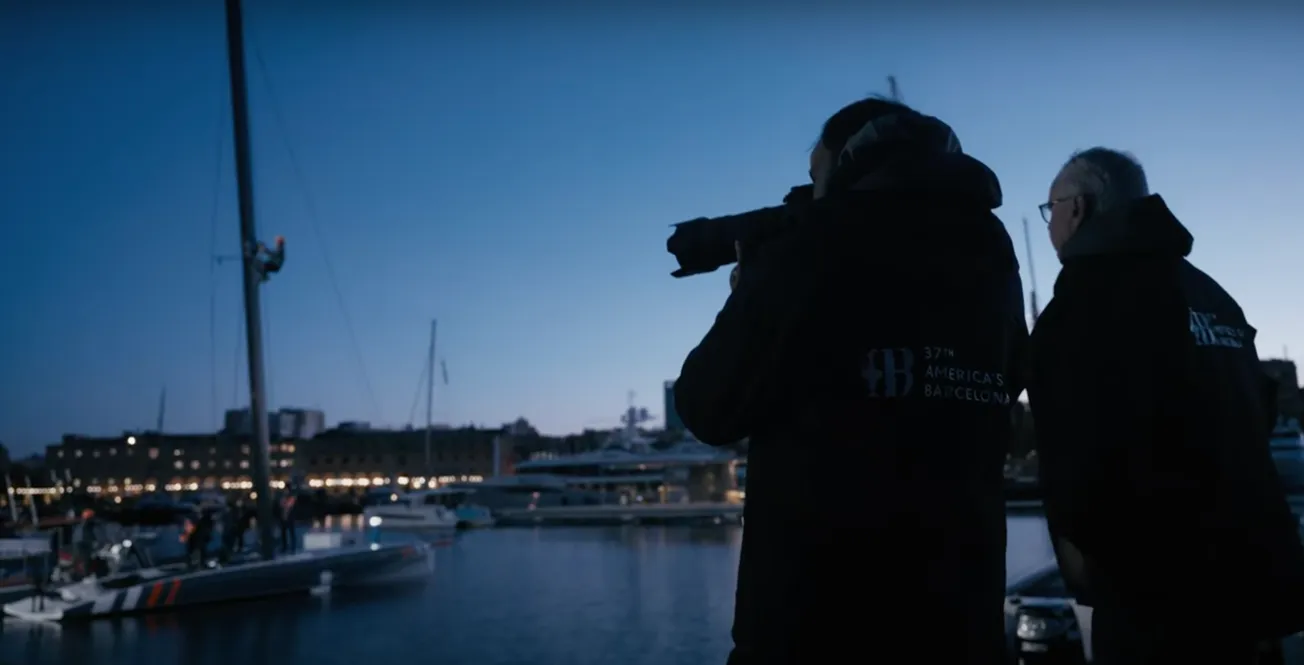
Our first recon session was on October 27 2022, the day the team wheeled their LEQ12 test boat codenamed T6 out of the shed for the first time. The concept of spying in plain sight is a strange experience for all concerned and I remember Ugo and I being nervous that first day not to do or say the wrong thing.
Happily for us, the rules of engagement for the recon programme had been well established. We were allowed two vantage points on the hardstanding outside the team base, each no more than 25 metres from the yacht. We were allowed to move in between those two points freely but our primary focus had to be on the boat itself. Shooting into the team base was strictly prohibited.
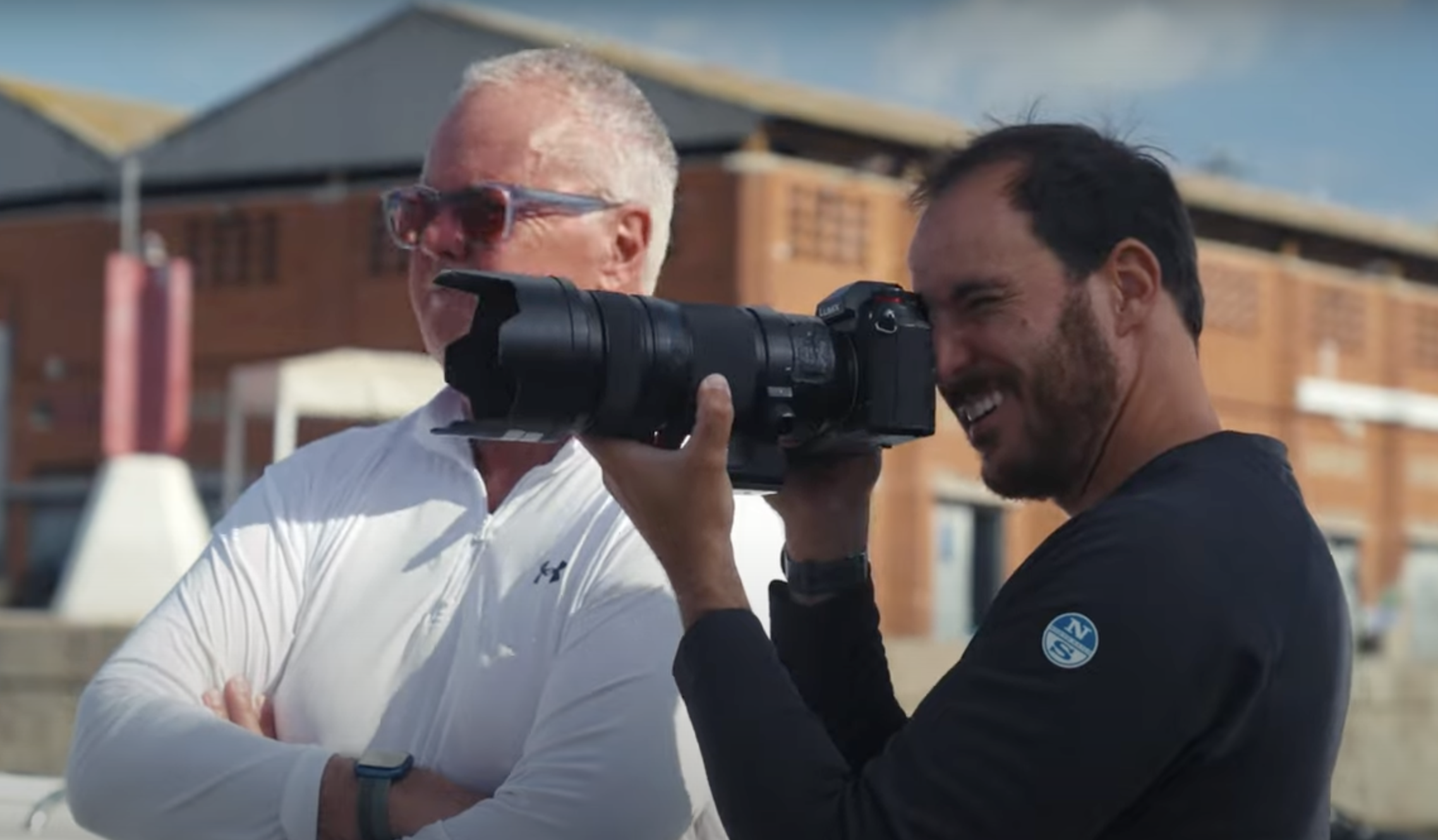
The British team were extremely welcoming and friendly in their dealings with us. Our main contact was sailor Ben Cornish who had shown us around the base a week earlier and made it clear where we could go – the coffee machine and the bathroom – and where we could not – pretty much anywhere else.
Soon after arriving on our first day Ben Ainslie came over to shake our hands and welcome us to the base personally. I have interviewed Ben a lot over the years and have always found him to be very open and generous with his time. His greeting was characteristically friendly and went a long way to making Ugo and I feel more comfortable while on-site. It also seemed to send out a signal to the rest of the team about how to interact with us.
Ugo and I pretty soon settled into a rhythm over our first couple of weeks of America’s Cup espionage. Under the recon rules the team had to give us 24 hours notice of the boat coming out of the shed. We would arrive about 15 minutes prior to rollout time so that Ugo could set up his tripod and cameras.
Early in the British test boat’s commissioning phase there were many long days spent ashore as the shore team and technicians meticulously load tested the rig and other components – either with the boat in its cradle or afloat alongside the pontoons. Eventually the shoreside test schedule was complete, however, and it was time to head out on the water – albeit without a mast and just for tow testing in windless conditions.
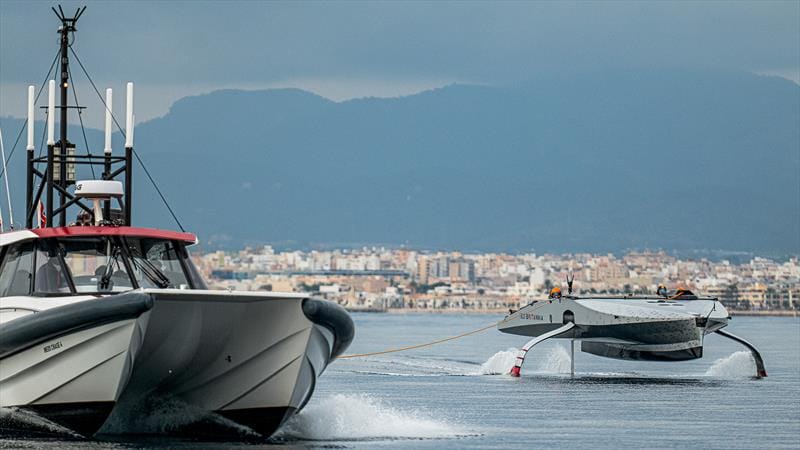
By the time the first sailing day came around, as we left the dock Ugo and I were beyond excited at the prospect of seeing T6 sail for the first time. More patience was required, however, as there were plenty more on-the-water pre-flight checks to be carried out. So we waited, slowly circling the silver-hulled yacht as the sailors hoisted and lowered sails in the flat water off Palma’s spectacular cathedral.
Finally it was time for sailing. The four crew – drivers Ben Ainslie and Giles Scott, along with trimmers Luke Parkinson and Leigh McMillan – pulled on their full-face helmets and dropped into their respective pods. The boat was released from its side tow for the first time and hydraulic pumps moaned and groaned as the sails were sheeted on for the first time and the boat accelerated, bashing through the wake of a passing ferry before climbing tentatively out of the water for a short flight. This was what we had been waiting for and it felt like our jobs as AC spies had finally begun.
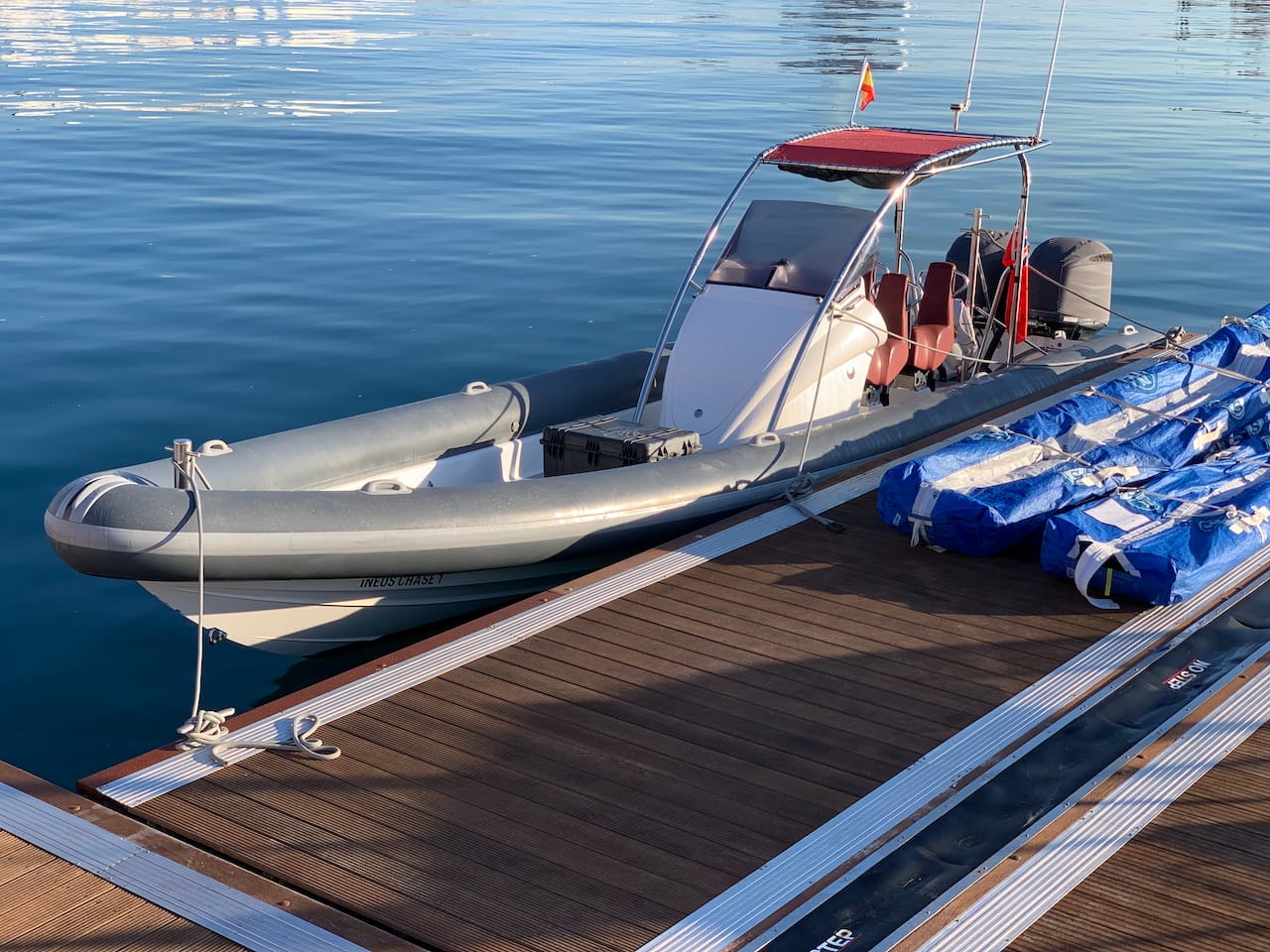
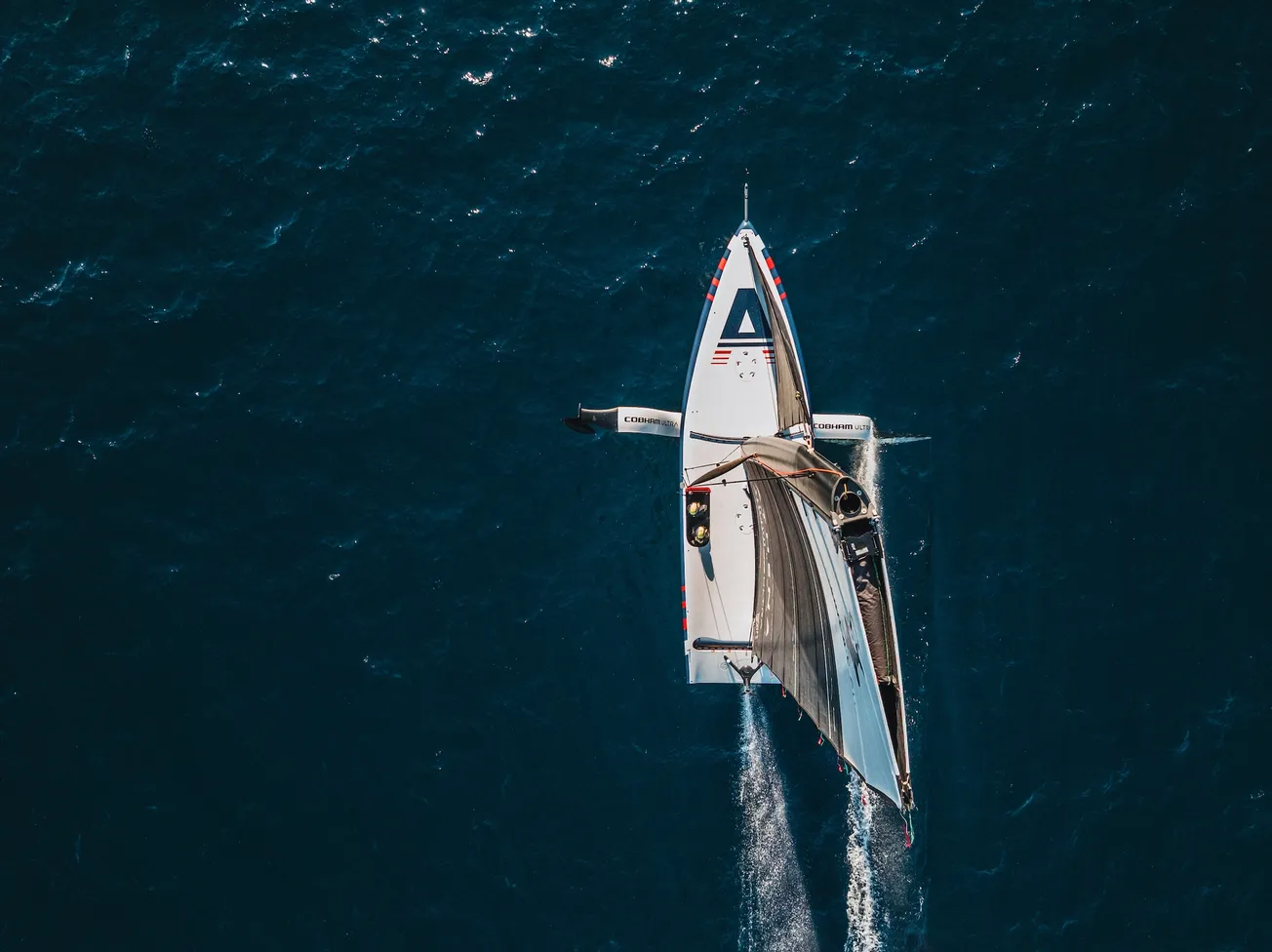
Observing, photographing and filming the boat from dry land is one thing, but doing the same out on the water is quite another. I was reasonably confident in my rib driving skills and the 10.5 metre boat the team had given (above) us was certainly not lacking in power. However, the driver / reporter role is not just about keeping up with the yacht, it’s about putting your photographer / videographer in the right place to capture the right information.
A core tenet of the recon role was to never be in the way of the team’s on the water activities and balancing that against positioning yourself to be able to gather useful images and footage was a constant challenge. For obvious reasons we were not given access to the radio communications between the sailors and their two (sometimes three) support boats. That meant we had to preempt the crew’s manoeuvres and position ourselves accordingly.
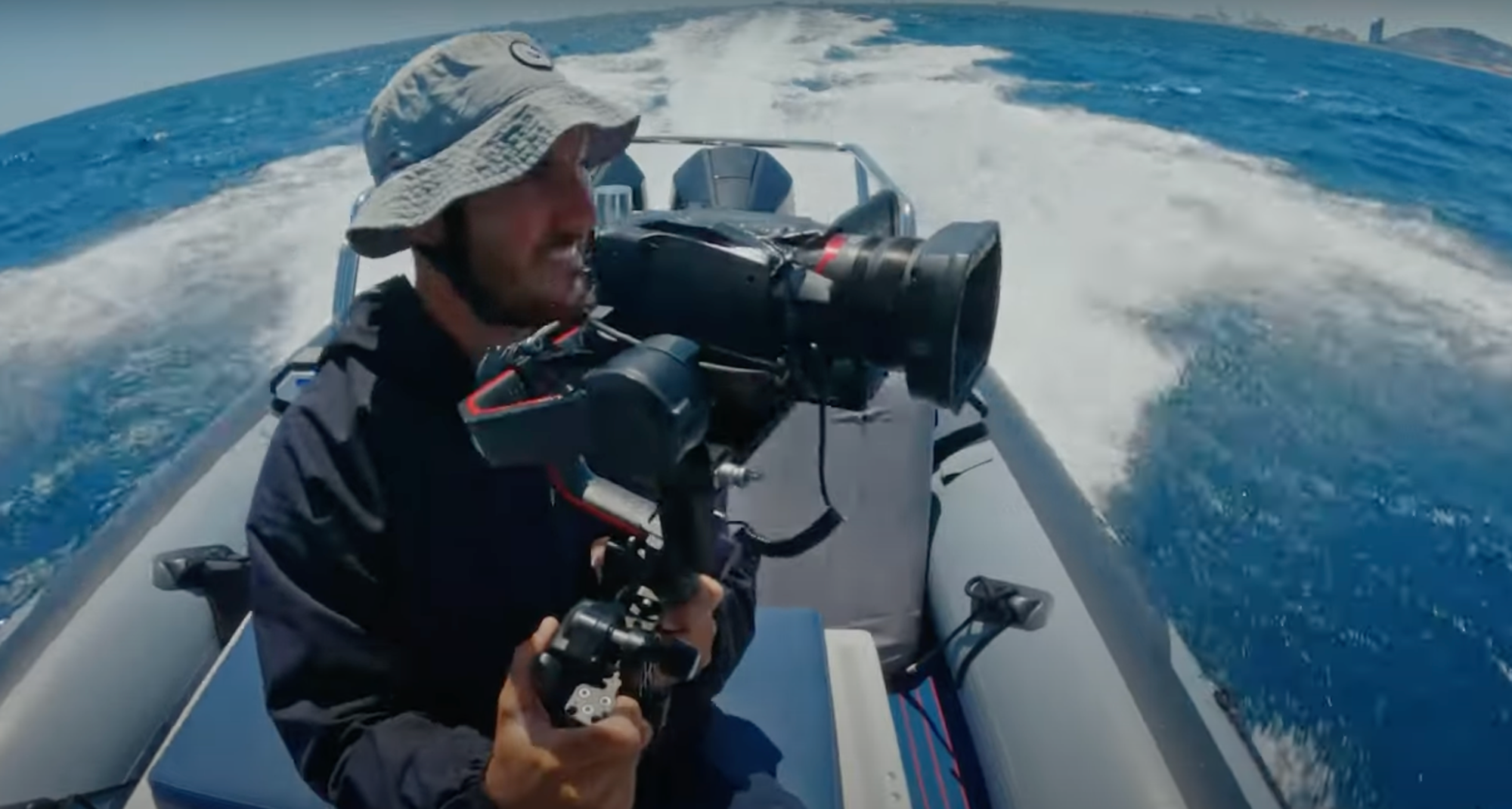
I am not ashamed to say that on more than one occasion we got left behind – usually due to the sea state making it impossible for us to keep up. In those scenarios, rather than chasing along uselessly way behind, we learned to think strategically and tried to position ourselves so that the boat came to us. This had the added bonus of giving us the opportunity to capture a bowshot – Ugo’s favourite image.
The guide issued to us by the recon panel – made up of the recon representative from each of the teams – included a wish list of images and footage. The list included: upwind and downwind full sail profiles from behind, upwind and downwind full sail profiles from 90 degrees (to windward and to leeward). With the LEQ12s and AC40s boats capable of speeds in the high thirties and the AC75s capable of 50 knots plus, strategic planning and good timing were required to both be able to be in the right position and to match the speed of the yacht.
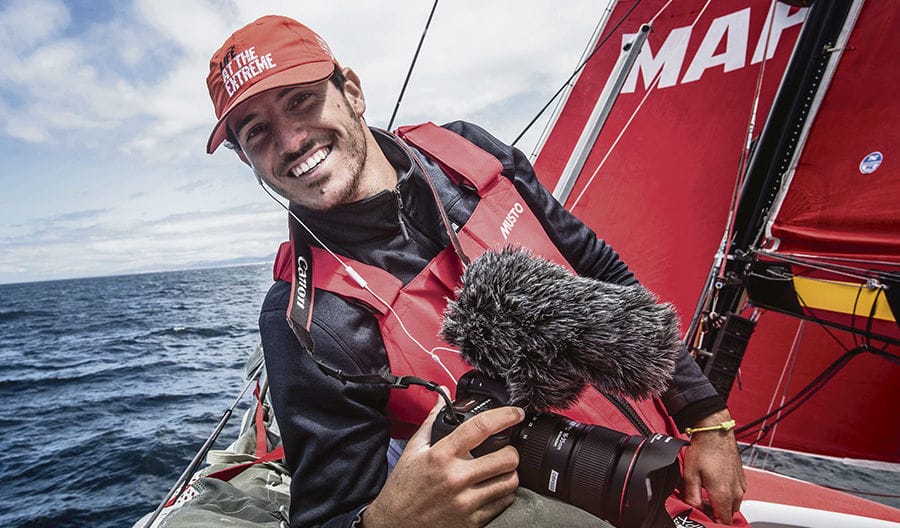
I was forever thankful to have Ugo as my media guy. As well as being a keen sailor and kiteboarder and running his own successful video production company, Ugo had also raced around the world in the 2017-18 Volvo Ocean Race as the On Board Reporter with the Spanish entry MAPFRE. I always figured that if he could successfully film on deck in the southern ocean then putting up with my rib driving in the confines of Palma Bay should be no issue for him.
Despite my best efforts to shake him off the boat or drown his equipment in sea water, he clung on and just kept shooting and filming. Even on the most testing of days when we had been pounding upwind at 30 knots and testing the range of the boat’s hydraulically damped seats to their limit I would be stunned to see the quality of the photographs and footage he had managed to capture.
Worth noting here that in my opinion the recon photographers / videographers had a tougher workload than the drivers / observers. While I had to conduct a three minute interview with one of the team after sailing and write a summary report of what I had seen that day, Ugo had to sift through and upload hundreds of images and hours of footage – including an edited three minute highlights reel.
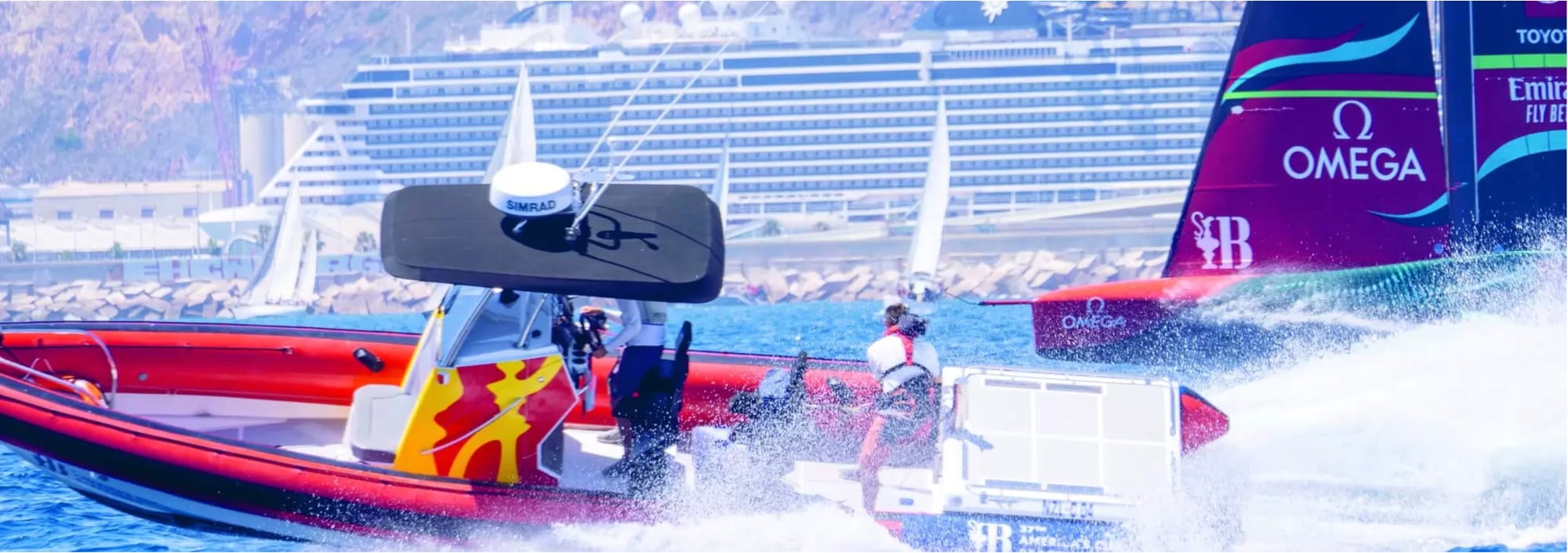
A word of commendation at this point too for America’s Cup writer Magnus Wheatley who trawled through the collective output of all the recon units to produce insightful written updates on the official website that went a huge way towards raising the general public’s awareness and interest in AC37.
The days could be long, tiring, and tough on your body but neither of us would have given it up at any price. From a personal point of view, parallel tracking the British boat upwind and downwind around Palma Bay at speeds sometimes approaching 50 knots and around 60 metres apart, is an experience I will never ever forget. Nor will I forget the looks of sheer amazement on the faces of the people aboard cruising boats ambling their way to their favourite anchorage when Ben and the boys suddenly ripped across their stern at 45 knots.
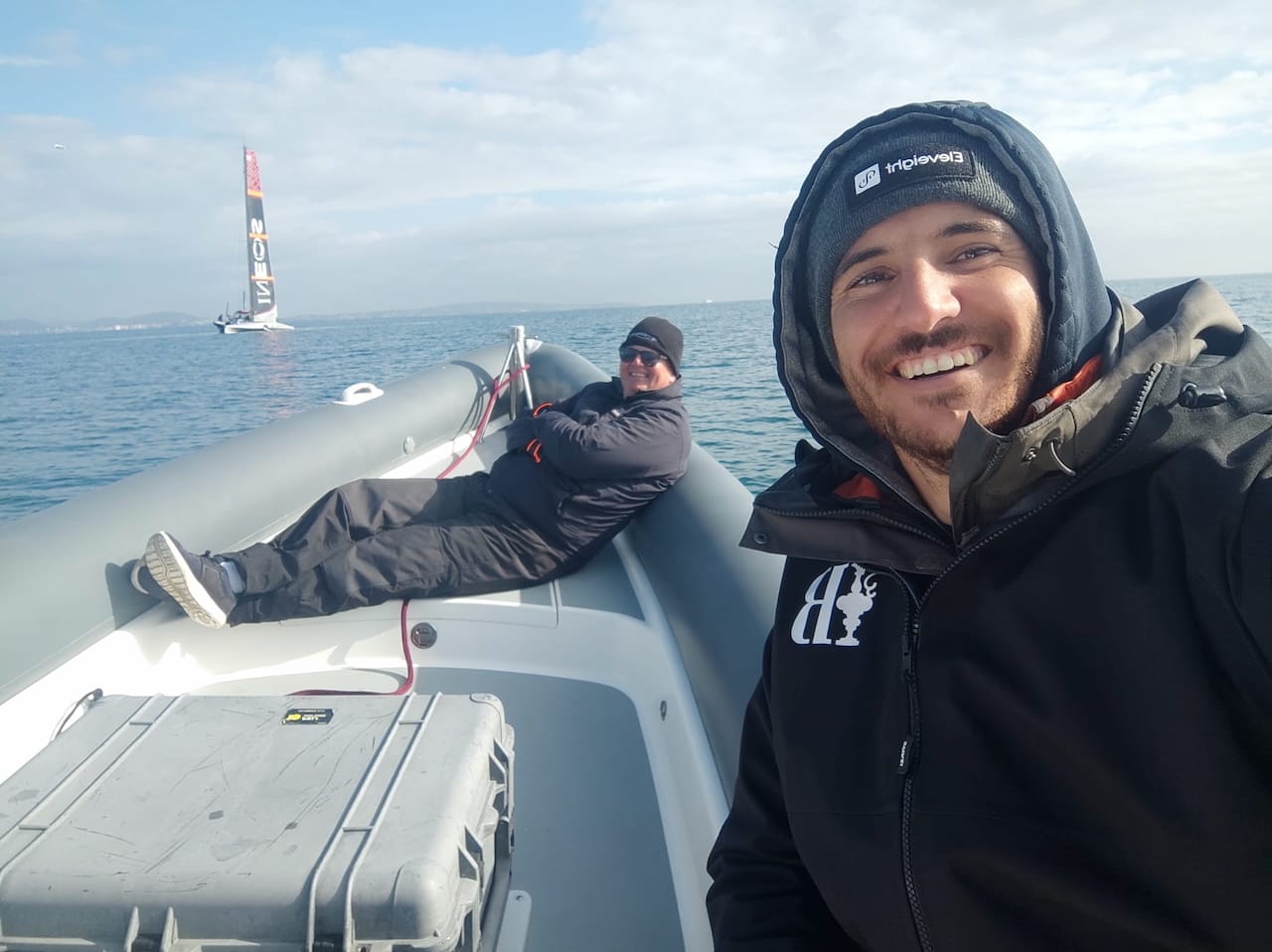
All that said, it was not all high-adrenaline action. By its very nature the America's Cup is a design and development race and the cutting edge test boats and latest generation AC75s take an inordinate amount of tweaking and testing to get them sailing optimally. That, and the fact that some days the wind just didn't materialise when it was forecast to, meant on soem days we did plenty of waiting around for something to happen.
In the winter we were often the only boats on the water. Although we had to triple-wrap ourselves in thermals, waterproofs, balaclavas and gloves against the biting cold of the apparent wind, our exclusive panoramic views of the Mallorcan landscape with snow dusting the tops of the island’s Tramuntana mountains more than made up for any discomfort.
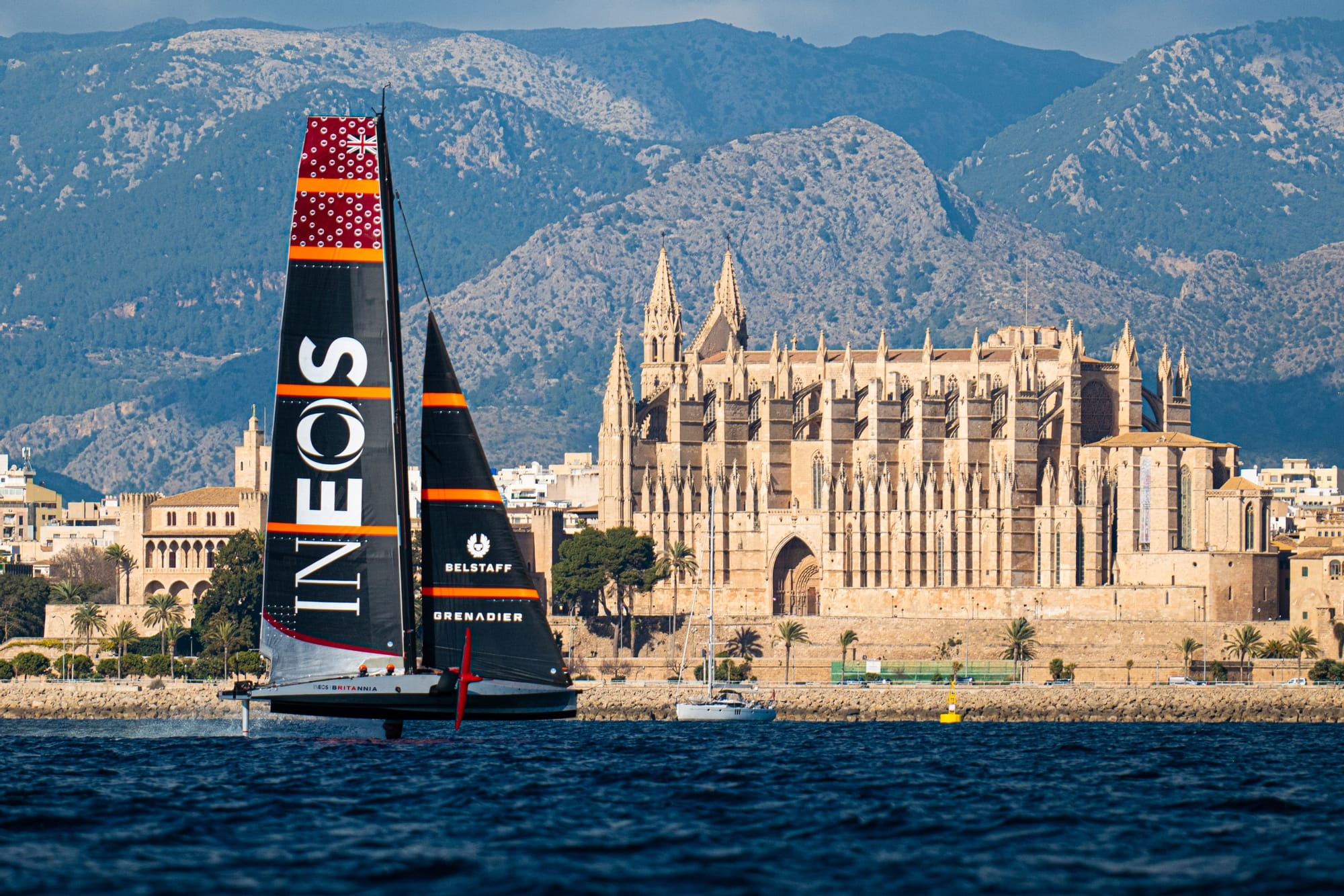
Ugo and I spied on the British challenger for 12 months and never missed a day of sailing. We were there when they capsized and nearly sank T6 and in February 2023. We moved across the Mediterranean to Barcelona with them in August of 2023, before the decision was made to rotate the recon units around the six competing teams.
Our first rotation was with the America’s Cup holders Emirates Team New Zealand, before we moved on to NYYC American Magic, Switzerland’s Alinghi Red Bull Racing, and the French Orient Express Racing Team. Although we missed the familiarity of the British setup – in particular the speed and manoeuvrability their recon rib meant it was always our favourite – it was fascinating to get the chance to observe the way the other teams operated.
In many ways they were all very similar – the same highly professional procedures, the same intensity of purpose, and even the same questionable banter amongst the shore crews. In certain other ways each campaign was very different.
In particular, the Kiwis impressed us with their no-nonsense, zero-faff, way of working. This is a team that has been in existence in one form or other for decades and the resulting depth of knowledge and experience shines through in everything they do. Schedules and plans are adhered to religiously. A 0900 rollout meant the doors opened at 0855 and the bow of the Kiwi boat emerged precisely on time.
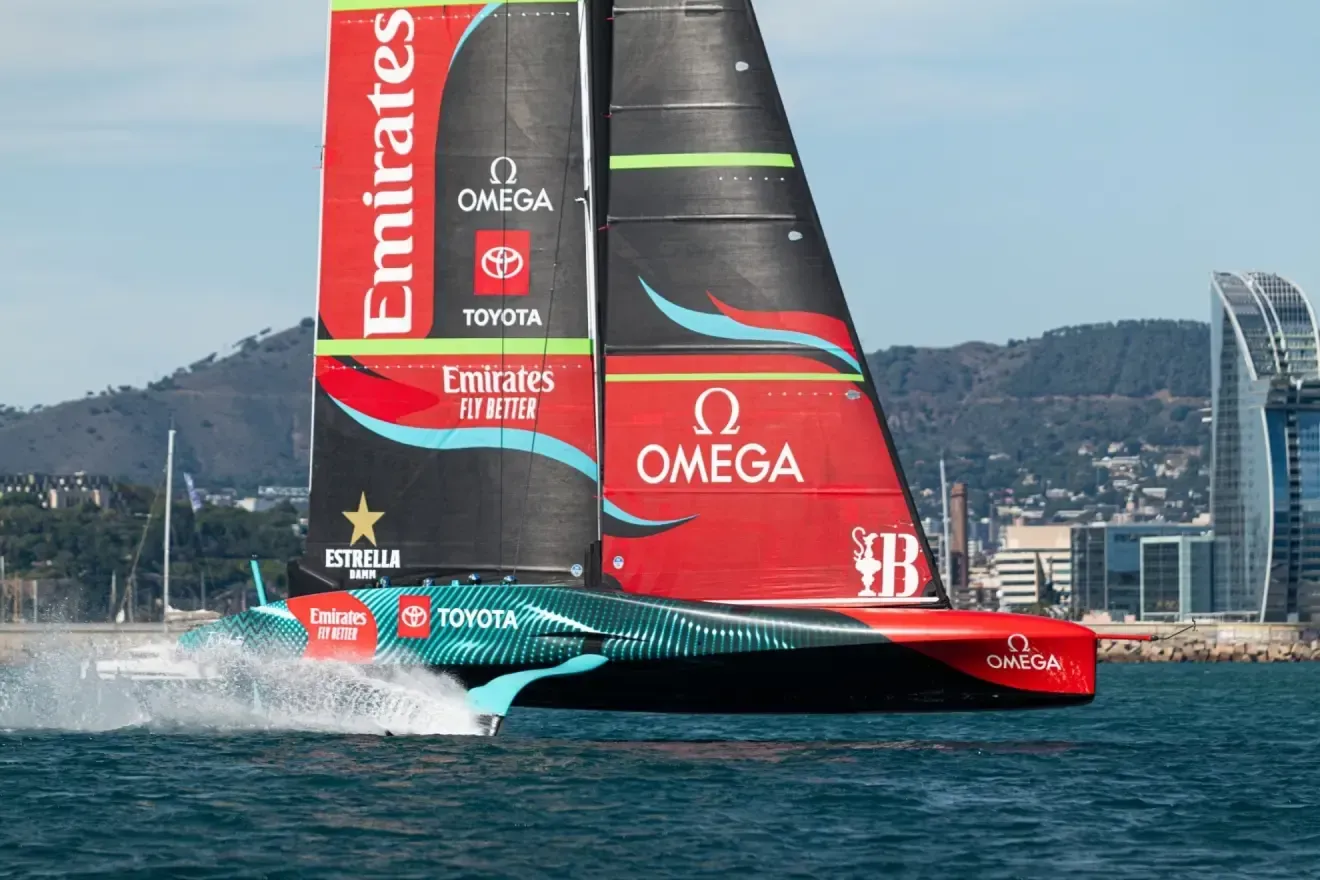
On the water they are exactly the same. Off the dock on time, out of the harbour, sails up quickly and smoothly. Minutes later they are up and foiling. Then, once the on-the-water schedule has been completed there is no hanging around, it’s back to the dock to give the shore team a head start on turning the boat around for the next day. Based on what we saw none of the other teams quite achieved the same level of efficiency.
The recon programme came to a close in the middle of August. While I was able to take on a shoreside role with the America’s Cup media team, Ugo’s amazing talents had been recognised by the British team who took him on to provide recon of the other teams in the lead-up to racing beginning.
Looking back at my time as an America’s Cup spy I can confidently say that the experience was truly life changing. As a sailing writer I have followed the top end of our sport for a long time now and – like many of my journalist colleagues – I have interviewed the majority of its key protagonists on many occasions.
Those interviews have given me a degree of insight into what life is like in the upper echelons of professional sailing. But my time with the recon programme has taught me so much more. I have been able to witness first-hand the unwavering dedication, professionalism, talent, and resilience required to be a part of an America’s Cup campaign – a unique viewpoint that I know will better inform my AC writing going forwards.
Justin Chisholm