Martin Fischer on switching teams and AC75 upgrades
Ineos Britannia’s new chief designer Dr. Martin Fischer looks exactly the way you expect a brilliant scientist/naval architect to look.

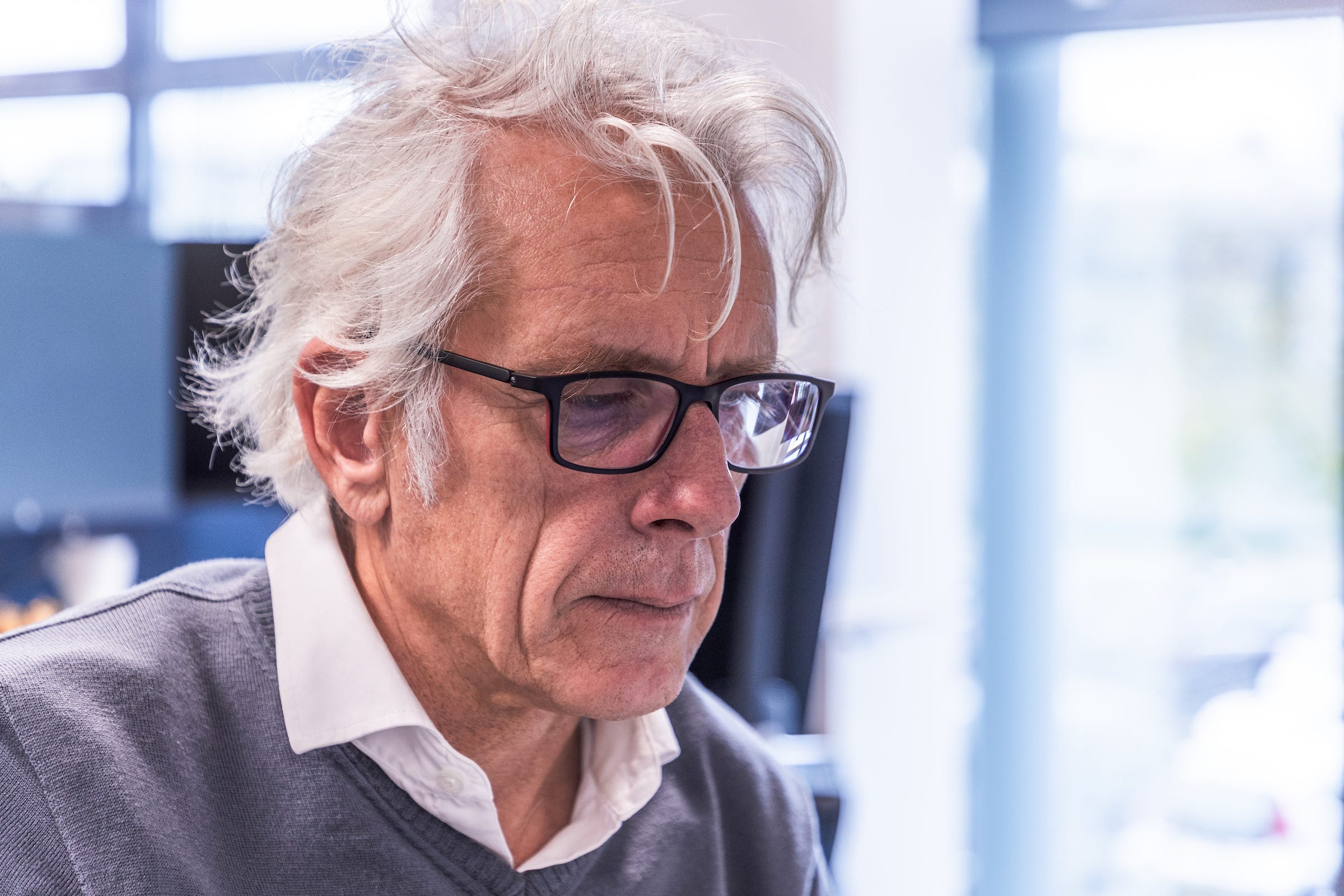
Ineos Britannia’s new chief designer Dr. Martin Fischer looks exactly the way you expect a brilliant scientist/naval architect to look.
Serious and steely-eyed behind an impressively large pair of black framed spectacles, the German designer’s appearance is softened considerably by his hairstyle – an undeniably unruly crop of pure-white hair that immediately puts you in mind of Albert Einstein.
In conversation he is disarmingly polite and accommodating.
Fischer followed up his original physics degree (where he had specialised in fluid dynamics), with a PhD in geophysics, before moving on to work for 10 years on climate research using coupled ocean atmosphere models.
“That’s pretty different [to yacht design],” he admits. “But it’s not so far away – because the the equations are the same. It’s all fluid dynamics, it’s just the scale that that is different.”
Fischer was introduced to sailing at the age of nine and says his love of the sport was what prompted him to study physics and to specialise in fluid dynamics.
Other than ‘a little club racing’ here and there, he says he doesn’t sail much these days. Back in the day, however, after graduating from the Optimist fleet he raced A Class catamarans for 15 years, followed by a further seven-year stint in Formula 17 cats.
Fischer has long been an established name in the professional yacht racing game and has been a go-to designer for a variety of top flight professional sailing teams – both inshore and offshore.
Amongst many other projects, he was the brains behind the underwater appendages for Franck Cammas’ all-conquering Groupama 4 Volvo 70 which dominated the 2011-12 Volvo Ocean Race, he led the design team for Team France in the 35th America’s Cup, and he was at the heart of the Luna Rossa design programme for last year’s 36th America’s Cup finalists.
Aside from all that, Fischer is also responsible for designing one of the world’s most successful one design foiling catamaran classes – the GC32.
“Originally it was not designed as a fully foiling catamaran,” he explained. “At first it was a foil-assisted boat and then after foiling hit the America’s Cup it was decided to transform it into a foiling boat. That was a relatively easy process as it was already designed for foils.”
For the 37th America’s Cup Fischer has switched allegiances from Luna Rossa to join Ben Ainslie’s British Ineos Britannia syndicate – the Mercedes-AMG Petronas Formula One Team-boosted Challenger of Record for AC37.
I tracked him down to his desk at the team’s new base in the vast Mercedes F1 team HQ in Brackley, England to find out more about his move to the British team and to quiz him on the changes to the AC75 design rule and their potential impact on AC37.
Cup Insider: This will be your second time working for an America’s Cup team acting as the Challenger of Record. Is there some advantage to being Challenger of Record?
Martin Fischer: Because you are involved in the rules discussions, that’s an advantage, – not a huge advantage, but an advantage nevertheless. It means you get a head start on the rules, at least. Plus, if there are things you don’t like, you can negotiate that.