


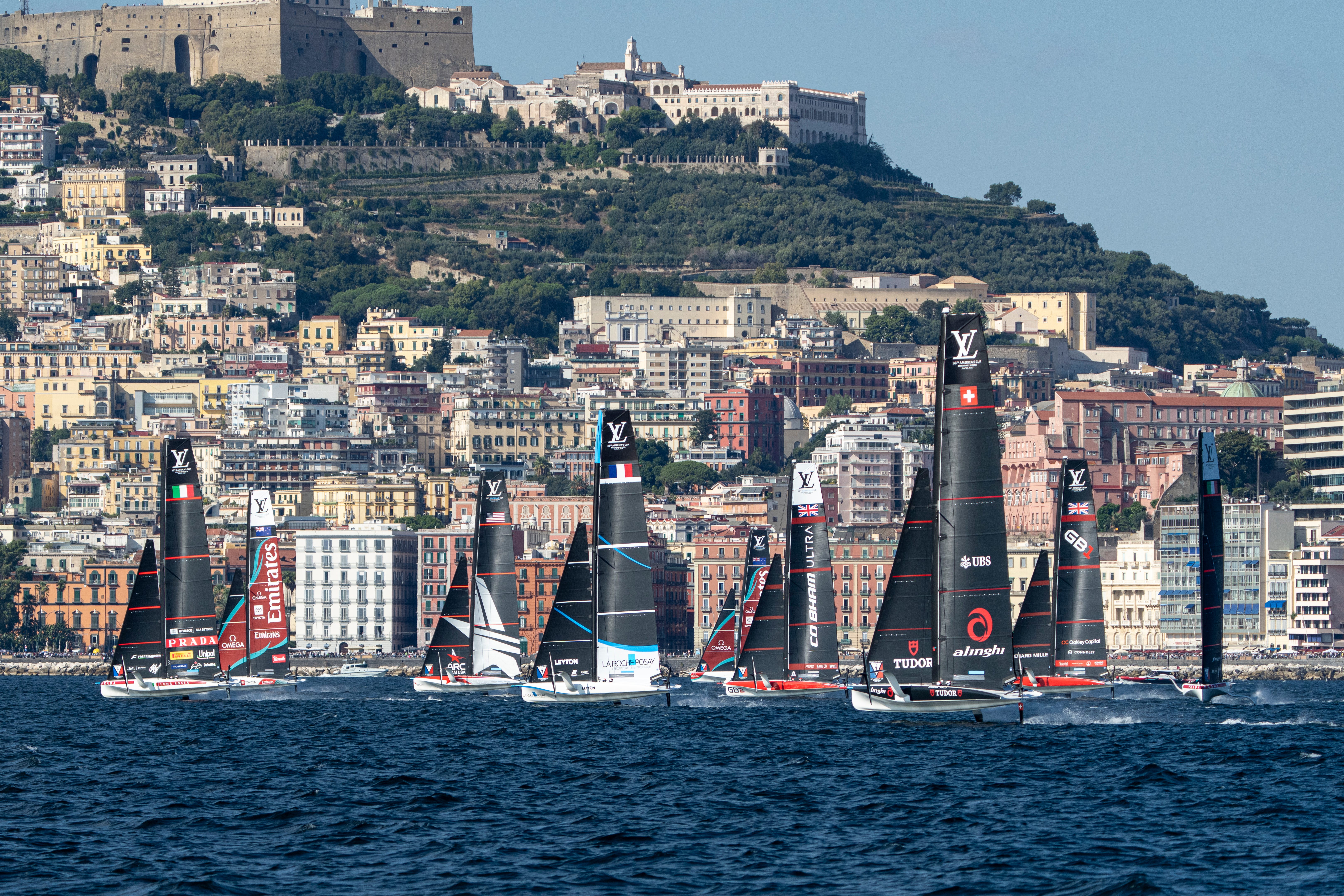
Being absolutely honest, I didn’t have the highest of expectations for last weekend’s second preliminary regatta of the 38th America’s Cup in Naples. I’d been warned to prepare for chaos ashore and windless drifting conditions out on the water.
As it turned out, I could not have been more wrong. My four-day visit to Naples was a fantastic experience all round, during which I got a real taste of the spirit and passion of Italy’s third-largest city, and witnessed some amazing high-performance racing between the top sailing teams in the world.
That’s not to say that Naples is not a completely bonkers place that pulses with incessant noise and frenetic activity. From the hair-raising, bone-jarring, Mad Max-style driving experience around the city’s mostly cobbled streets to the thronging crowds that pack the pavements and pedestrianised areas, and the breathtaking beauty of the coastline and surrounding islands, Naples is an all-consuming assault on your senses. (And don’t get me started on the quality of the local food and wine.)
Best seats in the house…
My official role last weekend was as a driver of one of the four America’s Cup photographer boats, but I was also keen to find out for myself how Naples and the Italian general public would respond to this precursor of next year’s 38th America’s Cup spring/summer spectacular.
Driving a photo boat at the America’s Cup is a wonderful assignment that gets you about as close to the racing action as you could possibly wish for. Photo boats operate in a narrow corridor between the race course and the outer circle of spectator boats. For the race starts we typically set up slightly to windward of the start line transits and then follow the fleet up to the halfway point of the first beat. There, we wait to catch them on the way back downwind, before making a fast run up to the windward gate. Of course, we also find our way to the leeward gate to catch the action there.
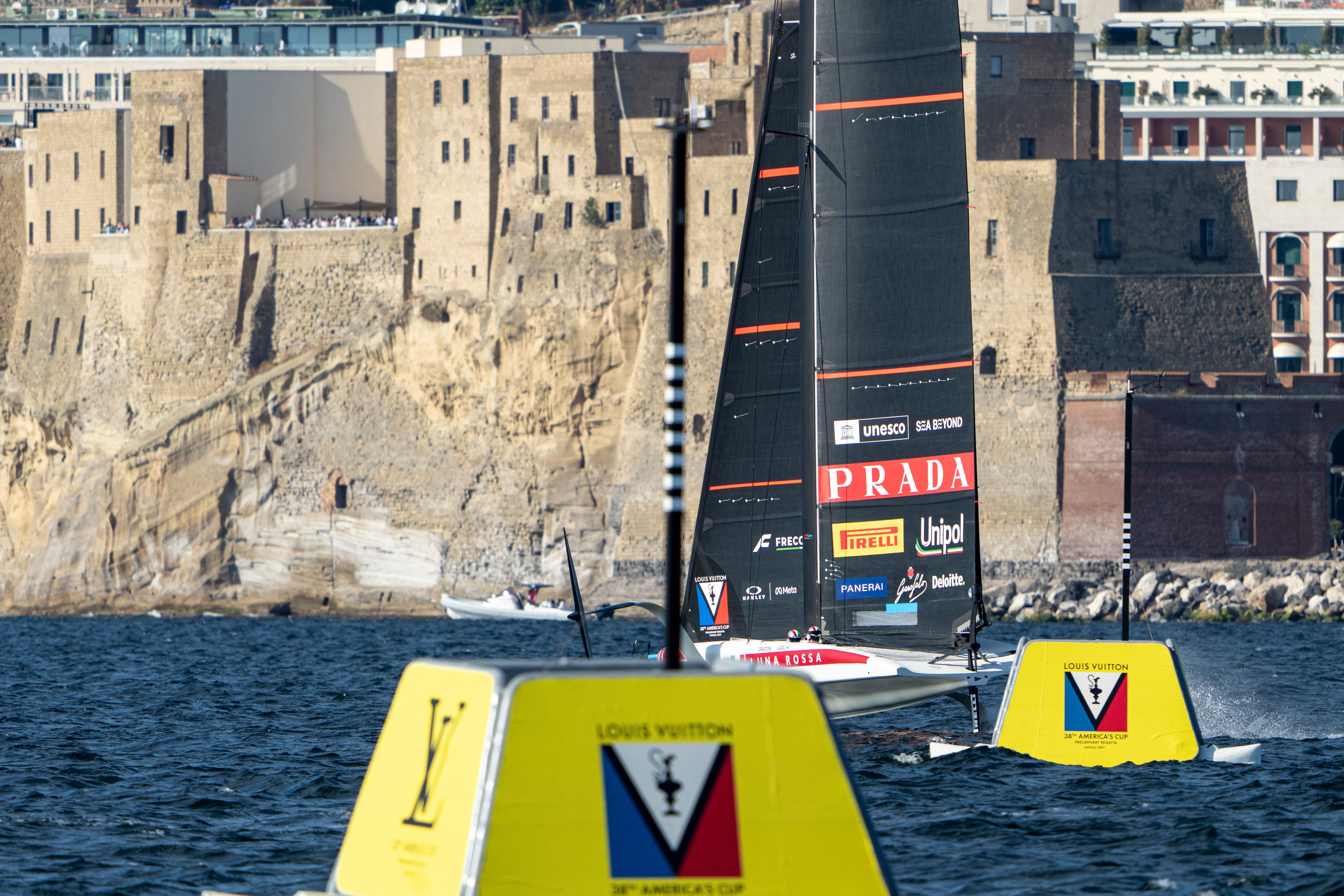
Every regatta venue has its iconic identifying landmarks – the Golden Gate Bridge in San Francisco, the Sky Tower in Auckland, and the mirrored W Hotel and Sagrada Família in Barcelona – and in Naples it was the natural grandeur of Mount Vesuvius and the sheer stone walls of the waterside Castel dell’Ovo that the local photographers were clamouring to line the AC40 fleet up with.
Naples is at its most spectacular from the water. Multiple tiers of sun-bleached ochre, terracotta, faded pink and cream façades form a natural amphitheatre around the America’s Cup racing area, and make for a simply stunning backdrop in the late afternoon as the sun’s angle decreased and the golden hour approached.
Bragging rights and more…
I suspect that anyone reading this will have also watched the racing in Naples last weekend for themselves and already know that – following eight exciting fleet races – the Luna Rossa ‘principal’ team led by Peter Burling emerged the overall winners after defeating Nathan Outteridge’s Emirates Team New Zealand in the match race final – a repeat of the first AC38 preliminary regatta in Cagliari on Sardinia in May of this year.
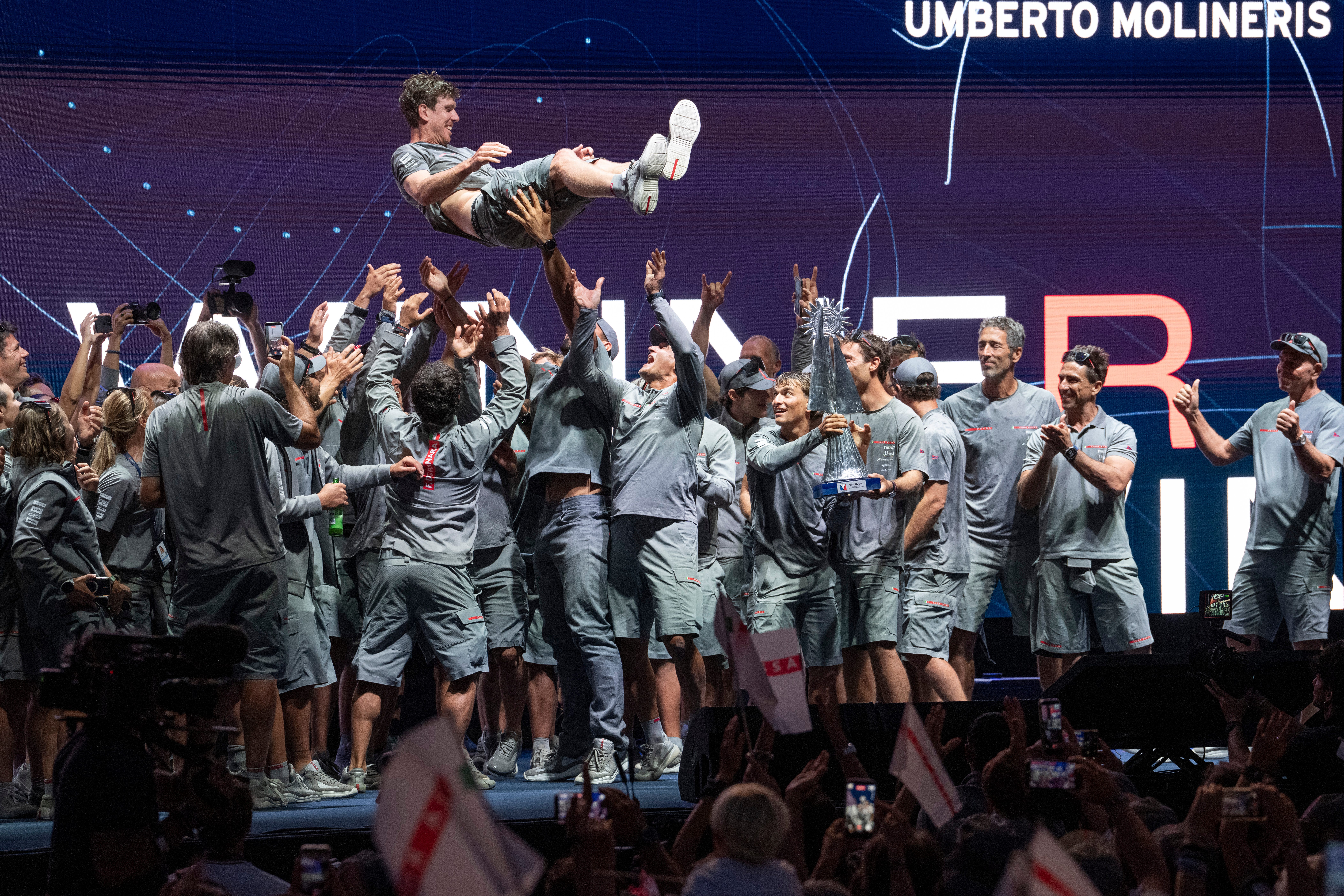
Since arriving at Luna Rossa last year, Burling has become something of a talisman for the Italian team and appears to have given the perennial America’s Cup challengers a new belief that a successful Cup campaign is within their grasp. At the prize giving ceremony in the waterfront race village in the Lungomare Caracciolo on Sunday evening a somewhat bemused-looking Burling was tossed in the air by his excited team mates. That, I’m guessing, never happened to him following any of his three America’s Cup victories with Emirates Team New Zealand.
If the Italians are on a high after last weekend’s regatta, which floor the mood elevator at the holders of the America’s Cup is currently sitting on is hard to establish. “Nobody likes losing,” said a quietly frustrated-looking Outteridge after the match race defeat.
Quentin Delapierre’s third-placed French team will be able to take plenty of positives from the weekend’s racing, but are no doubt ruing the two capsizes – at least one of which could well have cost them a spot in the final match race.
Paul Goodison’s Swiss Tudor Team Alinghi also impressed early in the event, although a poor last day dropped them from third to seventh overall. Nevertheless, the helming combo of Goodison and Phil Robertson looked much more coherent than during their first outing in Cagliari.
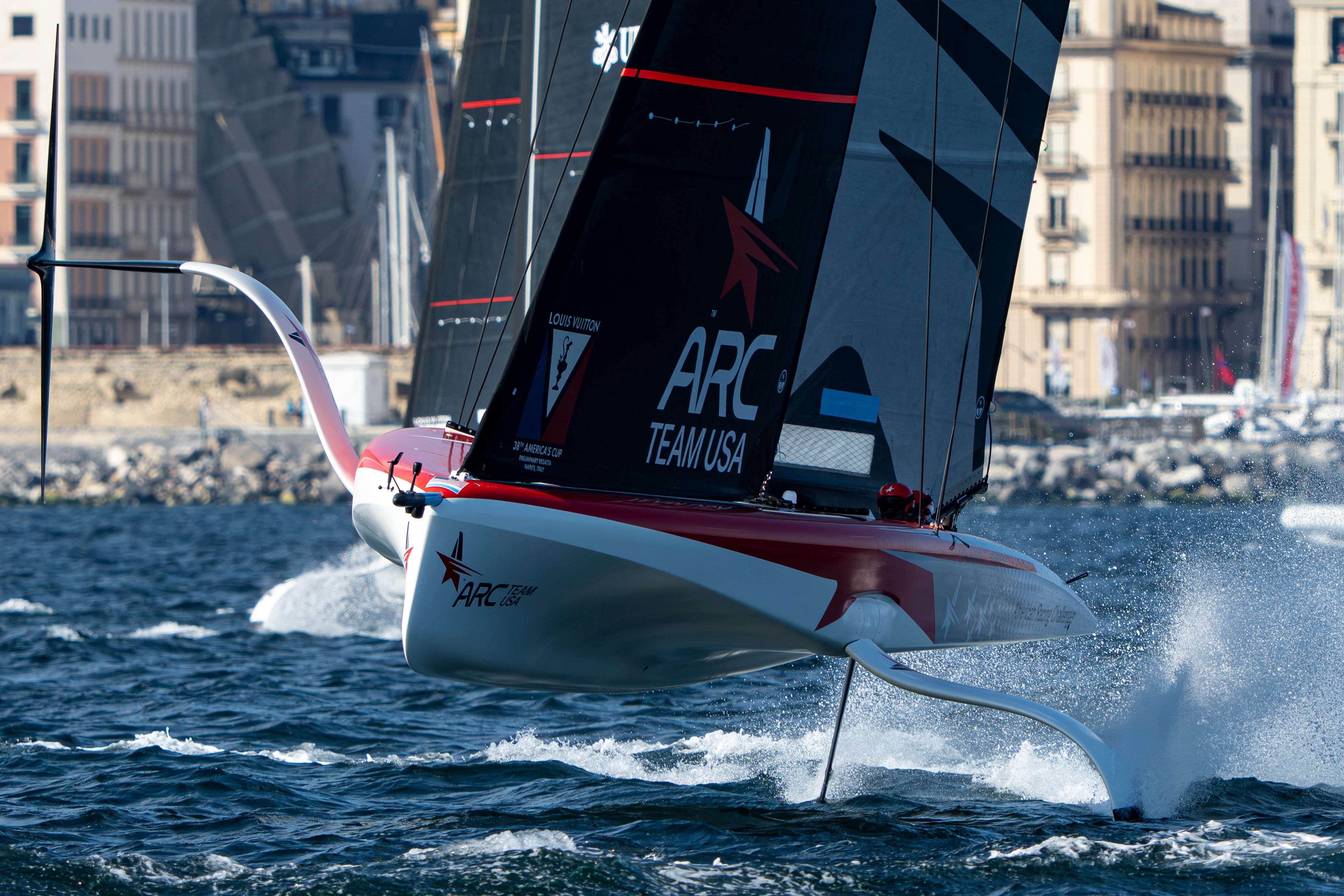
Meanwhile, there must surely be smiles on faces in the American Racing Challenger Team USA camp after the newcomers – led (although not officially) by Harry Melges – stunned the fleet with a win in the opening race and went on to finish fourth overall.
After an utterly lacklustre showing for the majority of the regatta, Dylan Fletcher’s British GB1 outfit will no doubt be keen to quickly refocus on the final fit-out and relaunch of their AC75, scheduled to take place in Naples this autumn.
What did we learn? Looking ahead to next year.
I’m not sure if this second preliminary regatta has taught us anything new in regard to the individual teams’ potential performances next year at the main event. After all, Emirates Team New Zealand and Luna Rossa were already the favourites to contest the 38th America’s Cup final, so you would expect them to be doing well at this stage too.
What we can say with confidence is that – if it were ever in doubt – Naples has proved that it has the potential to be one of the great America’s Cup venues. By and large the weather gods smiled on regatta director Iain Murray over during the event and delivered – albeit with an occasional bit of waiting around – pumping breezes on all three days. From what I was told by some of my new local best friends, we can confidently expect more of the same next year for the Louis Vuitton Cup and the AC38 Match itself.
Onshore, I think next year’s event is likely to be off the hook. The locals – and some visitors – packed out the race village on Saturday and Sunday and the atmosphere when Luna Rossa did a high-speed victory fly-by behind their chase boat accompanied by the massed ranks of the local coastguard was a sight to behold. The same went for the prizegiving an hour or so later when the winning team was received by a music-festival-sized crowd.
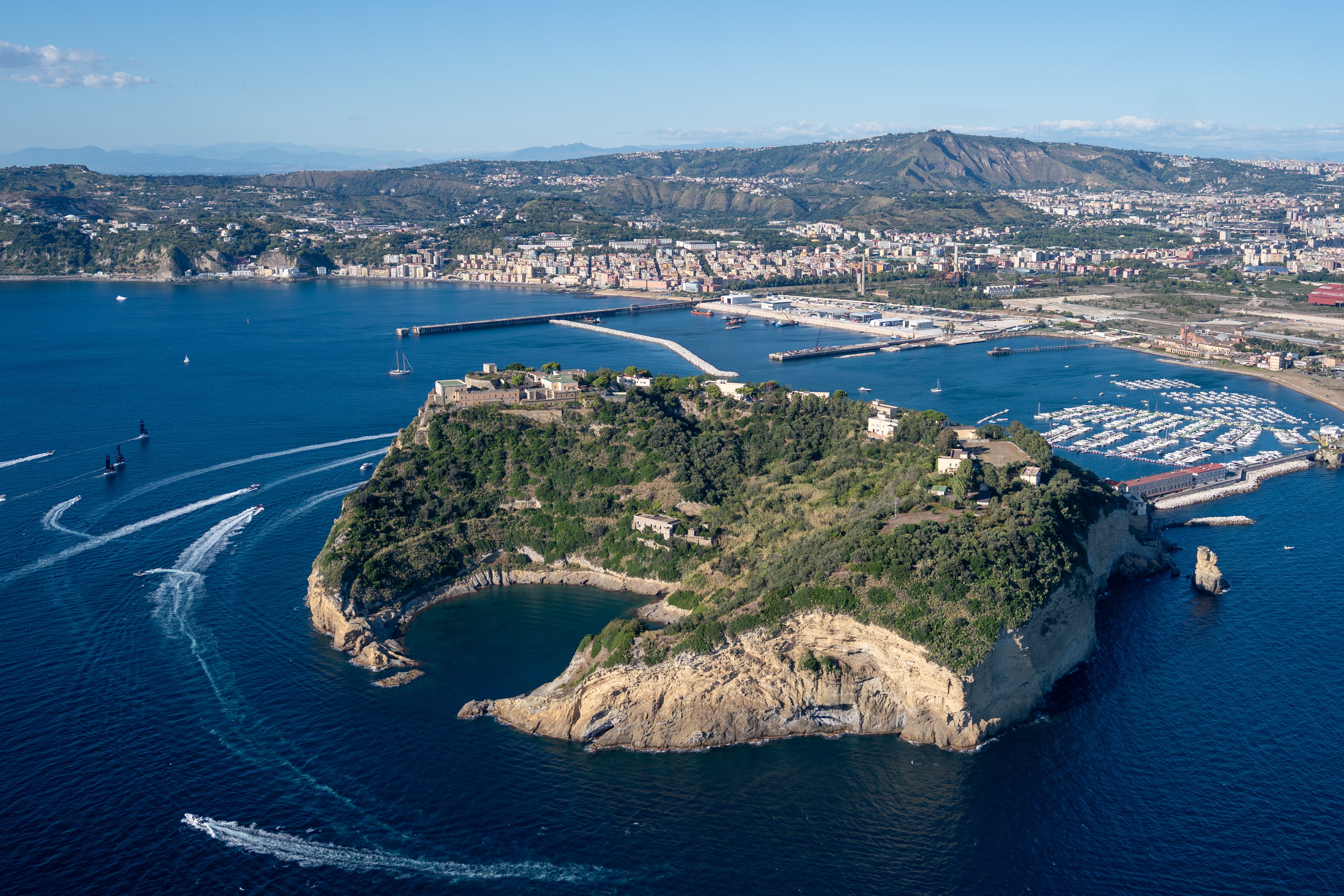
There has been some speculation about the practicalities of splitting the event between the race village in Chiaia and a separate location out in Bagnoli, where a rundown ex-industrial area is being redeveloped to house the team bases and a spectacular race village. I went out to Bagnoli by boat on Sunday morning before the racing to take a look. While there is still plenty of evidence of the old steelworks that used to dominate the site, the progress on building out the team bases and event organiser offices is impressive. The Emirates Team New Zealand, GB1, and Tudor Team Alinghi bases looked well advanced, and the steel shell of the AC media centre and offices appeared almost complete.
By the time the team bases are operational, the superyacht pontoon is in place, and the race village is complete I think this will perhaps be the best America’s Cup setup we have seen since AC32 in Valencia in 2007. My advice for visitors planning their accommodation for next year would be to stay in the city and enjoy all that it has to offer in the evenings – don’t get me started on the Italian food and wine – and then take the 20-minute, €3 train out to Bagnoli to enjoy an F1 paddock-style day around the bases.
What’s next?
For the fans, there is no denying that this America’s Cup cycle has been somewhat stop-start. With the two preliminary regattas now behind us, we are in for a bit of a quiet time until the third prelim regatta – this time in AC75s – at the end of May next year. That said, we can reasonably expect to see the British, French, Italian, and Swiss teams sailing their AC75s in Naples before the end of this year, with the Kiwis, Americans, and Australians joining the party in the new year.
Our best source of insider information is likely to come through the output of the Joint Reconnaissance Programme, which looks set to kick fully into gear as the teams arrive in Naples with their AC75s. The French were the first to move their big boat to Bagnoli – it arrived by barge last Thursday as there is not yet a suitable access road to the site – and are planning to have it on the water in mid-October. The Swiss and the British are also understood to be planning to have their AC75s sailing in Naples during November.
Just how many differences we will be able to identify on the updated AC75s – aside from a modified cockpit layout – is difficult to conceive. Other than the Australians, the teams will be using legacy foils, rudders, masts, and sails until next spring, and the changes to the control systems will be invisible from the outside. Nevertheless, it will be good to see the return of the AC75s as it marks the beginning of an exciting new phase of this latest cycle of yacht racing’s oldest and most prestigious competition.