
Yacht Racing Life is a reader-supported publication. If you enjoy our free content please consider signing up to receive our free email newsletter, or help the development of the website by becoming a paid subscriber.
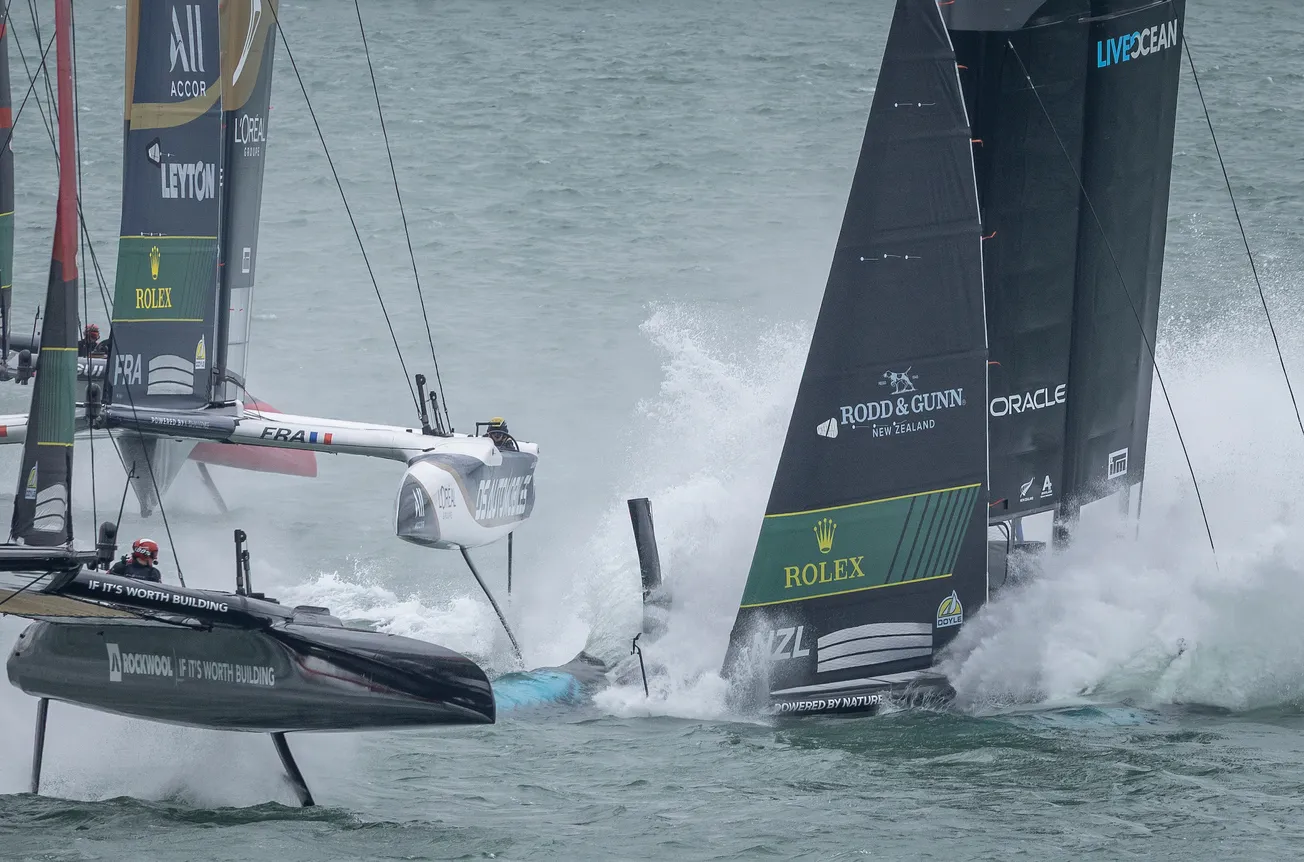
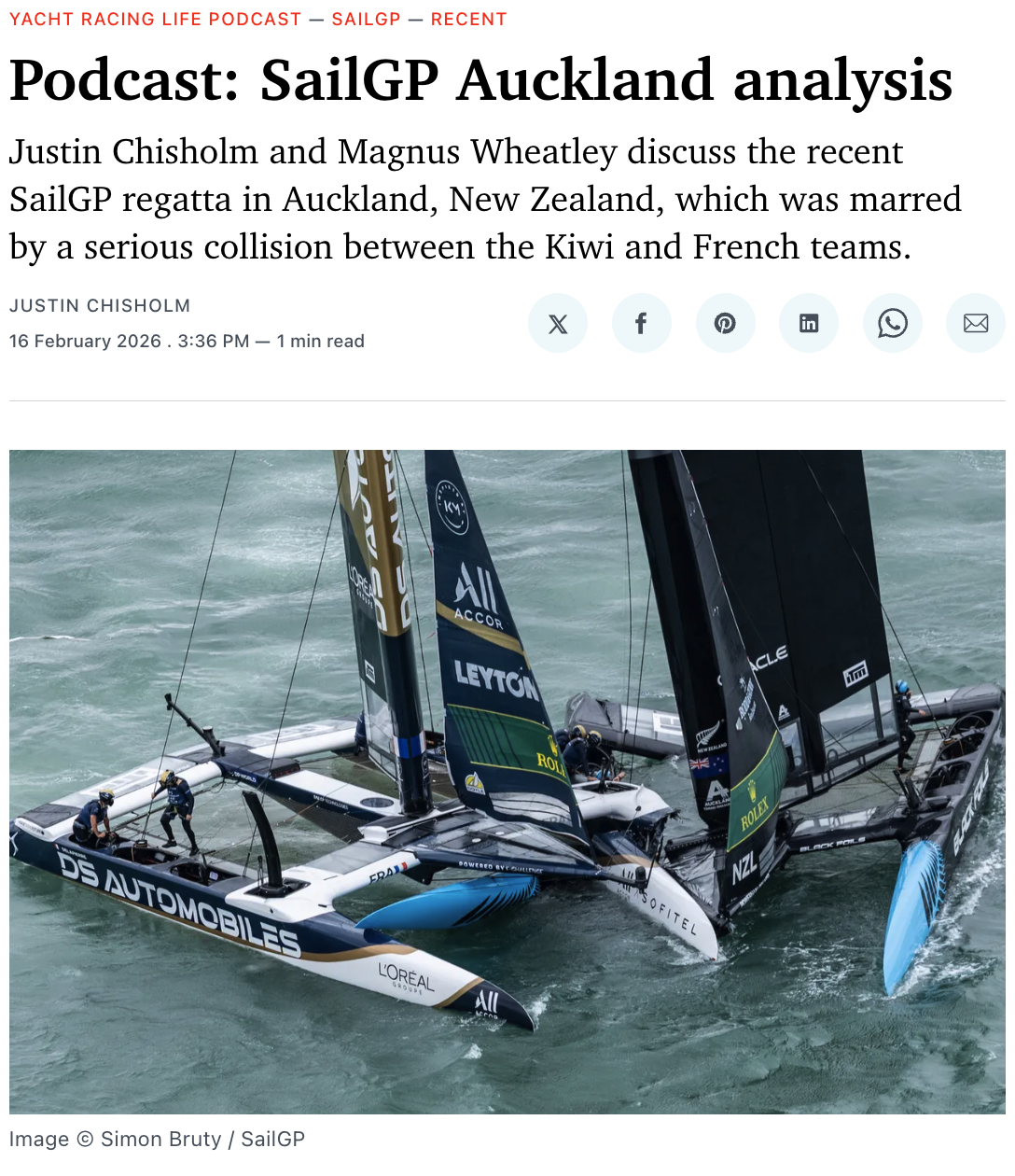
The crash took place 15 seconds after the start of the third race of the day when the New Zealand crew appeared to lose control while reaching at high speed towards the first turning mark.
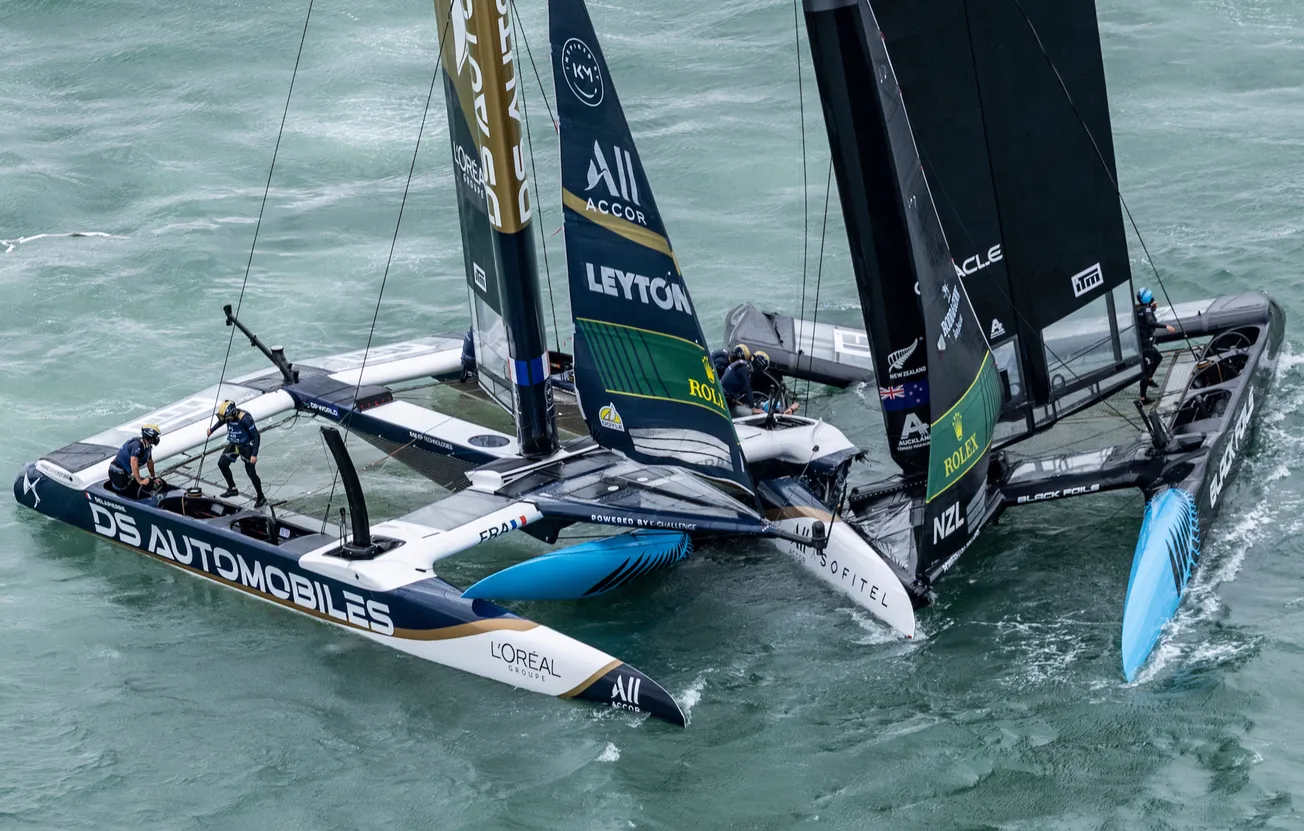
Video footage showed the boat appeared to skid sideways after the leeward (port) foil wing broke the surface of the water. This brought the boat into the path of the French team sailing close behind, and when the New Zealand boat dipped its windward bow in the water and instantly rounded up, it was too late for the French crew to take avoiding action.
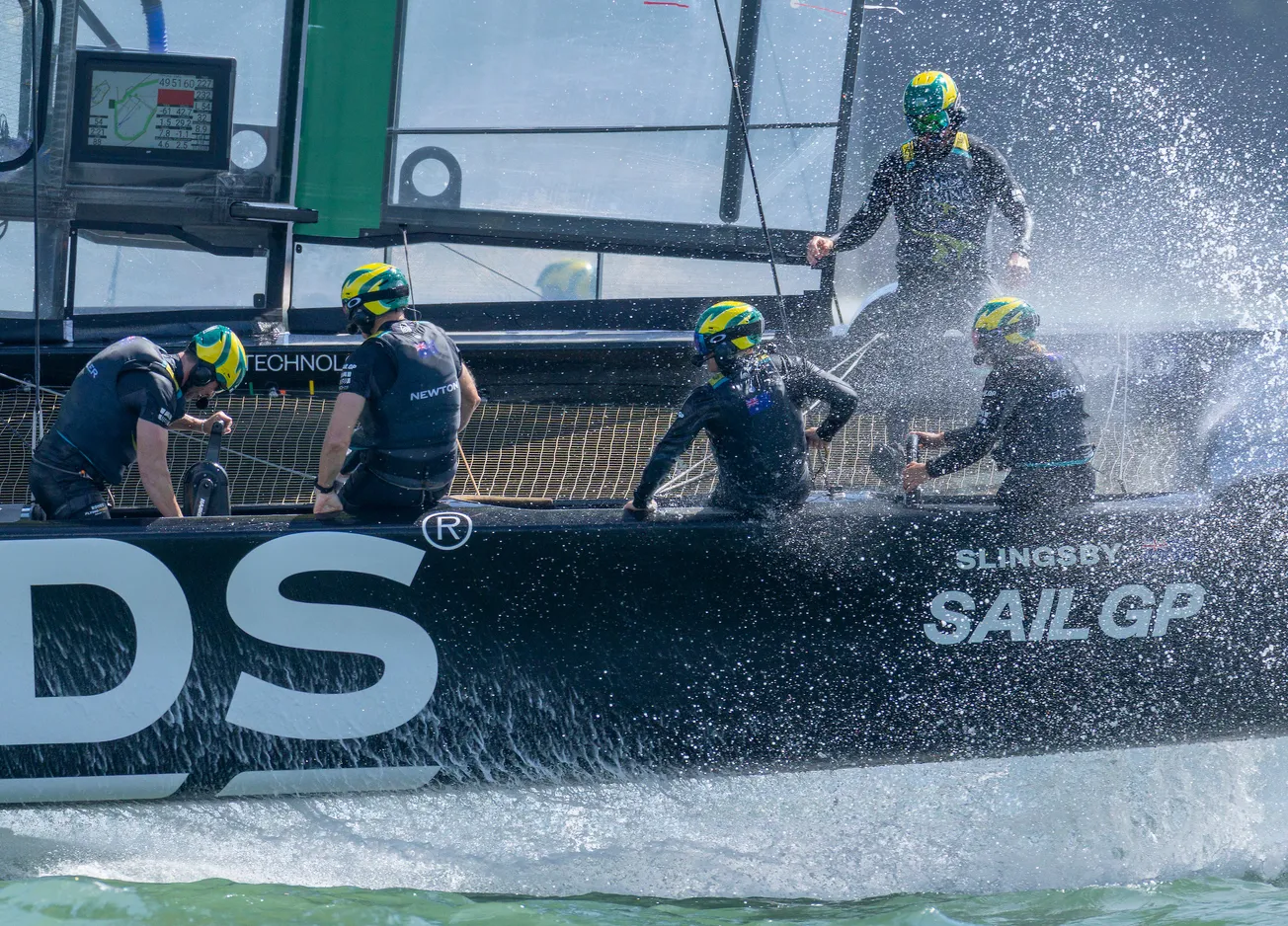
New Zealand grinder Louis Sinclair and French strategist Manon Audinet were both hospitalised after the incident, with Sinclair suffering two broken legs and Audinet being assessed for internal injuries after being thrown into the port steering column. Both have now been discharged from hospital.
SailGP says its engineering teams have conducted a detailed review using high-rate performance data, onboard telemetry, simulator recreations and video analysis to try to understand precisely what occurred in the build up to the crash.
The Yacht Racing Life Podcast is also available on Apple Podcasts, Spotify, and all major podcasting platforms.
According to the report, the New Zealand boat’s loss of control was triggered by a gust of wind that hit the boat when it was travelling at 90 km/h. The gust caused rapid acceleration, which in turn increased the lift generated by the leeward foil and raised the ride height of the boat to a point where the foil wing broke the surface of the water.
This was what triggered the side-slide that put the boat in the path of the French boat travelling at a similar speed close behind.
The analysis shows that the New Zealand F50 was sailing towards mark one at 90 km/h when it encountered a gust during the first reach of the race.
SailGP Director of Performance Engineering Alex Reid said the combination of speed, gust conditions and foil ventilation created a highly dynamic sequence which developed within seconds.
“The data shows the boat accelerated quickly and rose high on its foils,” he said. “Once the leeward foil pierced the surface, the boat entered a side slip where the foil began generating unwanted lift through leeway rather than via rake.
“At that point the dynamics of the boat changed very quickly. Control inputs from the flight controller were still being applied, but we believe the physics of the slide meant the boat could not be brought down in time.”
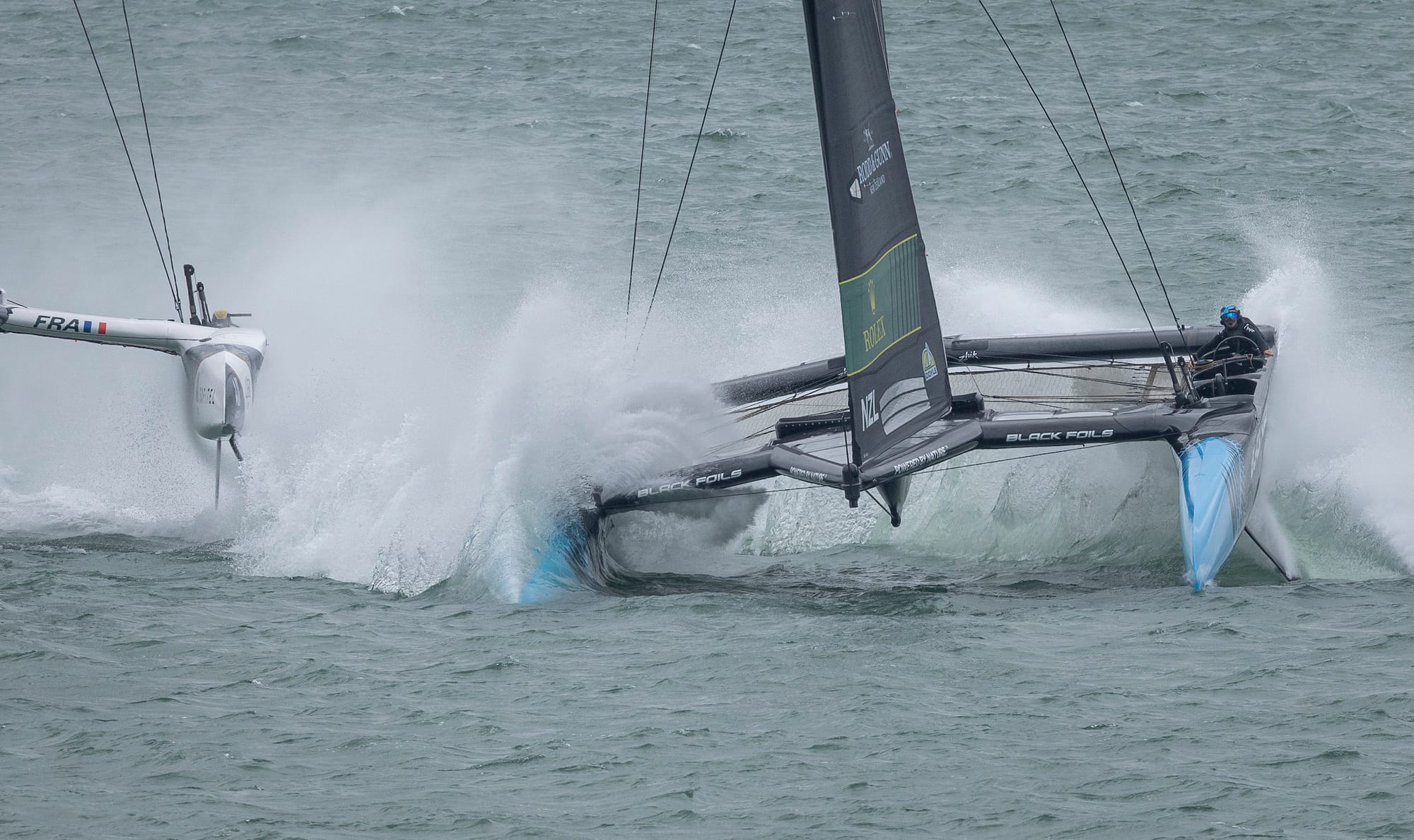
The report goes on to say that the sudden round up began when the New Zealand boat’s rudder momentarily lost grip as helmsman Peter Burling tried to regain control by turning the boat towards the wind and to avoid slamming sideways into the Red Bull Italy F50 to leeward.
The moment that the flow over the rudder then reattached itself coincided with the windward bow being immersed in the water (see image above) which triggered the sudden round-up.
“With the French F50 sailing close astern at speed, there was insufficient time or distance to avoid contact once the sequence began,” the report says.
The investigation revealed no evidence of any system malfunctions aboard the New Zealand boat.
“Analysis of high-rate performance data and onboard systems shows no abnormal system behavior or structural failure prior to the incident,” the report reads. “Instead, findings concluded the collision stemmed from a rapid hydrodynamic loss-of-control sequence triggered by foil ventilation during high-speed foiling in gusty conditions.”
Reid confirmed that there was no evidence of a mechanical or software failure in the systems leading up to the incident.
“What we see in the data is a very fast chain of aerodynamic and hydrodynamic events that pushed the boat beyond its controllable envelope at that moment,” he said.
According to SailGP, as part of its ongoing review process engineers are “assessing mitigations which could help crew better manage similar scenarios in future – with solutions being explored alongside SailGP athletes ahead of this weekend’s KPMG Australia Sail Grand Prix and further afield.”
The SailGP report did not mention anything about the New Zealand crew encountering a "system limit" that skipper Burling had previously suggested prevented the Kiwi crew from getting the boat back under control. That system limit was introduced during Season 5 of SailGP after crew user error aboard the Brazilian boat caused the main beam to collapse during a nosedive.
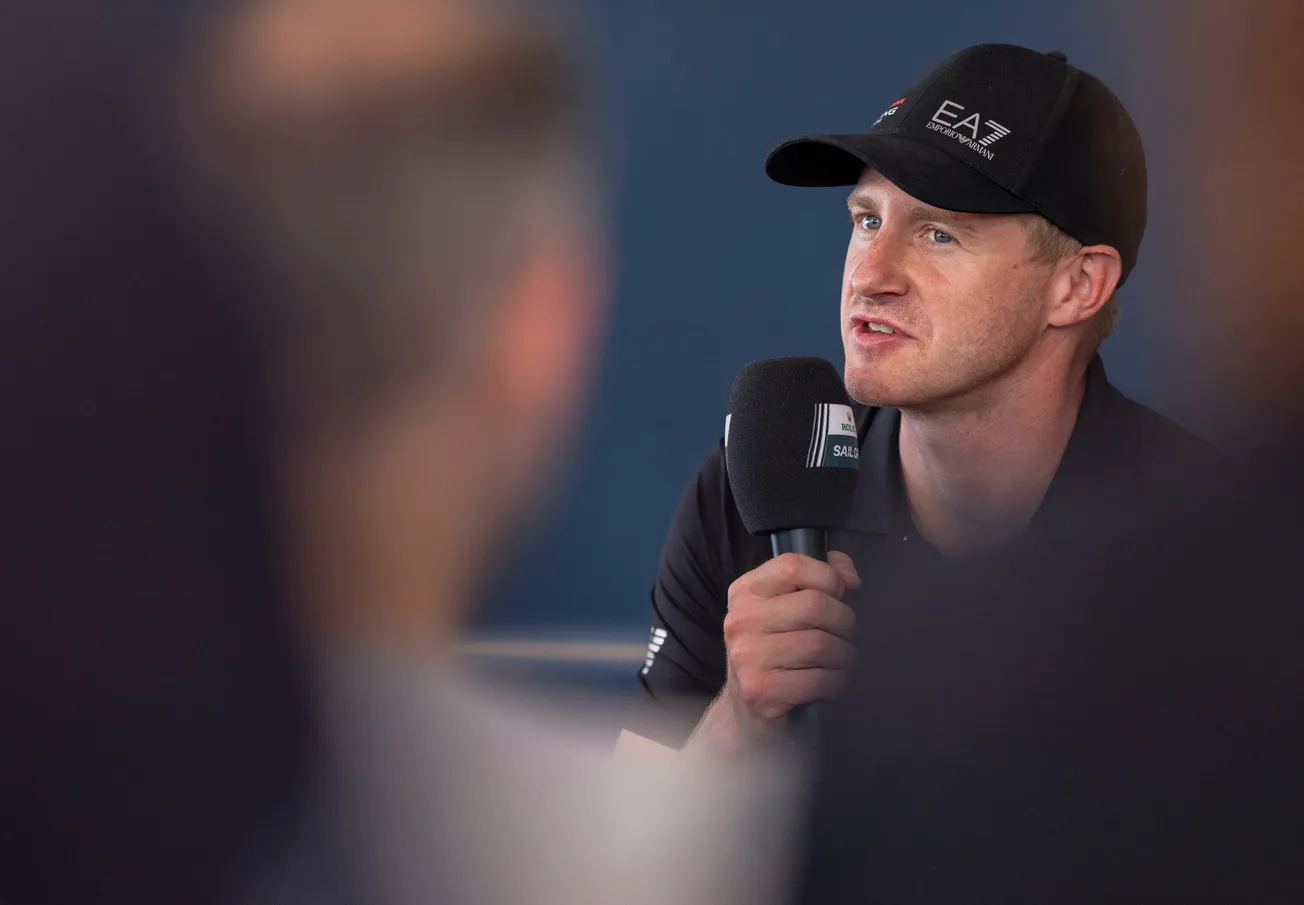
At a team press conference a few days after the Auckland event, Burling explained the purpose of the system limit like this: "It controls how negative you can go with the rake on the leeward foil. So it's really there to protect [against] another problem."
Asked what would have happened on the Kiwi boat had the limiter not been in place, Burling replied: "It's always incredibly difficult to say. It's a woulda-coulda-shoulda type of situation. But it definitely didn't help."
SailGP says that a penalty review hearing has since upheld the original decision that New Zealand broke Rule 14 (avoid contact), resulting in an eight-event-point penalty, while France was found to have had no reasonable opportunity to avoid the collision.
The circuit organisers had earlier confirmed that both New Zealand and France will miss the upcoming KPMG Sydney Sail Grand Prix as repairs continue, and said that work was “underway to return both teams to racing as soon as possible”.