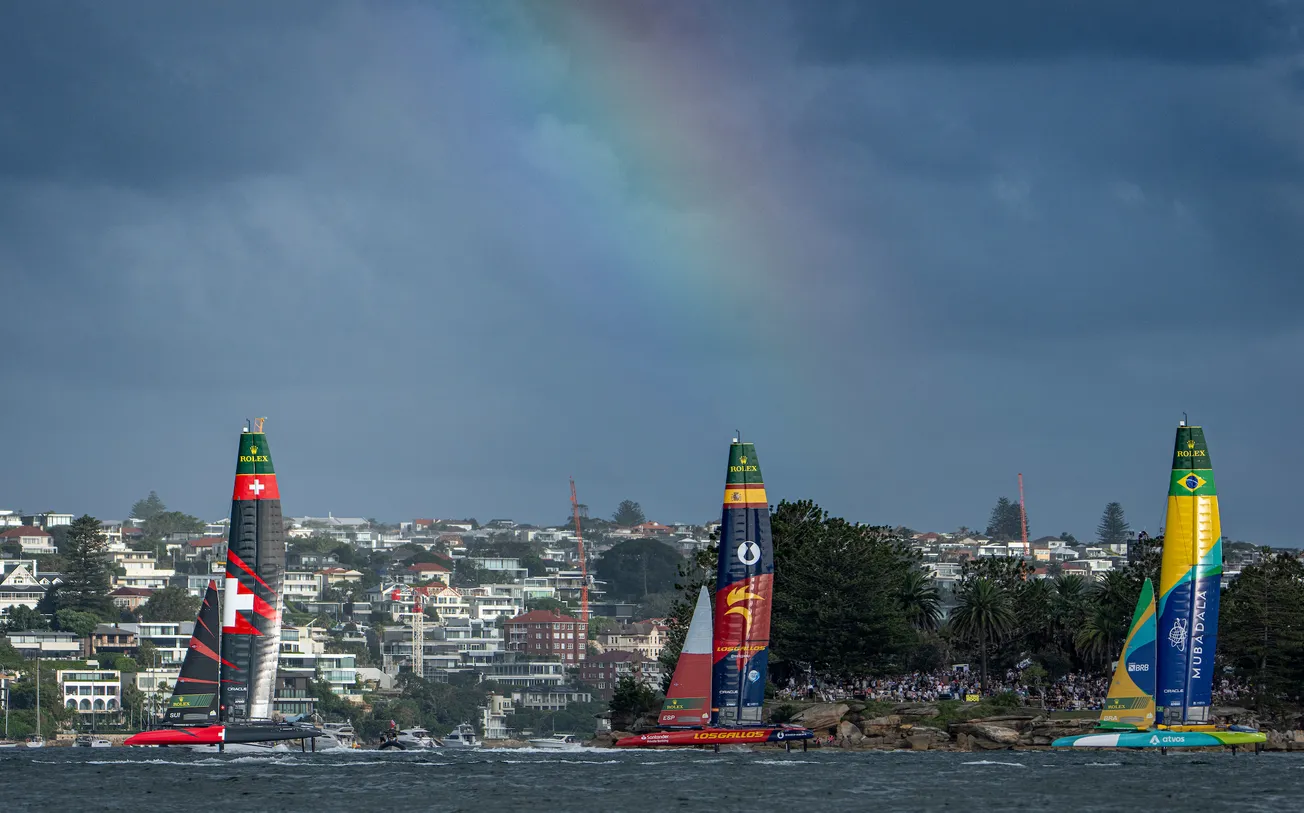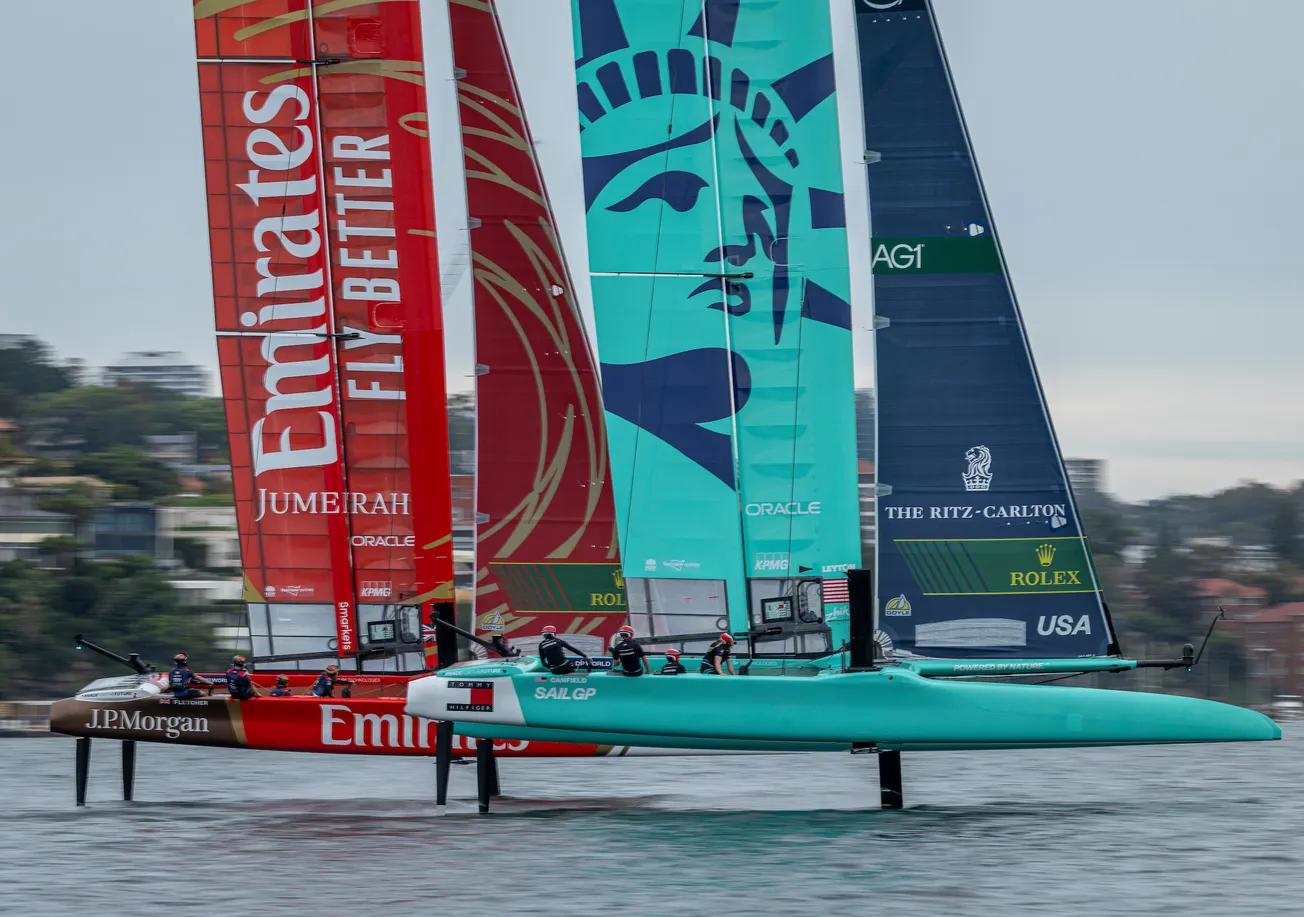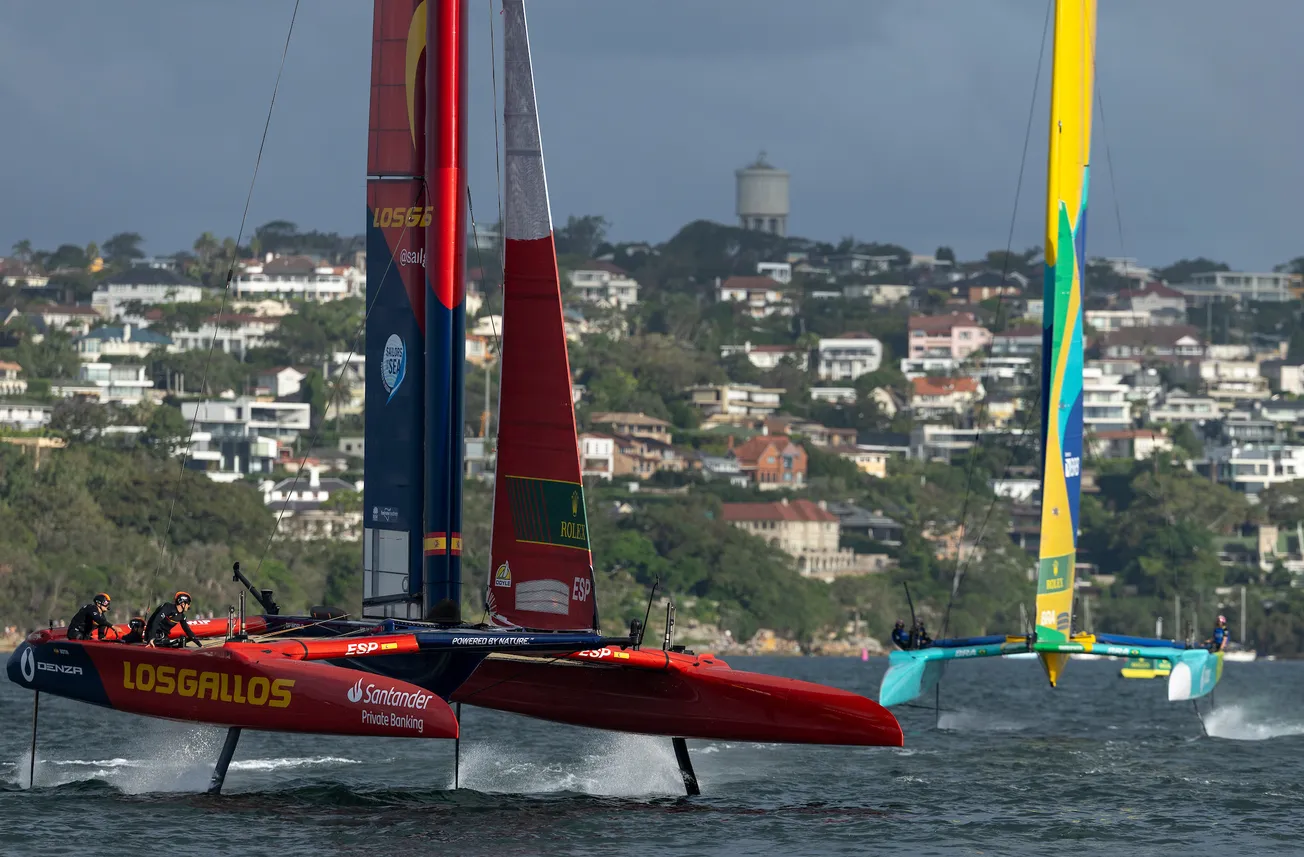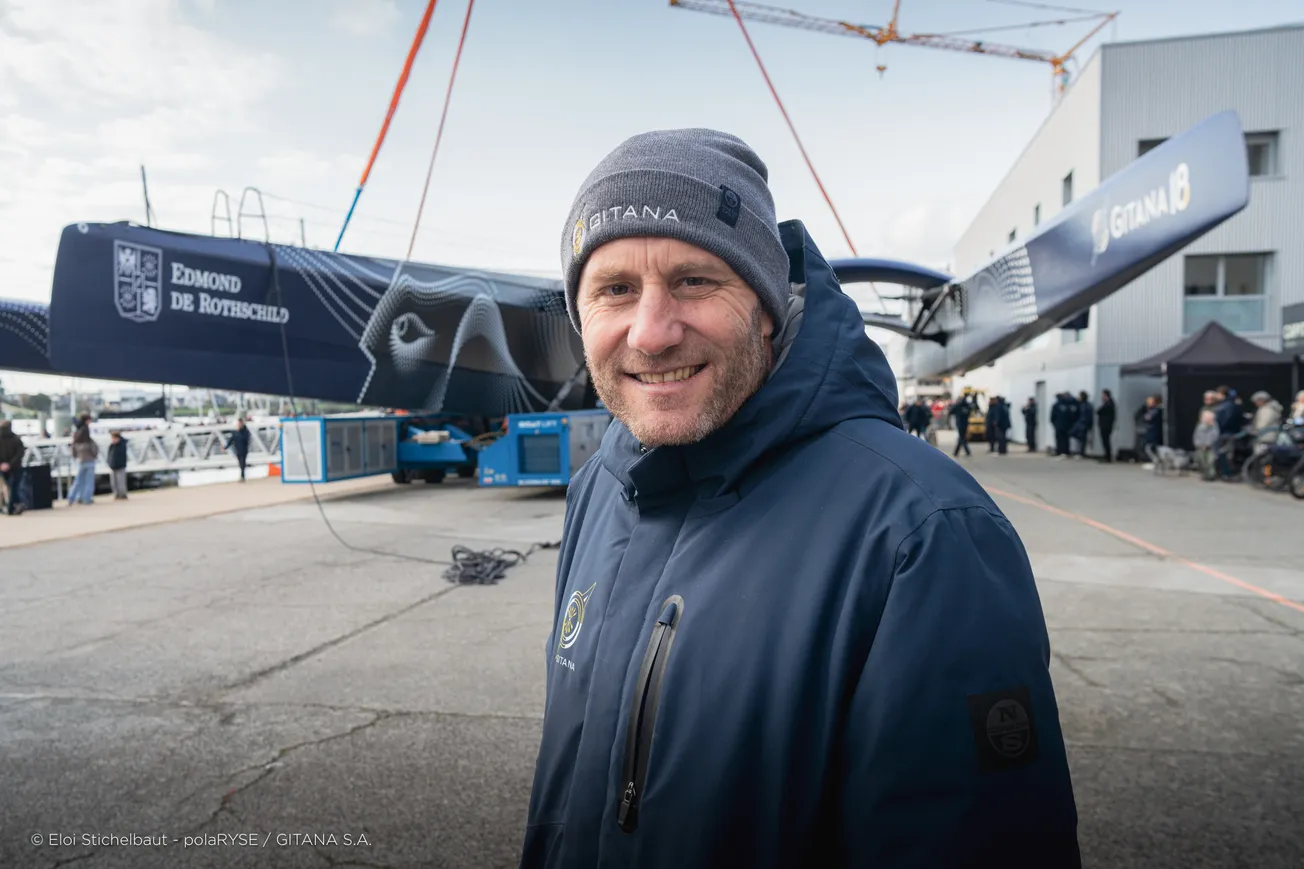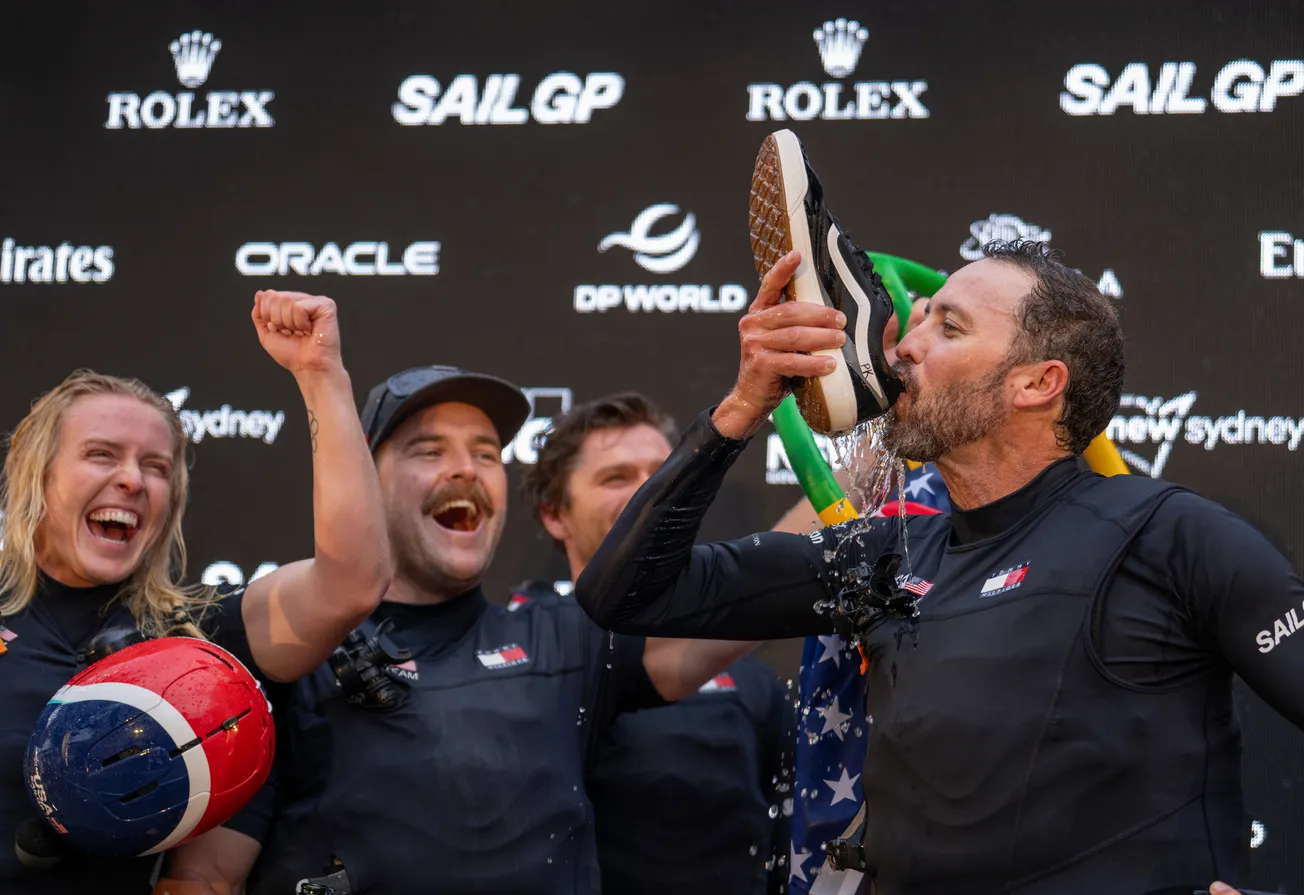
When I spoke to him shortly after he arrived back in the US, Canfield did not come over like a sailor basking in a feel-good moment. He sounded more like someone still replaying the key moves, still hearing the comms, still measuring the margins after the United States SailGP Team’s breakthrough event win on Sydney Harbour.
“We’re super pumped,” he confessed. “It was great to come away with a win. In this league, it’s definitely not an easy task to even get to that final race and get on the podium.”
What stood out from Canfield’s immediate post-event mood was not triumphalism, but an almost forensic satisfaction at the way the team did it. In his telling, Sydney was a weekend of visible progress and a reminder that in SailGP, momentum can shift quickly if the fundamentals are solid.
“We’re super pleased with how we sailed,” he said. “It was a pretty big comeback from Saturday to Sunday. It’s always good to know that we’re capable of passing boats throughout the racing.”
For followers of the league, the bigger story is not simply that the US team won a regatta, but how different the group looks in Season 6. When I suggested the crew work appears slicker and the boat handling more confident than it did last year, Canfield did not push back.
“There’s no doubt that we’ve taken a big step forward and we have a lot more confidence in our boat handling,” he said.
Ask any SailGP sailor what changes performance most, and the answers often come back to things that happen far from the racecourse: the rigour of preparation, the quality of debriefs, the willingness to examine mistakes, and the discipline to keep on trusting in the process even when results are not coming.
Canfield’s explanation of the US team’s step forward was rooted in exactly that.
“We have a great team just working around the clock to help us,” he said. “And we’re meeting multiple times a week to try to prepare as best we can within the limited practice time that we have.”
The key phrase there is “limited practice time”.
In a league where the boats are close to identical and the margins microscopic, the teams that maximise every available minute tend to rise. Canfield described an approach that tries to squeeze value out of everything: structured meetings, specialist break-out groups, and heavy use of SailGP’s simulator resources when the team is “on site”.
“We’ve been in the two-cockpit simulator pretty much every day that we’ve been on site with SailGP,” he said.
Between events, the work becomes more targeted. The team has effectively split its race programme into distinct components and assigned leadership roles to drive improvement in each.
“We have a few breakout groups for different areas of where we have identified we need to improve,” Canfield explained. “I’m the lead guy in our manoeuvre group. Our wing trimmer Michael Menninger is the lead guy in our speed group. Our strategist Andrew Campbell is the lead guy in our strategy and starting group.”
That division of labour matters because it brings clarity. Rather than everyone trying to fix everything at once, each part of the performance puzzle has an owner.
“We really divided our entire program into segments of the race. These are the areas where we think that we need to make big steps,” he said. “It’s been awesome to have everyone pushing each other to make the multiple small changes that we need to make.”
Just as important, Canfield emphasised a mindset that welcomes change rather than resisting it.
“Everyone’s very open-minded, which is great,” he said. “They’re very willing to make changes and try new things.”
The most revealing part of the conversation came when Canfield described what the improvement feels like from behind the wheel. At SailGP speeds, time is the currency that matters most. If the boat feels unstable, if manoeuvres feel rushed, decision-making compresses and errors multiply. When confidence rises, the whole picture widens.
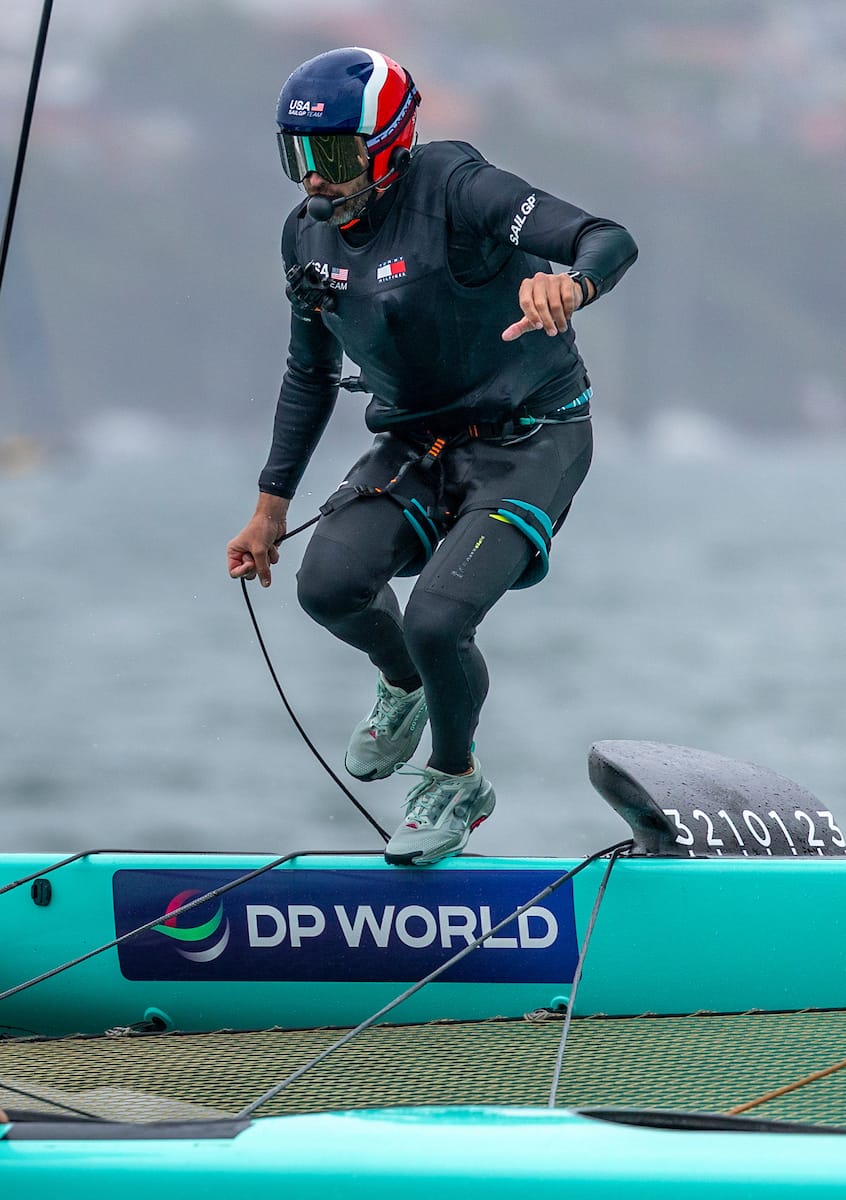
When I asked whether he feels he is sailing better now than last season, his answer was unequivocal. “Personally, I feel like I have a lot more time when we are racing. They say in sport, the game slows down for the people who have racked up the maximum hours – and it’s definitely starting to do that for me.”
That is the sort of line you rarely hear unless something is genuinely shifting. Canfield is clear he is not claiming arrival, only direction of travel.
“I’m starting to feel that moment, but I know I have a lot to come and hopefully that game slows down a little bit more so you can make those split second decisions even better.”
One of the most concrete changes Canfield pointed to was a block of training time the Americans had in strong breeze in the days leading up to the Season 6 opening event.
“The extra training time we got in Perth was huge,” he said. “We were sailing in big breeze every day and we went out there and we just pushed the boat hard.”
The aim was not to polish for the cameras, but to stress the system until it becomes familiar.
“It was about pushing the boat as hard as we could around the racetrack, doing the hard manoeuvres, and just getting comfortable sailing in those tough conditions,” he said. “And I think that’s kind of translated into helping us make those tough decisions when under pressure.”
From the outside, the US team’s leap can look like a sudden reset – but Canfield insists it is not.
“No, I think it’s just been a steady progress,” he said. “It didn’t really show on the water much last season, but at some of the later events, I think you could start to see us have some better moments.”
He referenced races where the performance started to appear, even if it did not translate to the results some expected.
“We were making those steps all along the way, and it wasn’t quite showing up in the results the way that a lot of people wanted it to,” he said. “But internally, we felt that we knew we were making gains.”
That internal belief matters because SailGP can punish a team twice: first on the water, then in the noise that follows off it. Canfield did not pretend the criticism last season was easy to absorb.
“I did read a lot of it,” he said. “And it hurts for sure. It’s not pleasant to have someone talking about you in bad ways.”
His response was not to deny the scrutiny, but to frame it as familiar territory.
“I’ve been doing this for a long time and I’ve definitely had people say bad things about me before,” he said. “I’ve always believed in myself and the teams that I’m sailing with – and just keep chipping away.”
The key, he said, is having the right people around you who keep you upright when you wobble.
“It’s just nice to have a group of people around you that are supporting you, believing in you and just really buying into the team that we’ve chosen and the skills that we have,” he said.
“I always knew that at some point it was going to click and it was going to come good. I am lucky to have a great team around me to pick me up when I need it.”
If there is one theme Canfield returned to repeatedly, it is communication. In a foiling cat that demands precision and timing, what is said in the cockpit needs to be more than just commentary on what’s going on.
“Communication is such a large part of what we do in these boats and in this type of sailing,” he said. “When it comes to decision making, ensuring that everyone knows exactly what’s coming up is so key.”
The team’s work here, he explained, includes reviewing audio and studying other teams.
“We have been focusing a lot on communication, and we’ve been listening to the audio on, the other boats that we think are doing it really well,” he said.
The goal is emotional control as much as clarity.
“For us it’s really just about trying to keep that same tempo throughout the entire race, whether we’re winning or losing, having a good moment or having a bad moment,” he said.
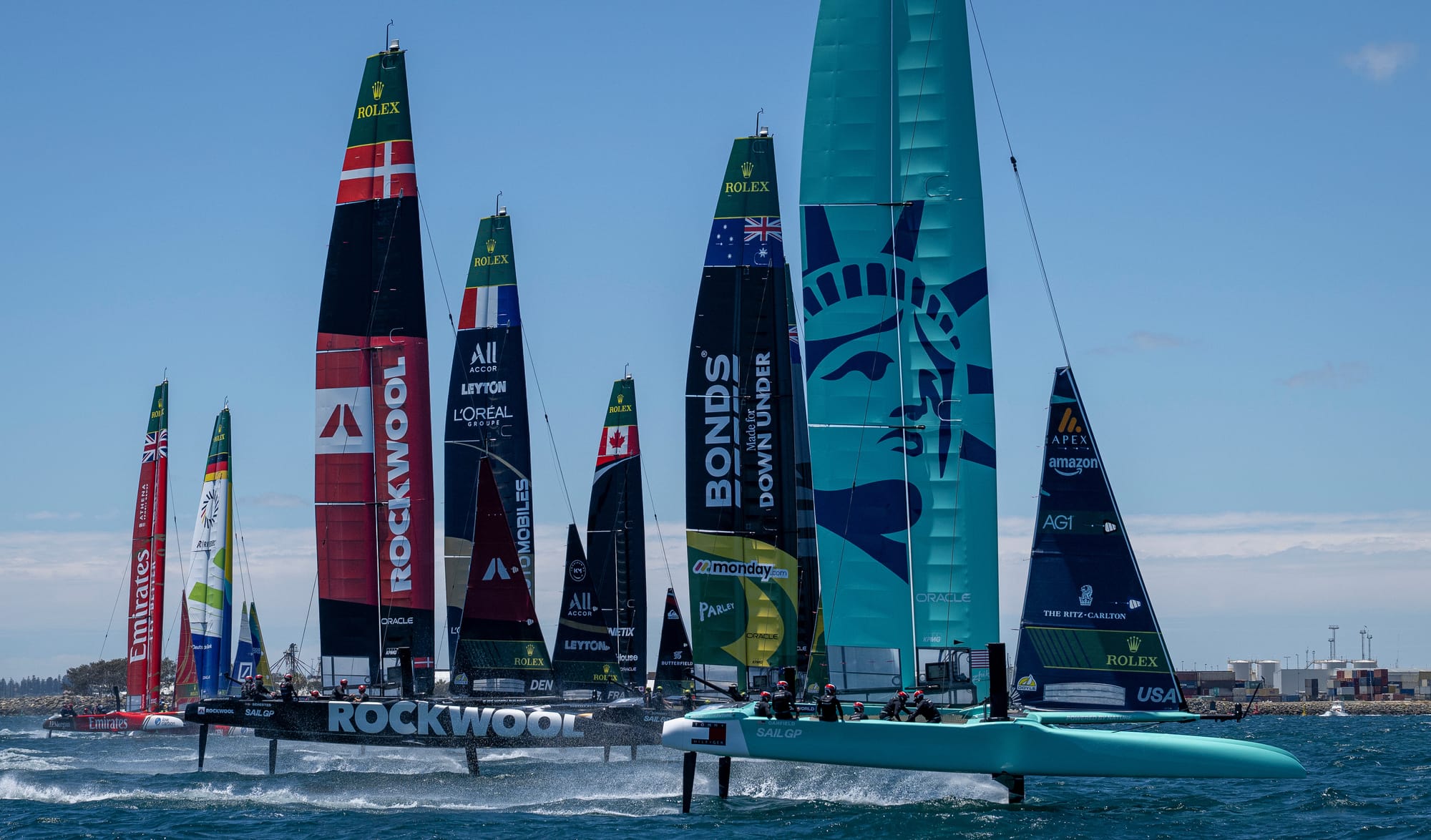
That even keel is not just a good leadership style. In SailGP, it creates the conditions for comebacks because – as Taylor points out – the racecourses present constant opportunities.
“There’s so many opportunities around these racetracks and these short, crazy, shifty venues that you’re never really out of it,” he said.
The most interesting part of the US team’s planning for Season 6, Canfield said, is that the objectives were not framed around results.
“It wasn’t a results-focused call whatsoever,” he said. “We’re purely focused on how we can all be the best at our jobs. The focus is still on performance, just not performance defined by the leaderboard.”
Behind that sits analysis work: data review, comparison, and a willingness to look at what other teams do well.
“We have this huge support system in the background, doing all the data analysis and looking through every race,” he said. “We have the ability to go through an incredible amount of data at very high speed and really decipher every moment of every race.”
When I asked whether the team feels “locked in” now, Canfield’s answer was immediate and emotional.
“I hope so, because I’ve never felt better sailing these boats,” he said. “I think we have an incredible group – and I have full confidence in everyone on board to do their jobs. I’m so pumped to sail with this group,” he said. “And I know there’s more left in the tank. It’s so exciting. Honestly, I’m getting goosebumps just thinking about it.”
Even in victory, Canfield’s instinct is to review. Asked about the Sydney final, he described it as a blur, but credited his crew for key moments that could easily have gone wrong.
Could it have been any cleaner, I wondered? Perhaps, he said, although the fact he struggles to find a clear error speaks volumes.
“It’s hard to pinpoint a spot where it went bad,” he said. “So I’m really happy with how we sailed, from start to finish.”
And yet, he was adamant the win does not change the team’s posture.
I asked if getting his first event win felt like getting a monkey off his back.
“Truthfully, not really,” he said, “I think it doesn’t really change much for us. We knew it was going to come at some point.”
If Sydney proved anything, in Canfield’s eyes, it is that the process is working.
“It just shows how hard everyone’s been working, the talent that we have on board, and the skills we’ve developed,” he said. “It’s about how do we make the next step? How do we show up better the next day?”
Looking ahead to the next event in Rio and what expectations he had for the team, Canfield paused before replying.
“I just want us to be better than we were in Sydney,” he commented with a smile.