If you’d told Paul Goodison a decade-and-a-half ago that he’d one day be co-helming a 75-foot foiling monohull with his old Olympic archrival Tom Slingsby, he might have chuckled. If you told him they’d actually make it work, he might well have laughed out loud.
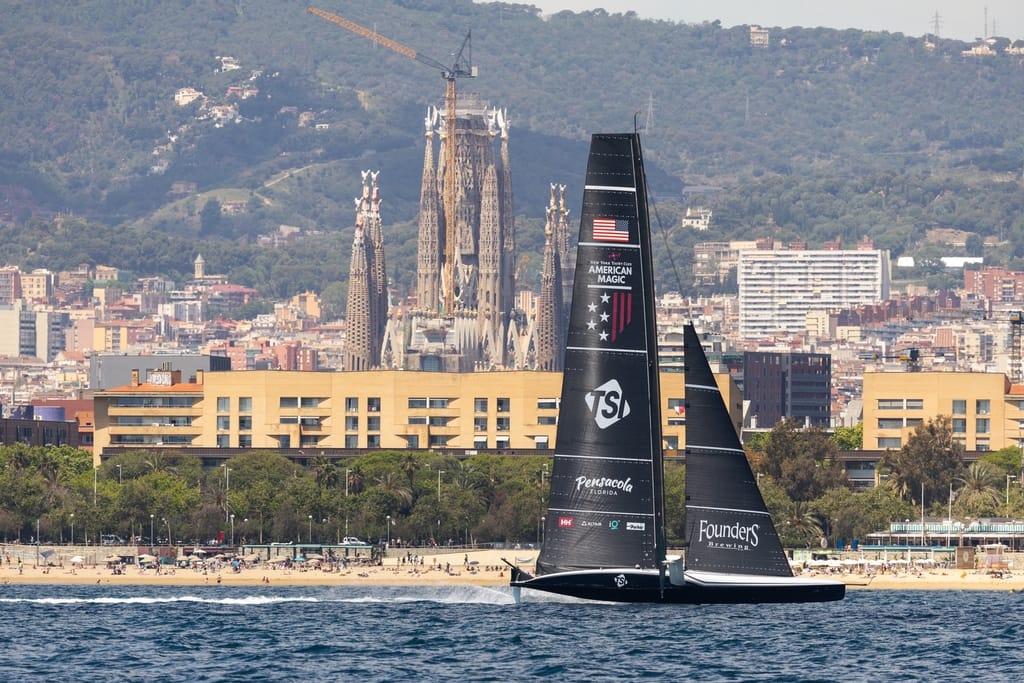
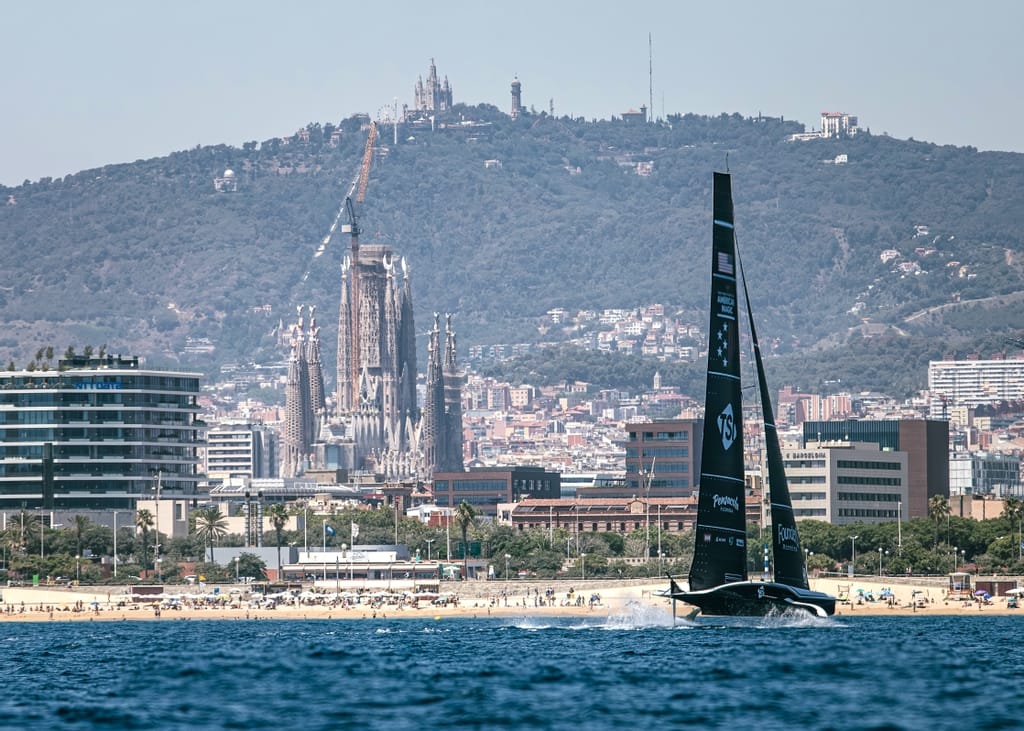
But the 37th America’s Cup saw the veteran British sailor, an Olympic gold medallist in the Laser, and a Cup veteran with multiple syndicates, paired up at the helm of NYYC American Magic’s Patriot—opposite none other than Slingsby.
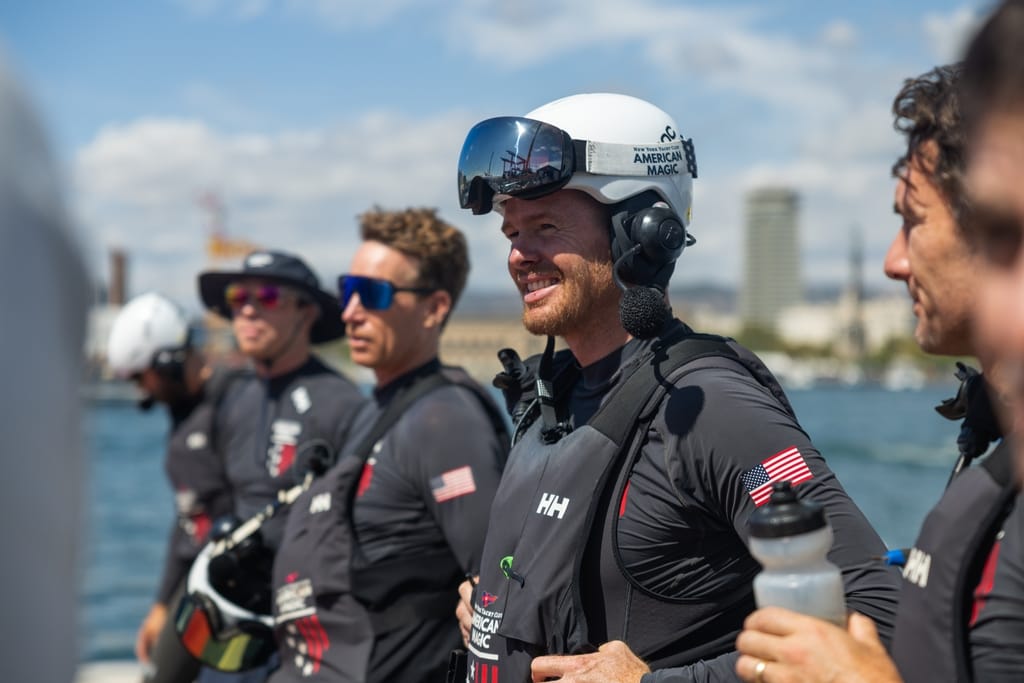
The 36th America's Cup in Auckland, New Zealand saw Italian challenger Luna Rossa Prada Pirelli break convention by introducing dual helmsmen on their AC75. That move turned heads among the other challengers—and ultimately set a new standard.
Now the dual driver configuration looks like a no-brainer, but at AC36 Goodison recalls the American team considered it seriously before–like everyone else but the Italians–opting for a conventional single helmsman who was required to change sides on ever maneuver.
"One of the considerations when we looked at dual helming before AC36 was that each helmsman only gets half the amount of time actually steering – so half the amount of practice time. On the face of it, that’s a huge downside. But of course, then we all saw how well Francesco (Bruni) and Jimmy (Spithill)) did at it aboard Luna Rossa, and we realised, wow, we missed that by a long way. So obviously we went dual helm for the 37th America’s Cup."
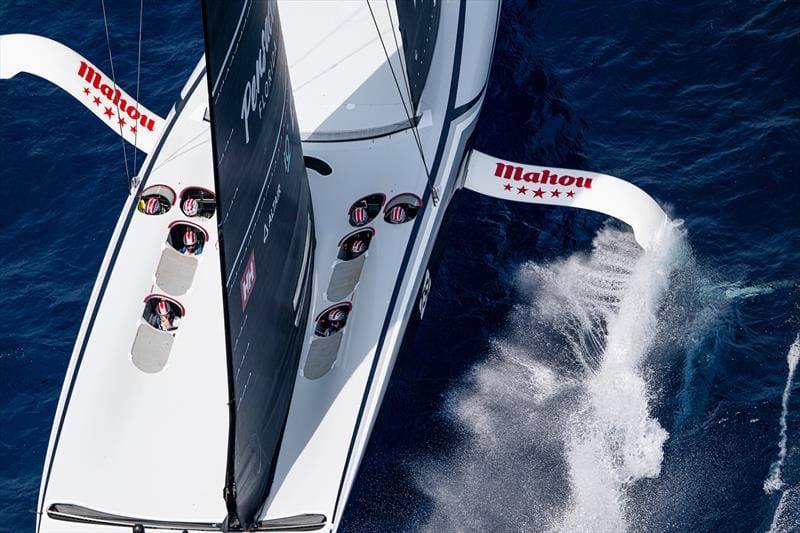
"The dual helmsman technique is a challenge because half the time you're driving the boat, half your time you're trimming (sails) and then giving input to the helmsman and trimmers on the other side.
The hardest bit is for both sides to be on the same page. The fact is that when you have a group of extremely talented sailors, hardly any of us see a particular situation in exactly the same way."
"There's always a slight snapshot of the scenario that is slightly different in one person's eyes to another person's eyes. So making sure you are all on the same page requires effort. And the hardest part is the communication, choosing the words you need that work well with your teammates on the other side.
"That’s a huge challenge, but it's also very rewarding when you're sailing the boat well, and you're both in alignment with a plan and it's going well. But then it's also incredibly frustrating when you're not doing as well and you miss a couple of things and you then have to battle back. The dual helm setup is effective – but it's definitely not easy."
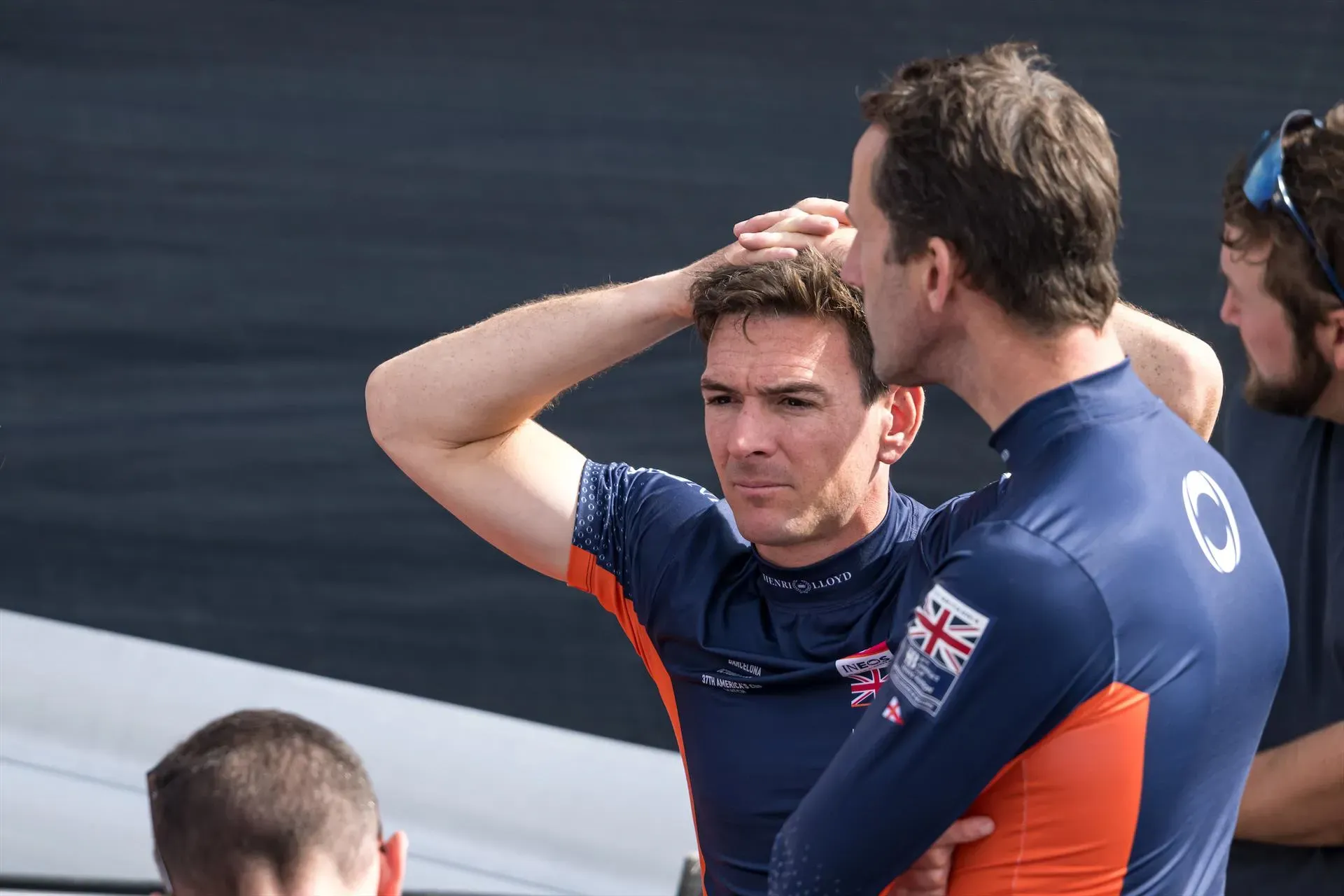
Asked about the way the Ineos Britannia helming pair Ben Ainslie and Dylan Fletcher had become progressively more in sync during AC38, Goodison noted: "I think a lot of that's down to confidence. Initially you're there in a racing environment and you're just trying to do your job well, and then you get confident in your role and you get better at it, and then you've got more bandwidth to start contributing more and more. And the more confidence that you get, the more you grow and the more information you feed. I definitely saw that with the Ineos team during AC37."
As for working with Tom Slingsby: "Well it wasn't easy for sure. But we did a pretty good job of highlighting that early on and working through the way we operated and worked together around that. We worked with a psychologist together. We had meetings regularly about making sure we were on track and going the right way and getting better in our interactions. Plus we had a really good support team around us helping us. I think you could see from the racing that we got better and better as time went on – and the comms got better and better."
"It was always a work in progress. But as far as putting the old stuff behind us, that was pretty easy. We were mates years ago and then we were rivals. Then it's easy to be mates when you're on the same team. The hardest bit is always trying to see things through the same lens."
Simulator time played a huge role in tightening up communications between the two helmsmen.
"We worked in the simulator for hours and hours going through set plays," Goodison said. "That’s when you get to see what the other person's seeing and they get to see what you're seeing. Then hopefully you come up with something that you can say okay, this is going to be the default from now on. This is how we're always going to approach this particular situation."
Goodison described the difference between the American team's simulators for AC36 and for AC38 as 'huge'.
"I would almost compare it to the difference between a PlayStation game as opposed to a virtual reality game. We brought up in the debrief from Auckland that we were a long way behind where we need to be in terms of our simulator. So a lot of time and effort was invested into developing the simulator to the point where it became a very useful tool – especially for race practice and comms practice."
So what does the simulator look like? "We just had a container that was set up inside to mimic our AC75 Patriot using all the same HIDs (human interface devices, like controllers and steering wheels). We used 3-D goggles so that effectively we could sail the boat as you would in real life."
On the role of the HIDs: "We used the simulator as a way of developing the things on the boat. So if you want a new wheel – maybe you want the buttons in a different place – you first test it out in the simulator to make sure you're happy with it and make sure you're happy with the mapping and the way it feels on your fingers. That was all about getting used to the device you use and comfortable with it. Then on day one when it goes on the water you don't need to look at it to see where to put your fingers."
"The hardest bit last time around – without such a sophisticated simulator – was that you might have a controller with 15 or 16 buttons on it and you’ve got very used to where they are without looking. Then you add some more functions or change the layout and you spend the first couple of days having to look at the device – as opposed to it already just being second nature."
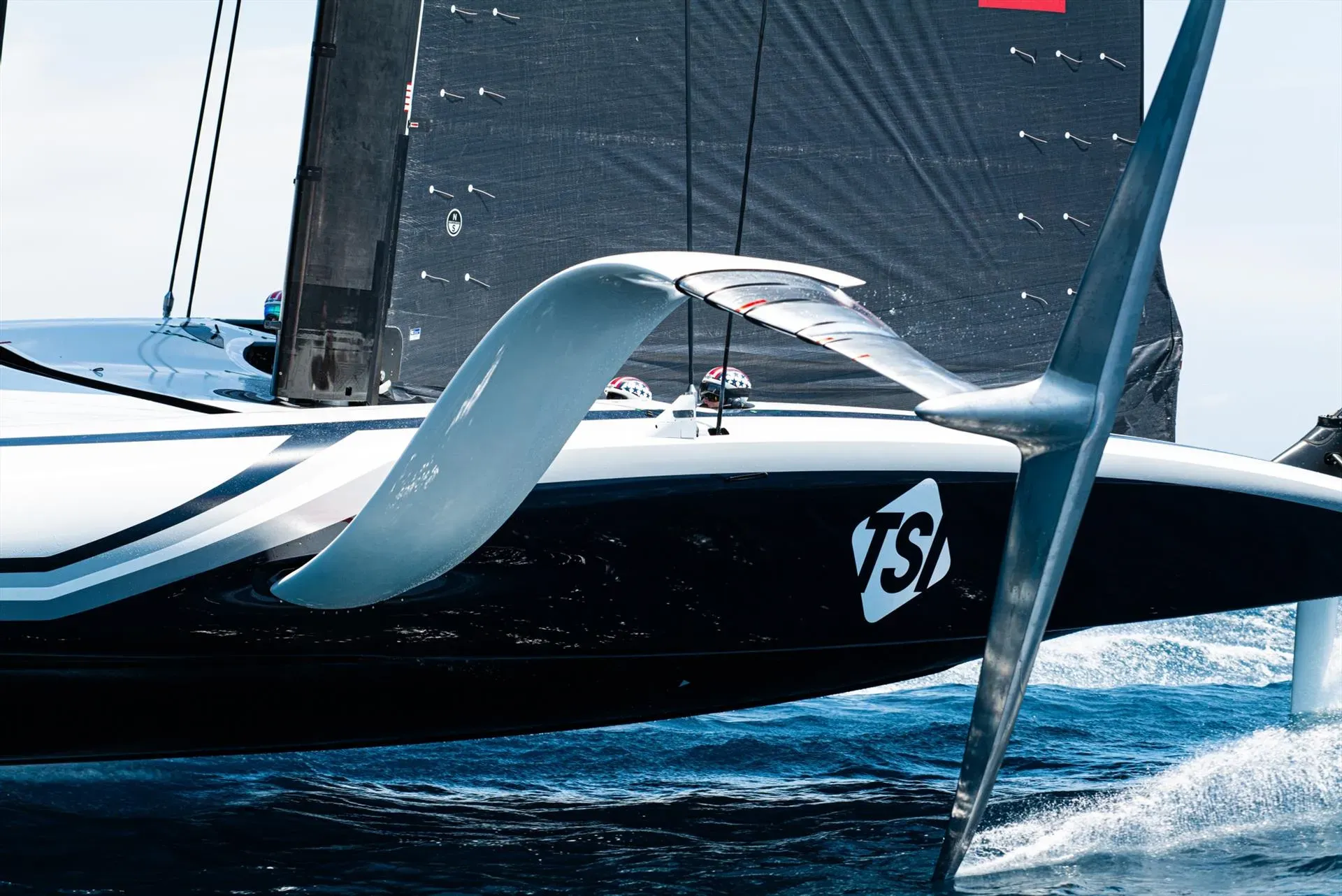
When it came to steering wheels, Goodison and Slingsby ended up with their own custom units.
"We had our own different setups. Actually, we tried for a while to have the buttons in the same place and have the same controls. But, like everything, it's very much a bespoke personal preference.
Asked what he primarily focused on while driving the AC75 Goodison said there were fundamental similarities with any sailing boat – even the singlehanded Laser dinghy in which both he and Slingsby won Olympic gold medals.
"It's very different in many ways, of course. But actually, the basics are very much the same. You're down so low in the cockpit that basically your eye level is focussed on an array of screens. On those screens can be anything from cameras that give you different views of the boat – forward, sidewards, backwards, or looking at the foils – and then you have all your displays, which give you a lot of the loads relating to each function on the boat. Like how much power that's available from the grinders and how much is stored in the accumulator. Then you've also got your tactical screen with where you are on the course and other information. Then you've got a whole array of buttons in front of you to control 101 things, as well as dials that can adjust the ratios on a lot of other stuff ."
"The primary focus while you're sailing is you're trying to look out of the boat as much as you can. You have an abundance of information, but my primary focus a lot of the time was just on the breeze coming at the boat from in front of you. Then you are looking at the jib and trying to sail as normally as possible. But you're always splitting your vision between the reality outside the boat and the array of screens you have down below. What you really need is for each of your eyes to look in different places – that would be useful!"
Click below to listen to the full Yacht Racing Life Podcast interview:
 Justin Chisholm
Also available on Apple Podcasts and Spotify or where ever you get your podcasts.