
Yacht Racing Life is a reader-supported publication. If you enjoy our free content please consider signing up to receive our free email newsletter, or help the development of the website by becoming a paid subscriber.
Yesterday’s PlanetSail video by British sailing journalist Matt Sheahan, which asked whether SailGP had ‘gone too far’ has already attracted 50,000 views and prompted over 300 comments from viewers in 24 hours.
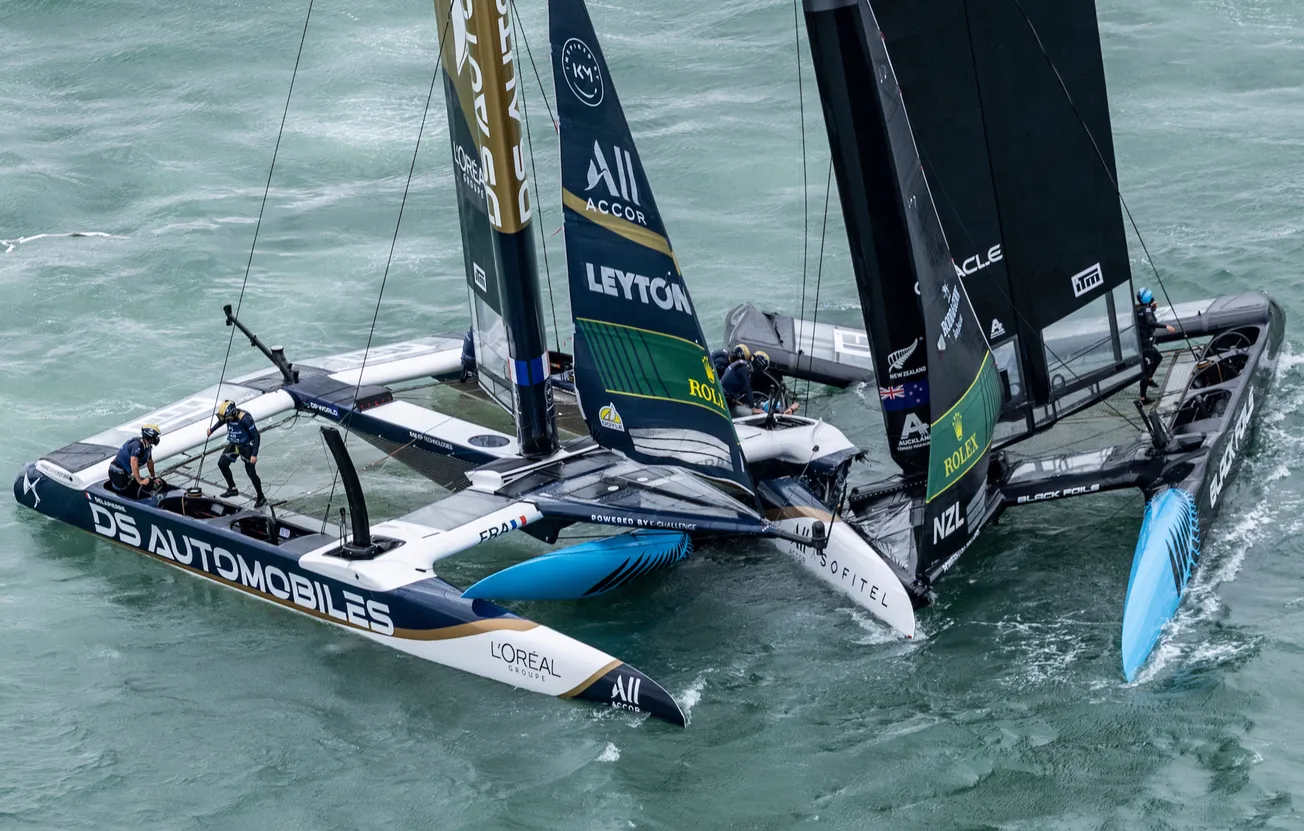
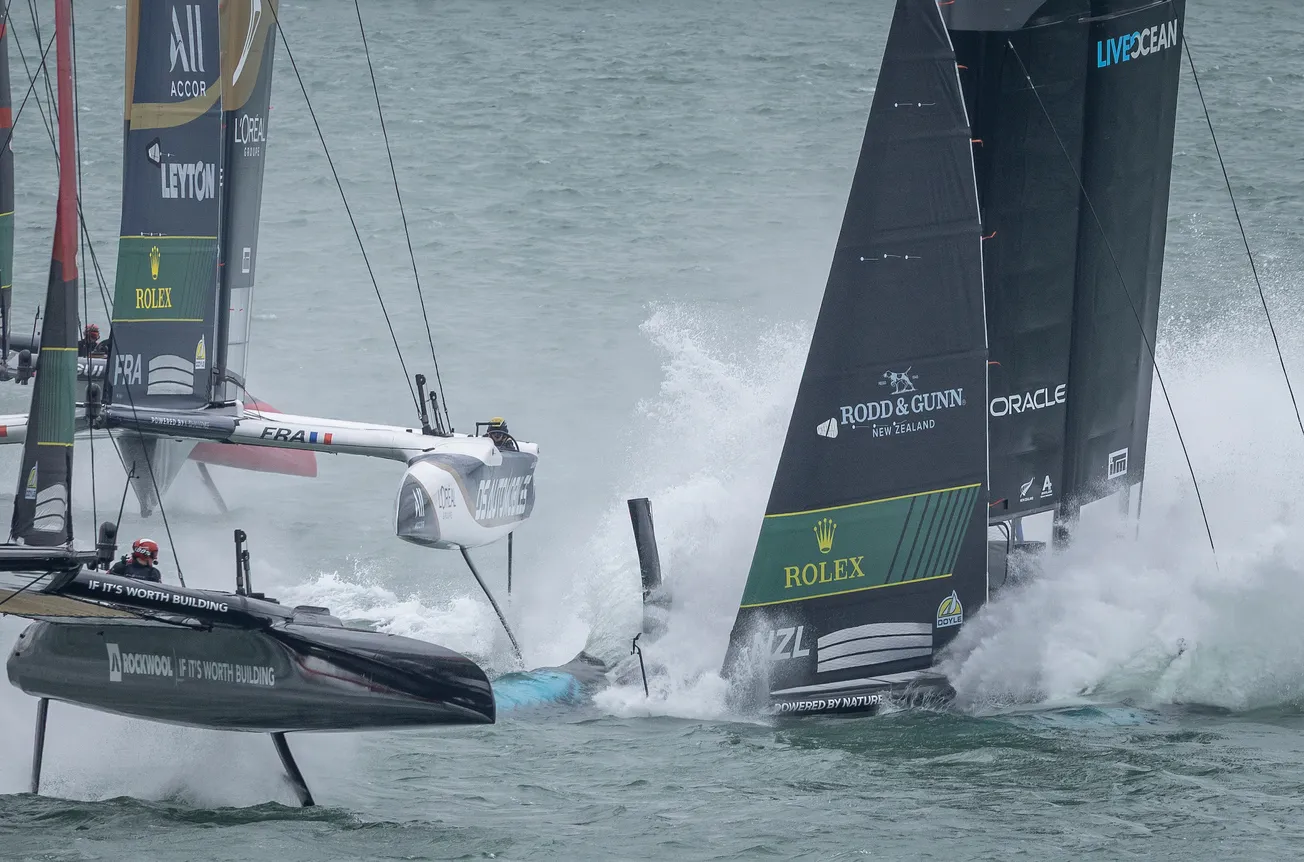
Many were critical of the event organisers for cramming too many boats into too small a racing area and prioritising spectacle over sailor safety.
“IMO a fatality was avoided by sheer dumb luck, while one possibly two sailors are severely injured, these boats are where F1 was in the 80s in terms of safety,” said one commenter.
“Spectacle is perfect but stop racing formula 1 boats on a go kart track,” said another.
Since its inception, SailGP has unapologetically positioned itself to attract new fans outside of the traditional base of sailing aficionados. Its first major marketing campaign in 2020 in the build-up to Season 2 was titled ‘It's Not What You Think’ and created to illustrate “how the global championship is transforming a traditional sport into a revolutionary world-class spectacle”.
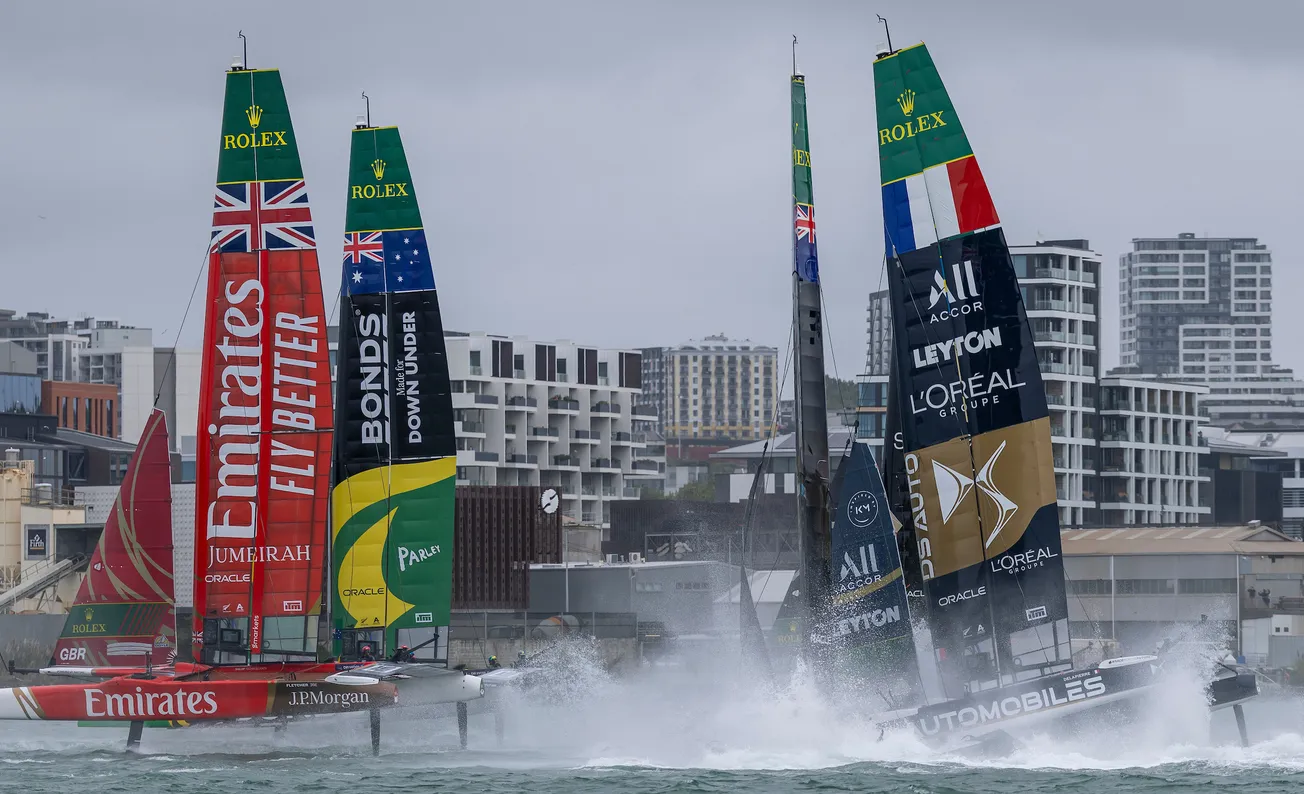
By all accounts, the league has been successful in drawing in non-sailing fans, attracted by the speed and spectacle of a large fleet of foiling boats racing in close proximity to each other.
“I am relatively new to watching sailing (specifically Sail GP), for me it is the speed, the closeness and the number of boats that creates the excitement that makes me want to watch,” said one such new fan.
“Is this the modern version of Roman Chariot Racing?” said another.
One new fan had this to say: “To someone who is not a sailor, it was immediately obvious to me and my friends that these boats are too fast and there are too many of them for a course that confined. Wasn't the least bit surprised to see a collision like this. The course needed to be much more open, they should have raced out towards Brown's Island and back.”
And there were more such opinions expressed:
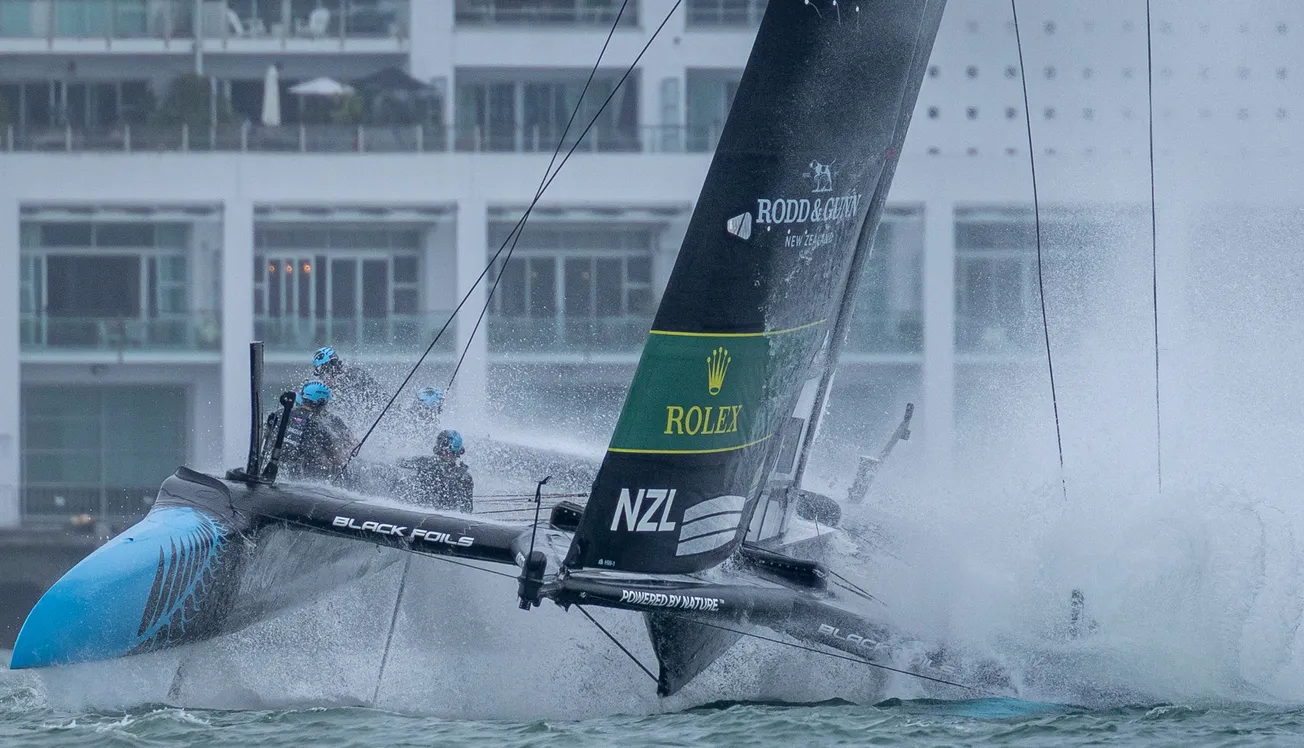
“As someone who regularly has to make assessments of risks, I can’t imagine how the event organisers have been in the least bit thorough in their risk management or mitigation,” one viewer wrote. “Usually risk is assessed on a matrix of likelihood v consequences so I wonder who it was that said the risks were low of a collision between two barely in control catamarans sailing at 30-50 knots and the consequences in the event of a collision were that no one was likely to be hurt. It just defies belief. T-bone collisions happen with much slower and better controlled boats, yet here we have the opportunity of multiple collision points with crews just totally exposed. The Black Foils were very lucky none of their crew were killed last Saturday. The old parental mantra of 'it’s all great fun ‘til someone loses an eye' couldn’t be more apt right now.”

Now in its sixth season, SailGP’s fleet sizes have grown from six boats in Season 1 to 13 on the race track in 2026. Meanwhile the size of the racing areas do not appear to have been increased – if anything, the course and the length of the races shrunk.
In the run-up to last weekend’s Auckland event many comments were made in the sailing media about the fact that the forecast strong southwesterly winds would make it difficult for the race management team to set as long a course as they did in Auckland in Season 5.
The windy and wavy Season 6 opening event in Perth, Australia – where a larger racing course could be set – was nevertheless still very congested. A major high-speed collision between the New Zealand and Swiss F50 catamarans on the approach to the first leeward gate in Race 1 saw the Kiwi boat damaged beyond repair and out of the event.
Whether consideration was given to splitting the fleet into two flights prior to the start of racing on Saturday in Auckland is not known. When split racing was used on the Sunday – in marginally windier conditions – the racing took place without any collisions.
Many fans commenting on the PlanetSail video believe it was a mistake not to split the fleet for the whole event.
“I have sailed in Auckland for 25 years so know it pretty well,” wrote one. “A lot of people here knew this sort of incident was highly likely with the combination of weather and the location and size of the course. Pure luck there were no fatalities. Incredibly stupid by SailGP not to have split the fleet on Saturday. We were there. They were playing Russian roulette with this. There is always denial after an incident like this, no accountability.”
Another called for a major rethink by the circuit organisers: “SailGP has been acting as if these continuing accidents were one offs, not related to a systemic weakness,” they wrote. “Sailors, fans, and press have expressed concerns over growing fleets and tiny courses. TV /Internet streaming windows seem to be the actual target. Bones had to break through skin to create divided fleets? SailGP is running this show with blinders on, still. Jobs need to be lost. A complete reorganization is needed immediately, starting with LARGER courses.”
Another fan said: “Thirteen boats racing for the first turn at 50 miles per hour was like a dozen trucks racing for the exit to the parking lot.”
“I’m a kiwi and live in Auckland but this course is just too small for that size fleet. I love having the race here but needs to be bigger,” said another.
“It's becoming a 'demolition derby' for sailing," was another comment.
Some even called for SailGP to switch from beginning races on a high speed reach and called for a traditional upwind start.
“SailGP may have to do away with the reaching legs start - for 13 boats on a narrow tight course that close to the shore,” they said. “Some new regulation for the course size requirements, starting box & line. Yes, it is exciting to watch these boats going fast, but if the SailGP committee doesn't implement changes for this season or next - sooner or later someone will get killed.”
However, not everyone agreed that the racing had become too dangerous.
“What a lot of fuss about this!” said one viewer. “I raced rally cars, yachts and super bikes in my career. I got broken bones and a crushed vertebrae from racing yachts in Auckland. Broken bones and brain bleeds etc from cars and bikes alike. These are the risks we take as competitors in dangerous sports. I do not complain and I hate it when non competitors try to limit the racing from their own fears. We don't race to be "safe", I really hate that word... It so much limits what we do in these times.”
Another said: “Fantastic sailing at the weekend. Time needs to be taken before there are knee-jerk reactions like this! This is a highly competitive, high speed sport. Sailors pushing the envelope of what is achievable on a sailboat. An unfortunate racing accident. No one died. There is risk in every sport!”
“These are professional athletes doing a pro sport,” said another one. “Crashes are part of many other sports. Not nice seeing folk hurt, but they dealt with it and made the right changes for racing on Sunday.”
“Keep it as it is. I want to see more carnage. That was great,” was another comment.
There has been no word from SailGP yet on whether we will see a return to single fleet racing for the third event of Season 6 in Sydney, Australia in two weekends’ time and at other SailGP regattas over the rest of the year.
One viewer of the PlanetSail video called for a balanced approach based on the weather conditions to be adopted.
“Low wind range might be single fleet races, with multiple split fleet races where wind conditions are stronger,” they wrote. "The risk of life threatening boat-on-boat contact even exists in a match-race format, though is likely significantly less than in moments of high congestion at high speed competition such as at the start of the SailGP racing. Participant safety must be paramount and likely even in light conditions the potential for serious injuries must be further considered by the series organisers.”
“Split the fleet, or larger course.. those are your options,” opined another.
Some fans even said they enjoyed Sunday’s split-fleet racing more than the 13-boat single fleet action.
“I’ve gotta say I liked the format on day 2. It was way better to follow the racing. 13 boats is just too much.”
As Magnus Wheatley and I discussed in yesterday’s post-event analysis of the Auckland SailGP event on the Yacht Racing Life Podcast, I believe Sunday’s two smaller fleets made for better racing and were much more enjoyable to watch. I enjoyed being able to focus on the various boat-on-boat battles that were going on – and not just at the front of the fleet.
Whether SailGP should permanently switch to split fleets is a hard call to make. Certainly it diminishes the spectacle and will reduce the number of close calls around the racecourse that the event commentators get so excited about.
Most likely I think we will see a return to single fleet racing in moderate conditions, with splitting the fleet in two being an option when weather conditions or course area requires it.