



For me and the many other race crew who spent much of March in the Caribbean, it was an unforgettable month of sunshine, smiles and strong winds, and a wonderful reminder of why the sport of superyacht racing is so important to this very special part of the industry.
The Caribbean superyacht regatta season got under way in its usual style with the Antigua Superyacht Challenge, where a fleet of 10 sailing superyachts gathered at Nelson’s Dockyard. The programme began with an optional Round Antigua Race: a 46.8-mile anticlockwise lap of the island, or the shorter Part-Island Race. Pursuit-format series races filled the following days and rewarded precise timing, boat handling and strategic decision-making.
This four-day event remains proudly non-commercial, with the emphasis on safe, competitive racing and delivering an unforgettable experience that people want to come back to. Fleet diversity defines this regatta, from towering schooners to modern super-sloops, and devising a format that pitches these designs against one another on equal footing is exactly what the Superyacht Racing Association (SYRA) and the ORCsy rating system is about.
What unites the fleet isn’t just scale or design, but a shared commitment to racing well, safely and fairly, plus an equally strong emphasis on the camaraderie that defines superyacht regatta participation, both on the water and ashore. It’s a unique environment – if you’ve not yet been a part of it, give it a go.
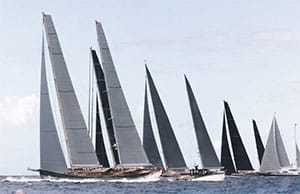
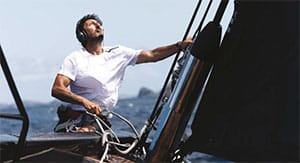
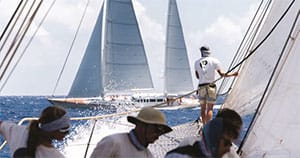
1. This year’s regatta circuit drew an exceptionally large and spectacular superyacht fleet to the Caribbean 2. Most of the yachts had a few pro racing sailors aboard to boost their permanent crews 3. Adix won her class at St Barths | Images © Fraser Edwards Photography
Participants and spectators were able to follow the fleet and on-water action with the recently updated TracTrac software, and we saw it used for the first time in Antigua. A collaboration between TracTrac, ORC and SYRA helped develop the system so sailors, owners and guests can see how they’re doing on the racecourse and against the opposition in real time. You can assess your projected ranking during racing and see provisional results as yachts cross the finish line. The software shows sailors where they’re gaining, and losing, with greater accuracy than ever before, and really adds another layer to the experience.
For ORC and SYRA, the improved software will be vital for data gathering, allow for better race monitoring, performance reviews and rule observance, and we’ll also be able to replay and study on-water situations.
Ashore in Antigua, over 300 sailors – owners, guests and crew – came together for the prize giving. The Gosnell Trophy, awarded to the yacht best representing the spirit of the regatta, went to the 65- metre schooner and SYRA-member Adix, racing in her first Superyacht Challenge.
‘It’s a real honour to receive the Gosnell Trophy,’ said Captain Oliver Bell. ‘For us this regatta has never just been about results, it’s about the spirit of the event and the people involved. To have the other teams vote for us makes it incredibly special… the atmosphere on the water and ashore has been brilliant. I’m incredibly proud of our crew. Everyone pulled together and pushed the boat hard in some demanding conditions.’
There was also a standout performance from the 66m Hetairos, another SYRA member, which not only won the Stan Pearson Trophy but set a new race and monohull course record for the Round Antigua, completing it in three hours, 20 minutes and 35 seconds. For the record achievement, the Hetairos team were awarded the captain’s weight in rum.
Another boat making an impression this season was Spirit 111 Geist, new to both the Caribbean circuit and to SYRA membership. Lymington local and ex- America’s Cup sailor Matt Cornwell was aboard, alongside several other faces from the Solent, and he summed up their experience: ‘For the owner, captain Justin Pope and the team, racing the boat in Caribbean waters was something we’d really been looking forward to. Racing two events back-to-back, starting with the Antigua Superyacht Challenge and then the St Barths Bucket, was a great way to maximise our adventure in the tropics. Both are longstanding events with pedigree, they’re well organised and managed, but individual in their styles. We had 15-25kts every day, big seas, warm winds, great courses, and enjoyed an incredible experience that only superyacht racing can provide.’
In St Barths, the Bucket Regatta had its largest fleet since 2015. Forty-one yachts were on the list, with 34 racing. The boats were split across nine classes, including two Corinthian Spirit (CS) non-spinnaker classes. The CS has really become popular - it’s a “turn up as you are” kind of thing, maybe flying in a couple of additional talents to help the permanent crew. It provides an entry level to the superyacht racing scene without the fullon commitment, and it’s encouraging how many boats have liked what they saw and come back fully race ready the next year.
There were a couple of notable additions to the Bucket. A schooner class made its debut, bringing together three striking three-masted gaff-rigged yachts – a first for the regatta. And there was an optional fourth day of racing, giving teams more racing time and a chance to assess the competition before things got serious. With Sunday’s racing ultimately abandoned due to strong winds, that extra day proved a good call and it looks likely to become a permanent fixture.
Racing followed the pursuit format under the ORCsy rule. Topping their classes at the end of the week were WallyCento V, Swan 90 Freya, Swan 100 Onyx, Geist, Whisper, M5, Perseus 3 and Adix.
This year’s coveted Bucket trophy went to the mighty Hetairos team, who narrowly took back victory on count after a fierce battle with, Aquarius 2 (Royal Huisman) and Maximus (Vitters Shipyard). The trio of behemoths spent much of the event with only seconds between them and provided a captivating spectacle.
The 2026 Bucket was the first event for Tony Rey in his new role as SYRA president and he joined Maximus for the action: ‘Simply sailing a 60m ketch in 15-20kts of breeze in the Caribbean feels like a spectacular dream. Racing in the Gazelles class with the three big ketches, along with three iconic monster sloops, all in close proximity around islands and marks, borders on unreasonable! Sometimes sailing these yachts feels like racing a school bus on a motocross track, but we got it done, and safely.’
For Rey, it was particularly valuable to see the ORCsy prove its worth. ‘Race one had Maximus, Aquarius 2 and Hetairos all finishing overlapped after 23 miles of hard racing. After two races, we were in a three-way tie for first. We’ll have to wait until Bucket 2027 to properly break the tie on the water!’
Undeniably, whether you are stepping onto a start line for the first time or returning after many seasons on the circuit, the world of superyacht racing offers something truly special. ‘And SYRA exists to support that world,’ says Rey, ‘It’s a privilege to see these regattas from both sides of the sail. At its heart, SYRA is about community. Membership is not merely about rules or administration; it is about having a say, contributing experience, and helping to shape the future of sailing superyacht racing.’


